
China NEV exports hit record 582,000 as final October retail trails estimate

Automakers in China exported a record 582,000 passenger new energy vehicles (NEVs) in October 2026, up 144.7% from a year earlier and 3.9% from September. Final data from the China Passenger Car Association (CPCA), released on November 9, put October NEV retail in China at 1.109 million, down 13.7% year on year.
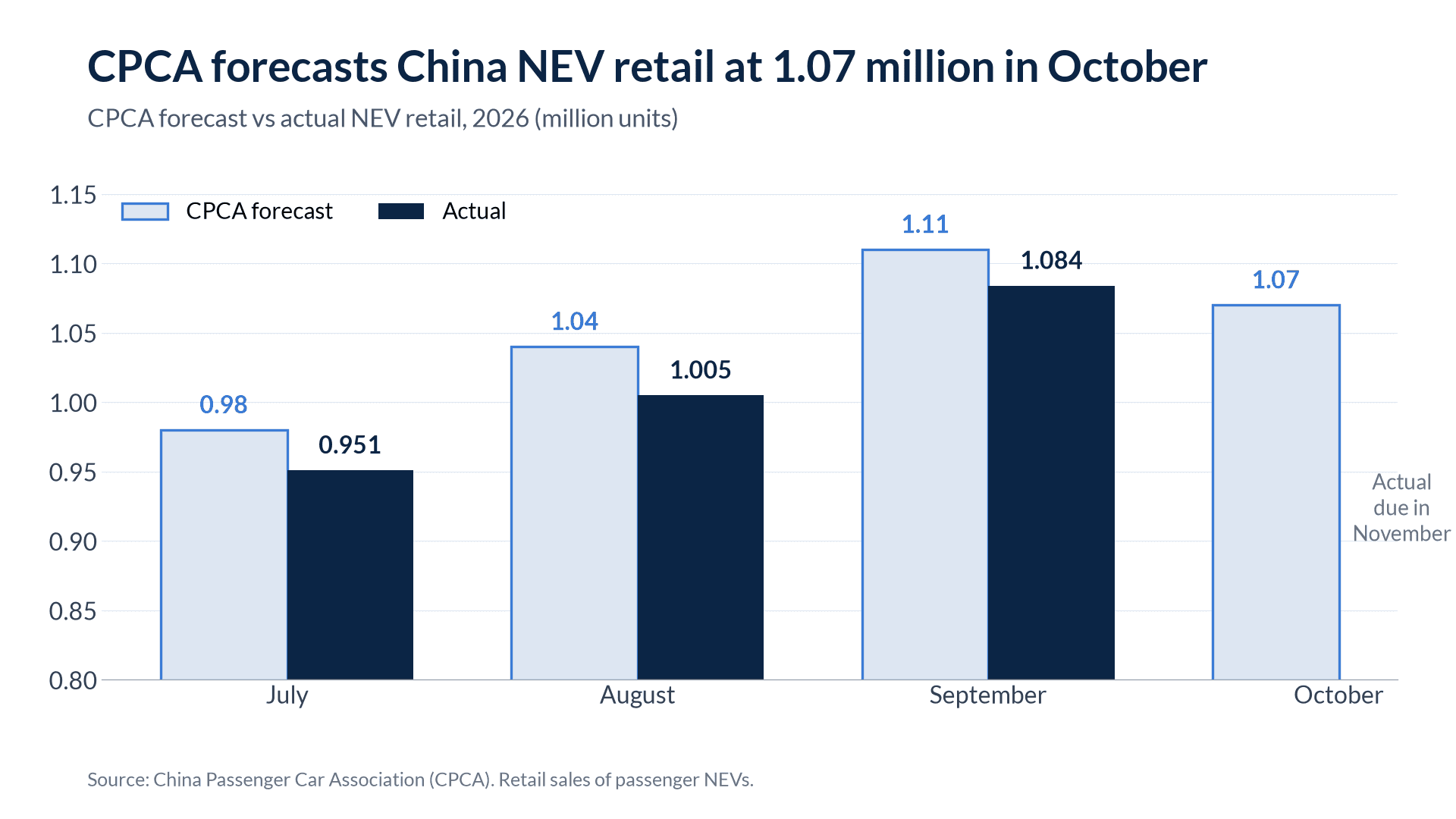
That final retail count came in below the CPCA's preliminary estimate of 1.148 million, published on November 4, which had pointed to a 10% annual drop. Retail still rose 2.3% from September, but October was the tenth straight month of year-on-year decline for NEV retail sales in China.
The export number is the new part of the story. Monthly NEV exports rose from 499,000 in June to 540,000 in July, then dipped to 518,000 in August, down 5.0% from July, before climbing again to 558,000 in September. October's total was also more than double the 284,000 shipped in November 2025, which was 2025's monthly high; December 2025 came in at 273,000.
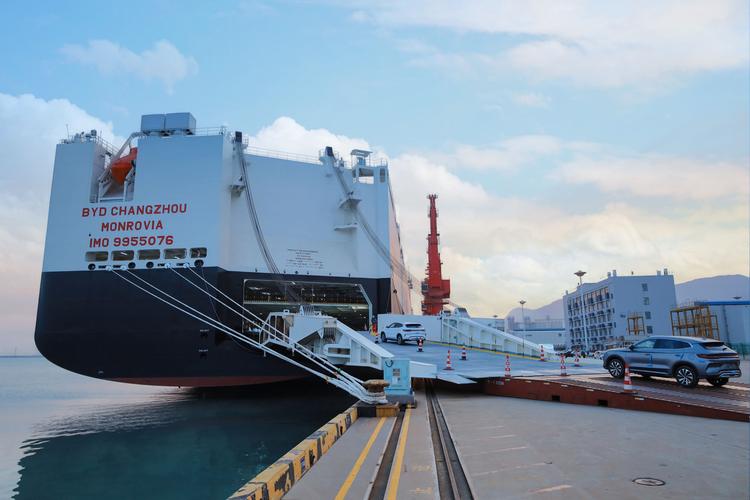
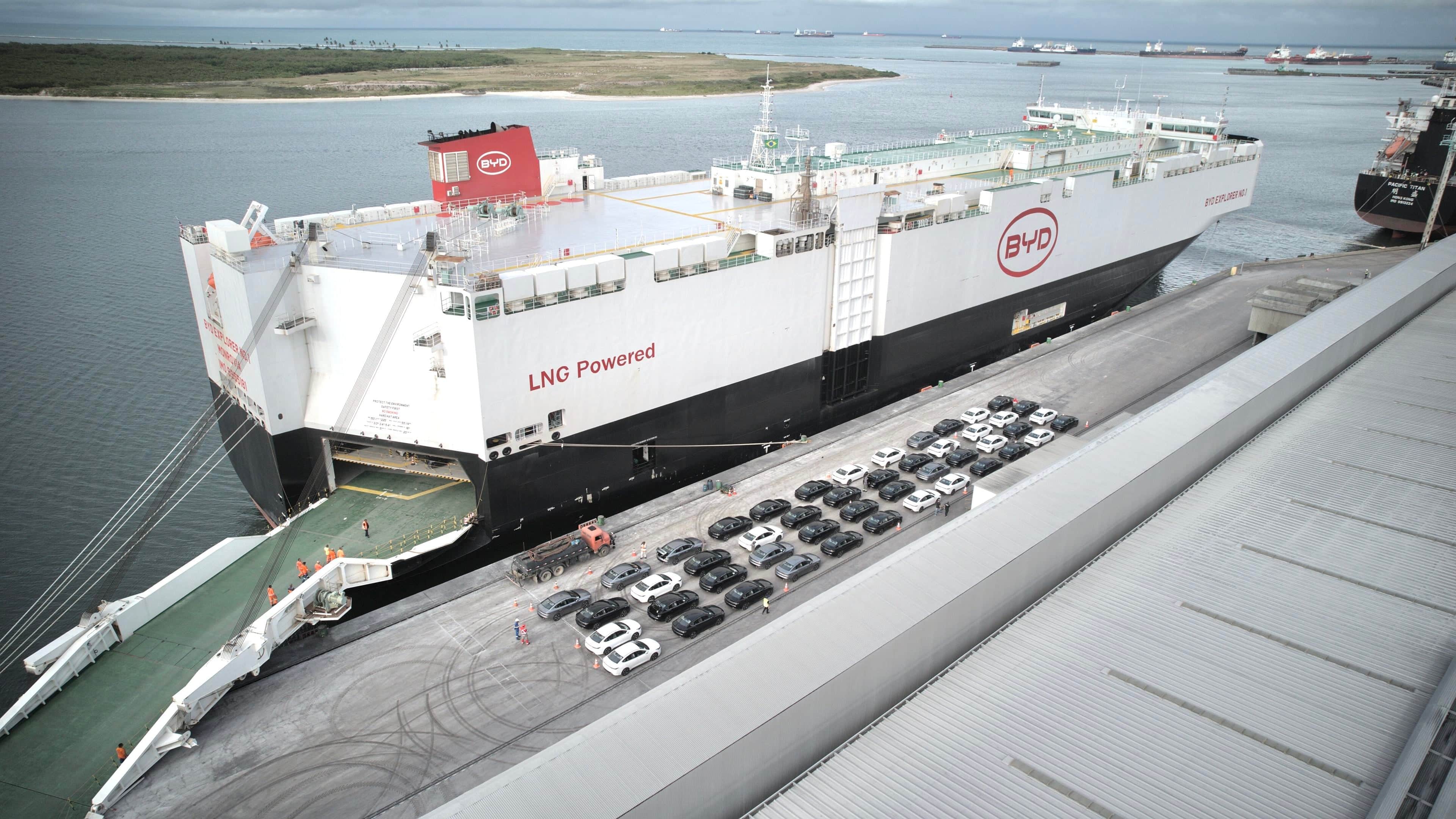
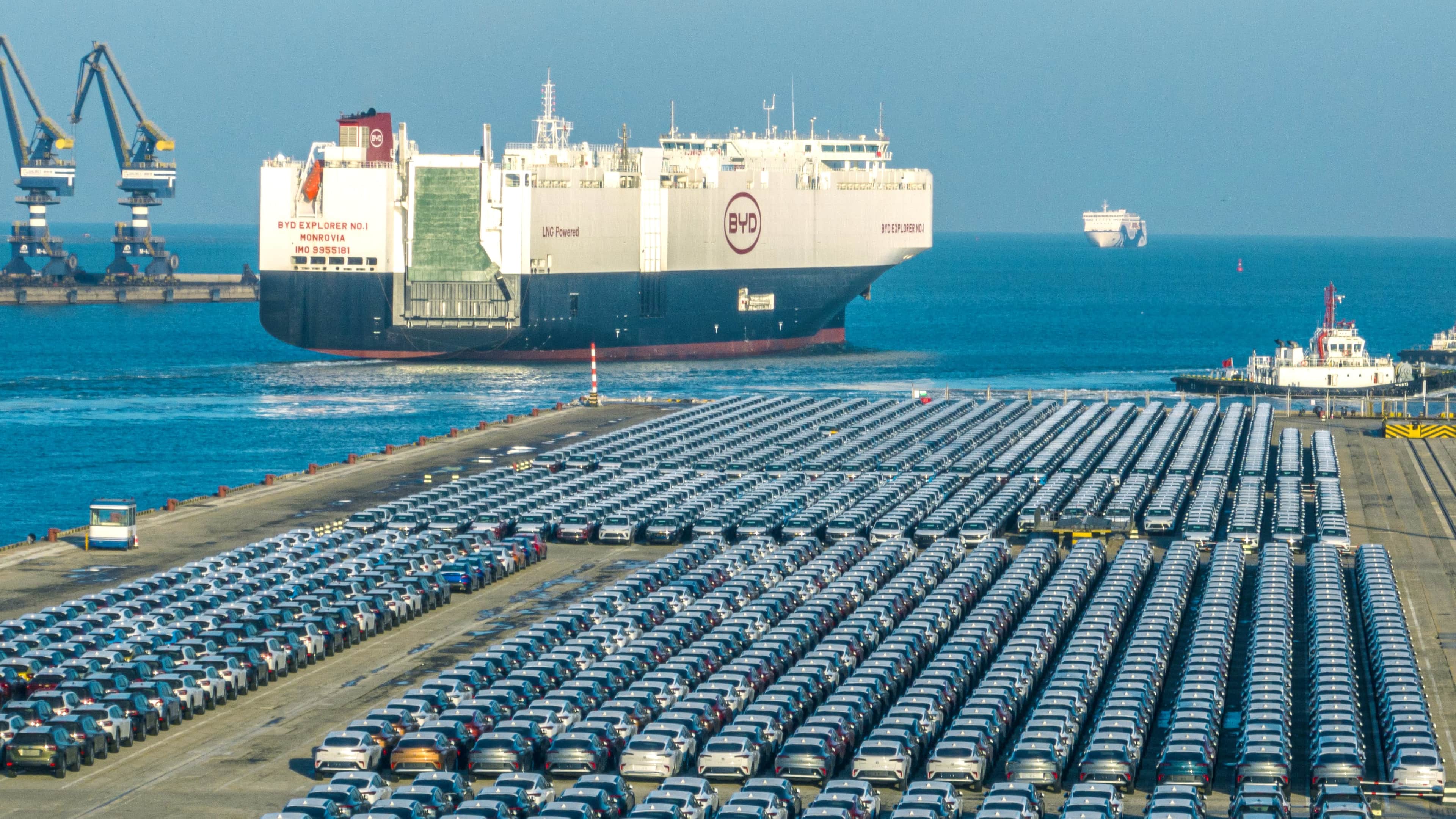
Cars drive onto BYD CHANGZHOU, BYD's second LNG-powered car carrier with 7,000 vehicle spaces, ahead of its late-2024 maiden voyage to Europe (BYD)
Over the first ten months, automakers exported 4.472 million NEVs, up 139.7% from the same period of 2025. Domestic retail over the same stretch was 8.869 million, down 12.9%, so for every two NEVs sold in China this year, automakers have shipped about one more abroad.
NEVs made up 62.8% of the 928,000 passenger cars China exported in October, counting both complete vehicles and kits for local assembly. That share was 20 percentage points higher than a year earlier. Total passenger car exports grew 68.5%, less than half the pace of NEV exports.
Exports now carry a large part of the industry's volume. They accounted for 33% of automakers' NEV wholesale shipments in October, against 15% a year earlier. Across all passenger cars, exports made up 35% of manufacturer sales, up from 19% in October 2025. The CPCA said exports had overtaken domestic demand as the force holding up wholesale volumes and profits.
GCEV Weekly · Every Tuesday
China's EV industry in five minutes.
Launches, sales, batteries and policy — the week's stories that matter, with the context the headlines leave out.
Sent by GigaCharts Inc. Questions? Write to globalchinaev@gmail.com. Unsubscribe anytime. See our privacy policy.
Chinese brands did most of the shipping. Domestic brands exported 810,000 passenger cars of all powertrains in October, up 77%, while joint-venture and luxury brands exported 118,000, up 28%. Gasoline cars are moving abroad too: exports made up 40% of automakers' gasoline car wholesale, up from 24% a year earlier, and conventional fuel car exports rose 11% to 346,000.
That shows in the gap between shipments and sales. Automakers shipped 1.772 million NEVs in October, up 9.8% from a year earlier and 6.2% from September, while they built 1.835 million. Wholesale ran about 663,000 units ahead of domestic retail, and exports account for 582,000 of that difference.
Small, cheap electric cars led the export mix. Battery electric vehicles were 61.7% of NEV exports, down slightly from 62.6% a year earlier, and A00 and A0 models made up 56.4% of battery electric exports, up from 42.1%. Plug-in hybrids took 33.7% of NEV exports and extended-range models 4.6%. The CPCA said plug-in hybrid shipments to developing countries were growing quickly despite recent interference from some foreign countries.
BYD (HKG: 1211) was the largest NEV exporter, with 165,194 passenger vehicles. Chery (HKG: 9973) followed with 83,843, then Geely Auto (HKG: 0175) with 80,119, Tesla China with 59,012 and SAIC Passenger Vehicle with 42,030. Changan exported 30,343 NEVs and Leapmotor 21,132. BYD's own monthly filing counted 170,194 NEV exports across all its vehicles.
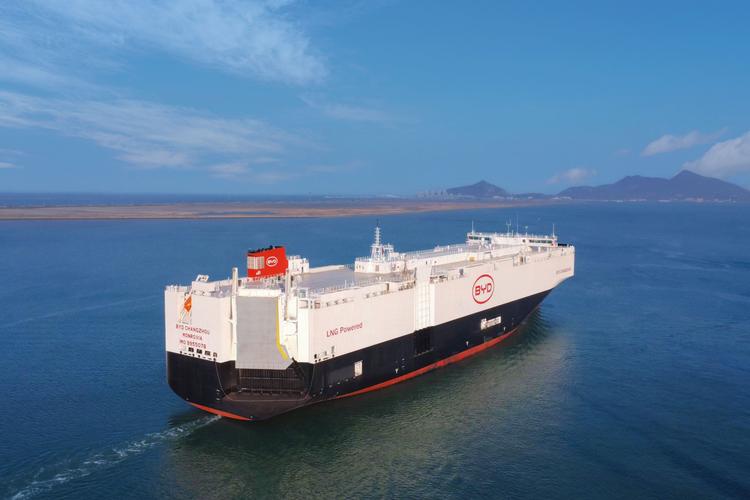
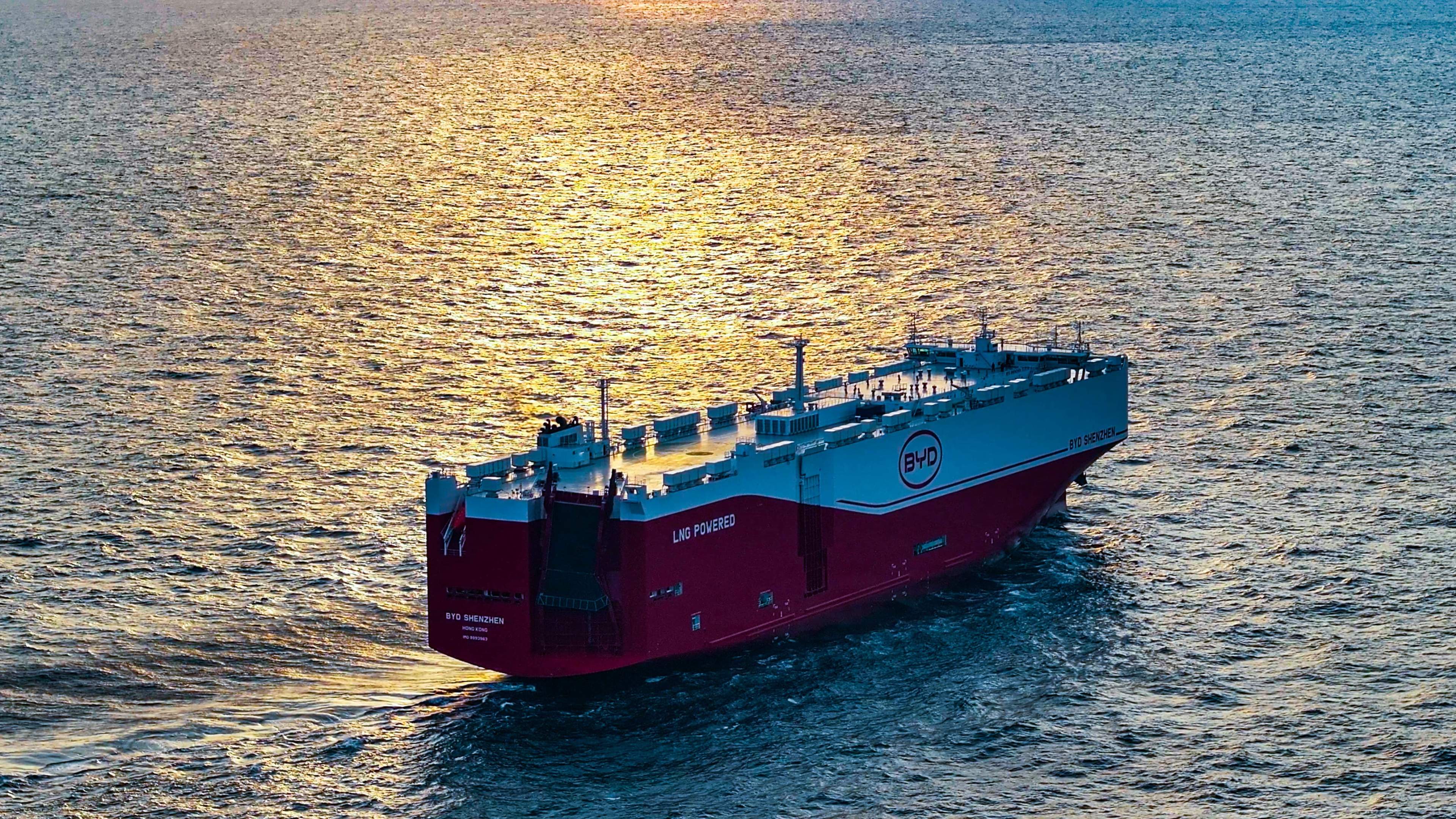
BYD CHANGZHOU under way after departing Yantai on November 29, 2024, then loading nearly 5,000 NEVs at Lianyungang and Taicang before sailing for Bristol and Rotterdam (BYD)
Some of those cars leave China as kits rather than finished vehicles. Kits for local assembly made up 41.9% of SAIC-GM-Wuling's NEV exports in October, 31.1% of Great Wall's, 27.6% of SAIC Passenger Vehicle's and 8.0% of Leapmotor's. BYD's own count of overseas passenger car and pickup sales was 169,564, up 103% from a year earlier, against passenger NEV sales of 483,125 for the month.
For some brands, exports are now most of the business. Tesla China's total NEV wholesale was 67,829, so exports made up about 87% of its October shipments, leaving roughly 8,800 for the domestic market. Chery Automobile reported 194,674 exports of all powertrains in October, which means NEVs were well under half of what it sent abroad.
At home, BYD led NEV retail with 250,301 units, followed by Geely at 131,708 and Leapmotor at 83,573. Changan sold 68,925, SAIC-GM-Wuling 67,696 and Xiaomi 50,123. Total passenger car retail fell to 1.643 million, down 27.1% from a year earlier but up 1.5% from September.
Gasoline cars took the biggest hit. Retail of conventional fuel cars fell 45% to 530,000, and the CPCA blamed high oil prices for speeding up the switch to electric. That pushed NEVs to a record 67.5% of retail, 10.5 percentage points higher than a year earlier, even as NEV sales themselves fell.
For the domestic market, the CPCA expects a modest recovery in November. The month has 21 working days, two more than October, and colder weather plus migrant workers heading home tend to lift car buying in county and rural markets. The CPCA also said dealer confidence is weak and year-end inventory pressure remains high.
The CPCA warned that the export boom may not last into early 2027. It expects many November shipments to be pulled forward by expectations of a lower export tax rebate and narrowing windows before overseas tariff changes. Christmas-season cargo for overseas markets also has to leave by mid-November, and the CPCA said the rush could drain export momentum in the first quarter of next year.
The rebate change is already set. China's finance ministry and tax administration said on October 12 that the VAT export rebate for NEVs will fall from 13% to 9% from April 1, 2027. Cui Dongshu, the CPCA's secretary general, said the cut would hit low-priced, thin-margin models hardest but would not reverse the growth of NEV exports, which he tied to the strength of China's supply chain rather than the rebate.
Exports have kept China's NEV factories busy through ten months of weaker home demand. The test is whether that holds once the rebate cut takes effect next spring.
GCEV Weekly · Every Tuesday
China's EV industry in five minutes.
Launches, sales, batteries and policy — the week's stories that matter, with the context the headlines leave out.
Sent by GigaCharts Inc. Questions? Write to globalchinaev@gmail.com. Unsubscribe anytime. See our privacy policy.