China NEVs take just 61.2% of early-October retail but 78.1% of shipments
China's passenger new energy vehicles (NEVs) took 61.2% of retail car sales over October 1 to 11, 2026, down from a record 67.0% for September as a whole and 70.3% in the first 13 days of that month, according to weekly data the China Passenger Car Association (CPCA) released on October 14, 2026. NEV retail sales totaled 281,000 units, down 13% year over year and 7% from the same period of September. At the shipment level the share moved the other way, with NEVs making up 78.1% of automakers' wholesale volume, which includes exports.
That shipment share owes more to shrinking fuel-car volumes than to NEV strength. Automakers shipped 301,000 NEVs in the period, up 6% year over year but 11% below the same stretch of September, while total passenger car wholesale fell 18% year over year to 385,000. That leaves about 84,000 fuel cars, roughly a fifth of all shipments, and CPCA said fuel-car wholesale fell 53% over the first two weeks of October, after domestic fuel-car production dropped 51%. For comparison, NEVs made up 65.4% of wholesale volume in all of September, itself a record at the time, so the shipment share has jumped by almost 13 points while the retail share fell by almost 6.
Advertisement – Continue scrolling for more
Retail moved in the opposite direction. Total passenger car retail sales fell 24% year over year to 459,000 but rose 7% from the same period of September. With NEVs down 7% on that comparison, the CPCA figures imply fuel-car retail, conventional hybrids included, of about 178,000 units, roughly 40% above the same days of September; had it merely held flat, the NEV share would have been close to 69%. Against October 1 to 11, 2025, the same arithmetic puts fuel-car retail about 37% lower and the NEV share around 7.6 points higher.
The National Day holiday split the period in two. Daily retail across all passenger cars averaged 32,651 units over October 1 to 7, down 25% year over year and 10% below the same days of September, then rose to 57,589 over October 8 to 11, still 22% below 2025 but 32% above September. CPCA credited National Day auto shows, local subsidies and automakers' peak-season promotions for the pickup, which it described as relatively mild. With the Mid-Autumn Festival falling in late September this year, CPCA also noted that October has more effective selling time than usual.
Advertisement – Continue scrolling for more
CPCA also pointed to how automakers are selling. Most NEV brands currently lack hot-selling models, it said, yet they must keep production steady, and many have moved to target-driven sales that push volume on certain models even without an order backlog. That lifted automakers' direct retail sales slightly in the first two weeks and left NEV penetration unusually high, in CPCA's assessment. High international oil prices remain the backdrop, with cumulative gasoline price increases this year reaching 2,375 CNY (c. $353) per tonne by the end of September.
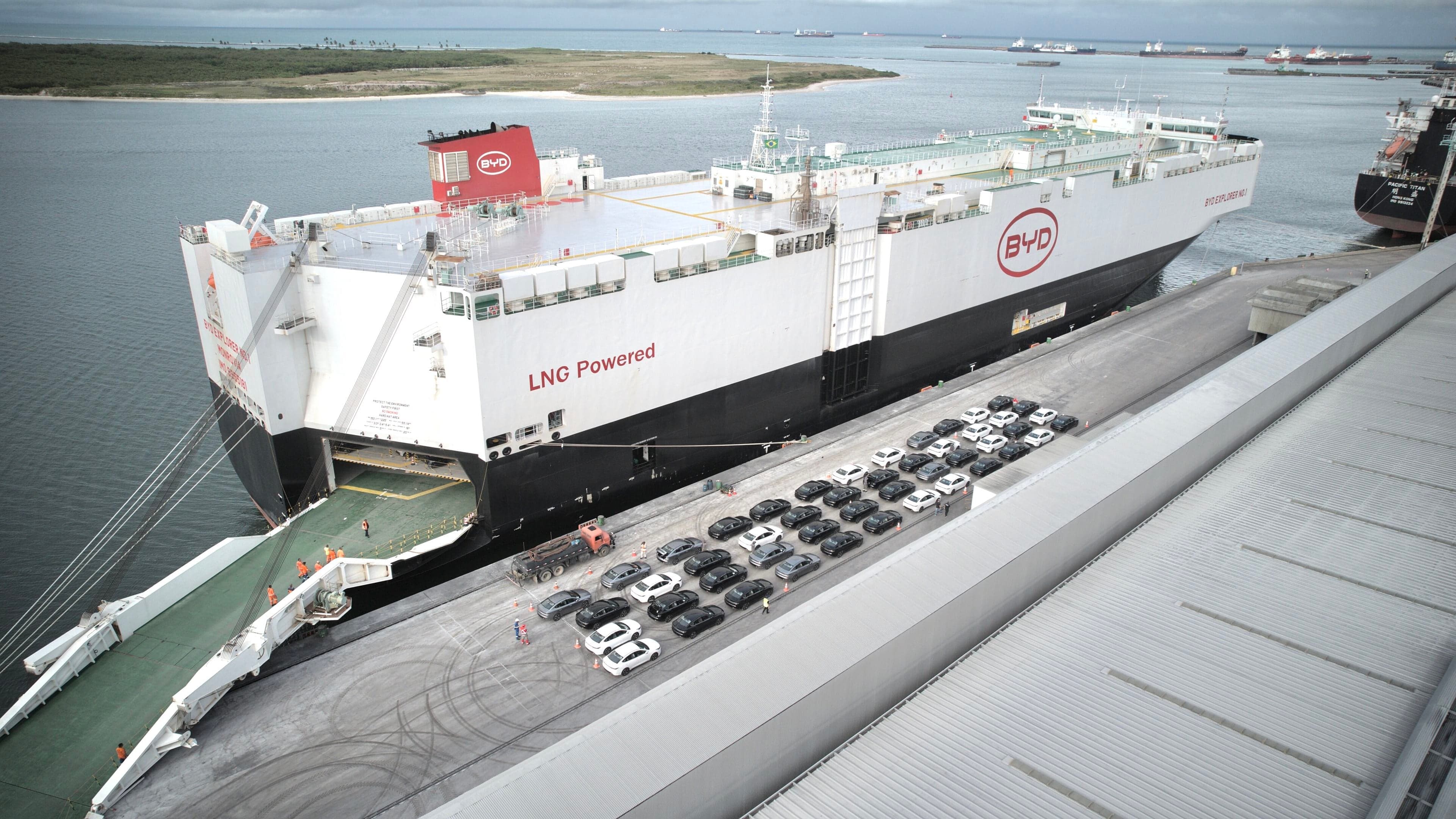
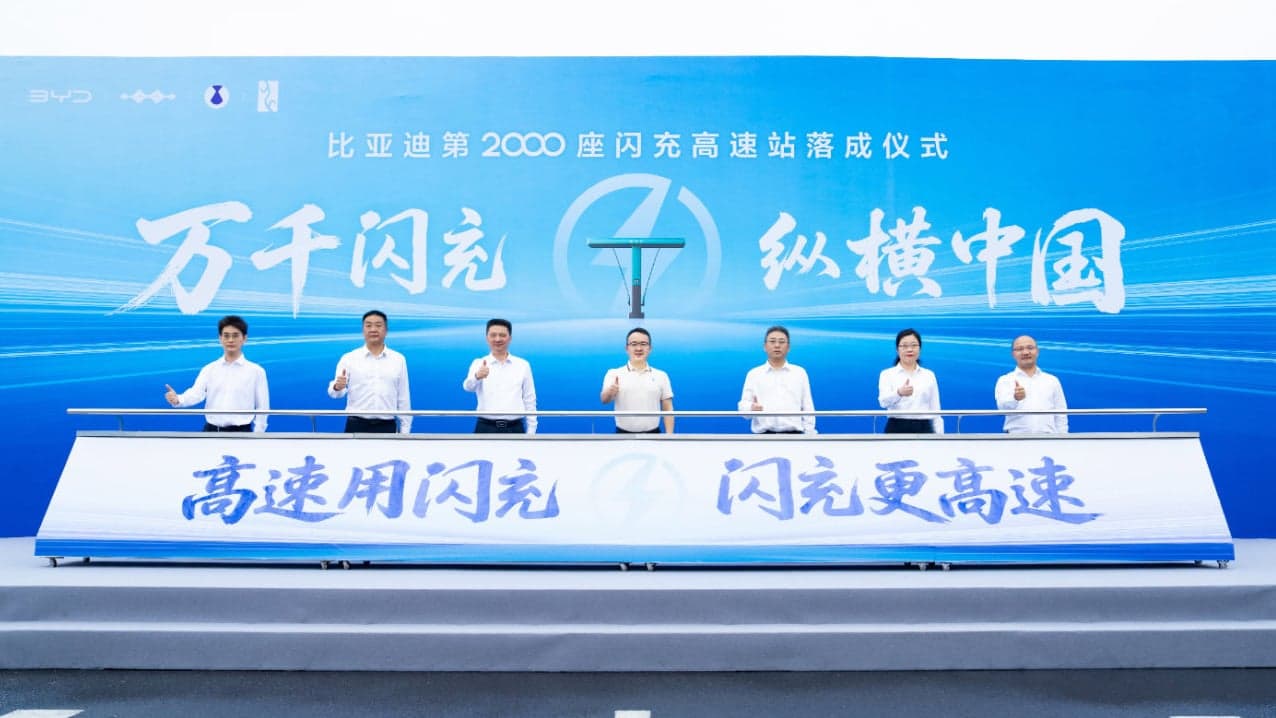
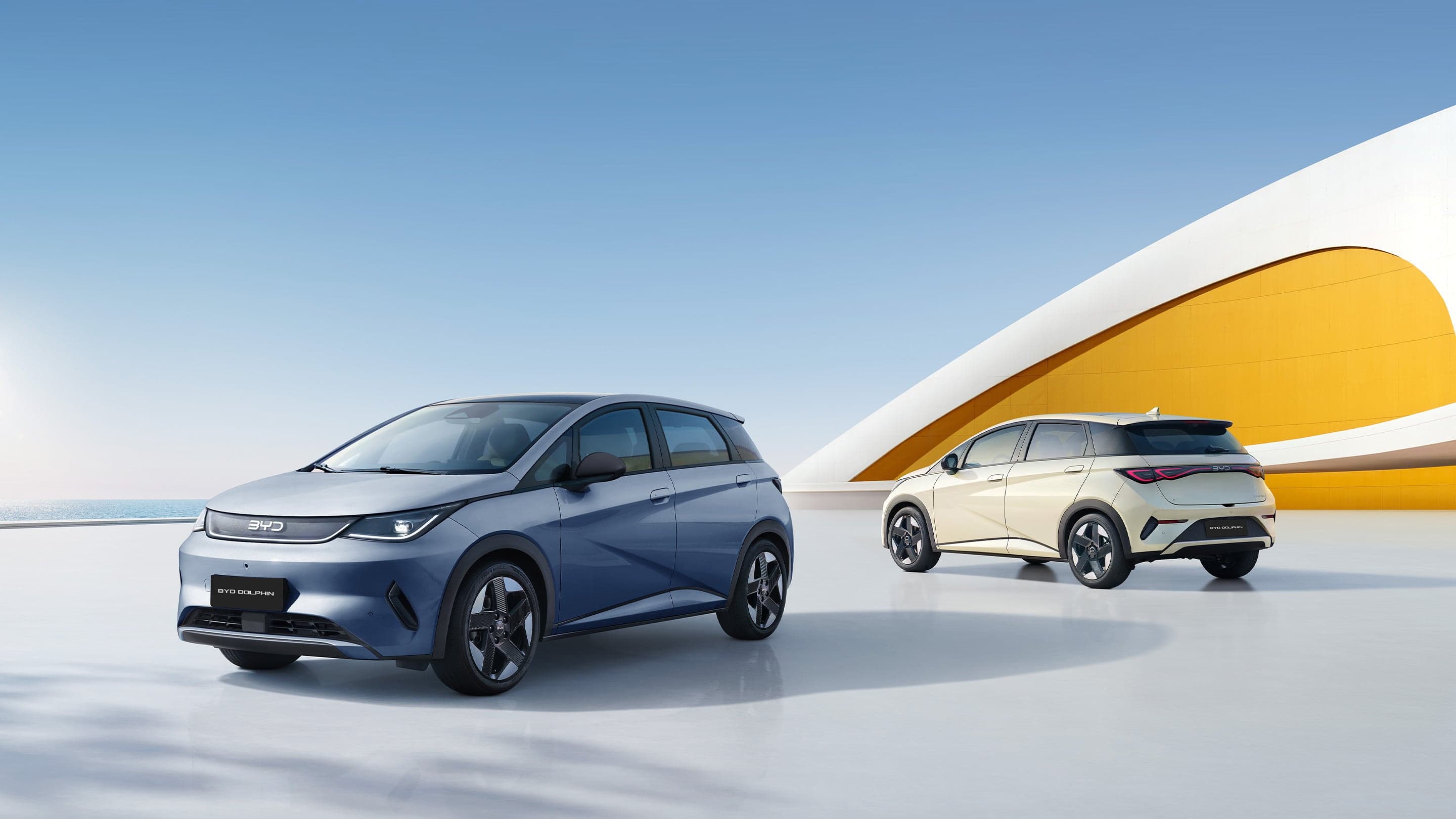
The gap between what automakers ship and what Chinese buyers take home is widest at the top. BYD (HKG: 1211) led September's domestic NEV retail ranking with 246,816 units, while the company itself reported 456,713 NEV passenger car sales for the month and 179,877 overseas sales of passenger cars and pickups. CPCA's September list of models shipping more than 20,000 units was led by BYD's Song at 69,266, with the Dolphin hatchback at 35,141.
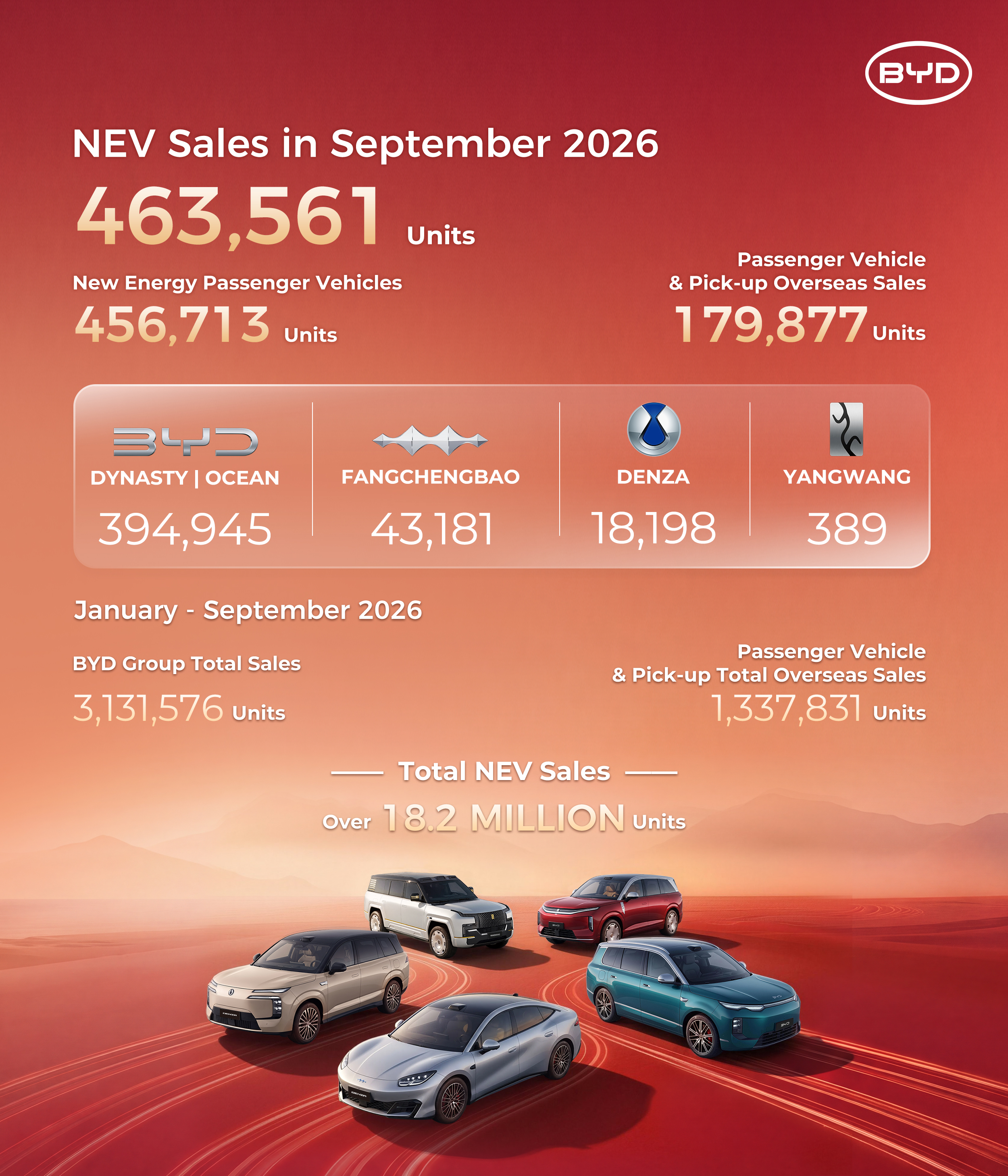
BYD's graphic also puts January to September 2026 group sales at 3,131,576 units, with 1,337,831 sold overseas (BYD)
The weekly data also sharpen the risk of a tenth straight monthly decline. September's final NEV retail count was 1.084 million, down 16.7% year over year and the ninth consecutive monthly drop. October 2025 set a bar of 1.282 million, about 18% above this September's total. With 281,000 sold by October 11, the remaining 20 days need roughly 1.0 million units, about 50,000 a day against roughly 25,500 a day so far.
September's weakness was concentrated among domestic brands. Their NEV retail sales fell 19% year over year, while mainstream joint-venture brands grew 36%, though they held just 4.8% of NEV retail, and luxury brands slipped 8%. CPCA said entry-level A00 electric cars from domestic brands fell sharply under unfavorable subsidy policies, and that emerging EV makers lifted their retail share to 23.6%, up 3.4 points from a year earlier.
Advertisement – Continue scrolling for more
Month-end surges are routine in China's car market. In the final six days of October 2025, passenger car retail averaged 117,687 units a day across all powertrains. Even so, the same 20 days of October 2025 delivered about 959,000 NEVs, so this year's remainder would have to run about 4% ahead of last year after a first 11 days that ran 13% behind. Weekly figures are also provisional: CPCA's first September tally put NEV retail at 1.141 million before the final count lowered it to 1.084 million.
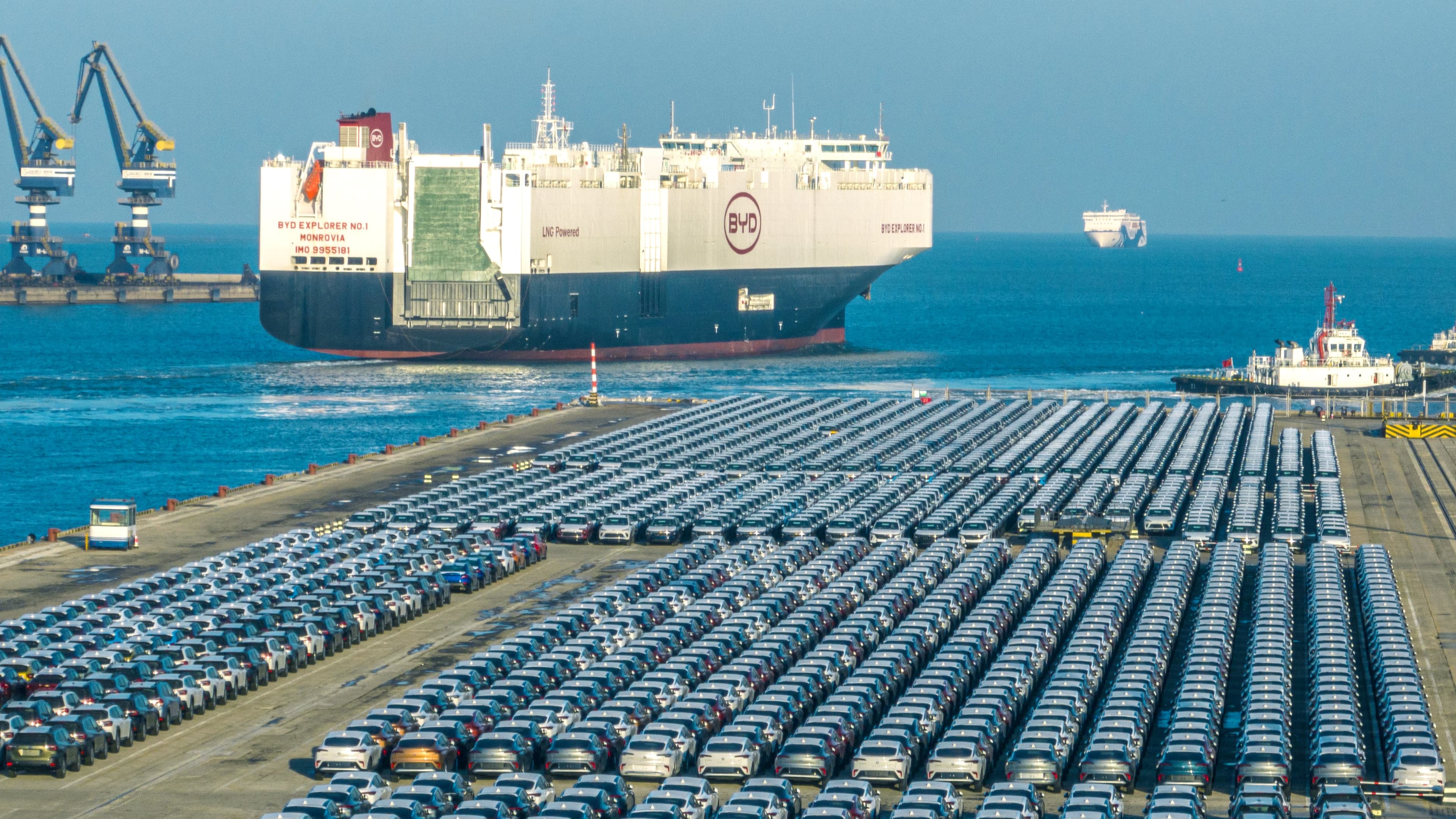
Exports explain why shipments keep outrunning retail. China exported 558,000 NEVs in September, up 163.5% year over year, with BYD at 175,877, Chery (HKG: 9973) at 85,990 and Geely Auto (HKG: 0175) at 72,893. Through October 11, NEV wholesale for the year reached 11.75 million, up 9%, while retail totaled 8.039 million, down 13%. CPCA expects mounting trade pressure in the European Union to gradually slow export growth.
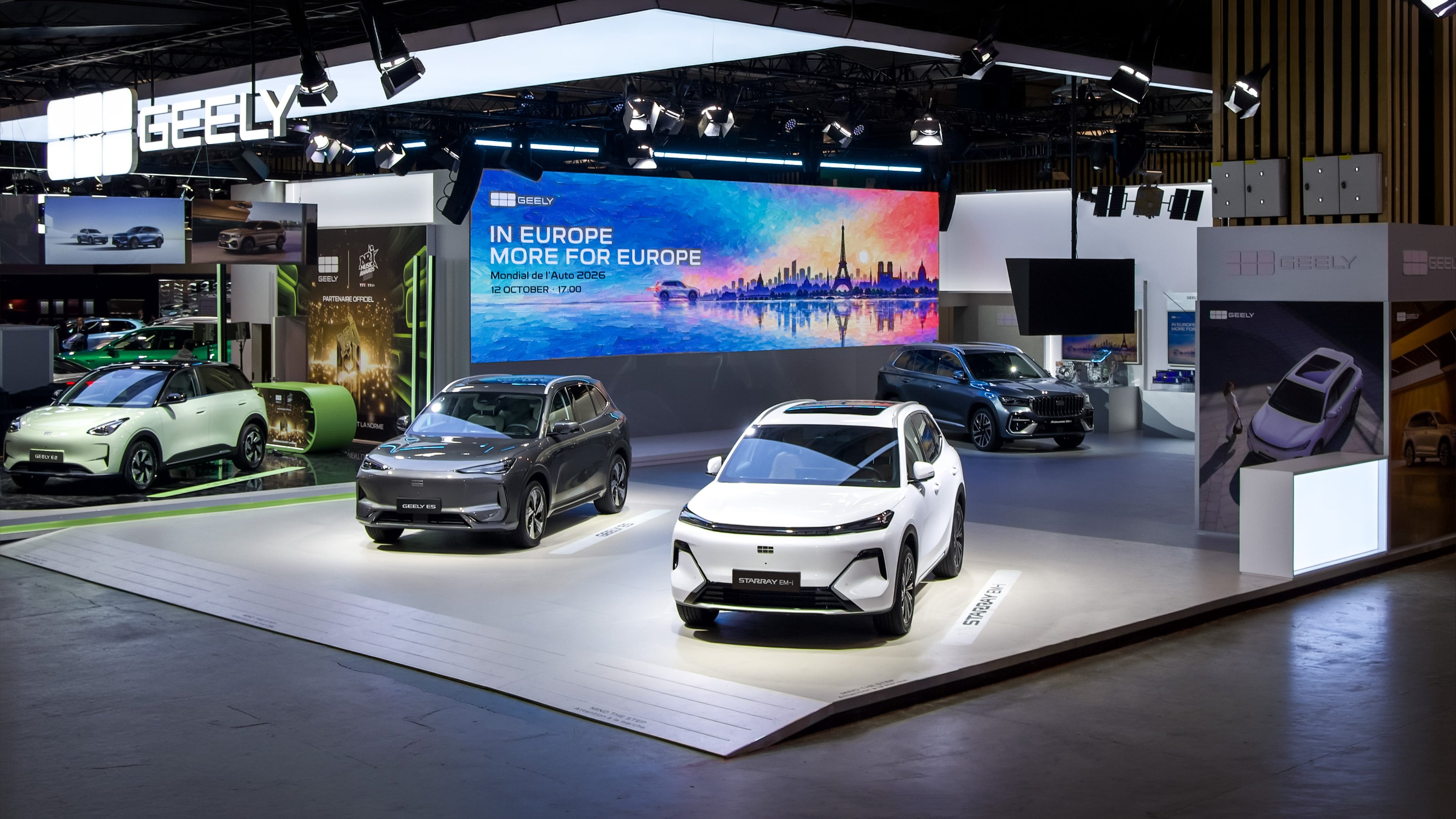
Geely shared this view of its Paris Motor Show stand on October 12, 2026, as the show was about to open (Geely Auto Group)
For the rest of October, CPCA counts 18 working days, the same as a year earlier. It expects trade-in subsidies this year to be weighted toward the later months, a contrast with last October, when subsidies were gradually withdrawn. CPCA also said first-time buying has stalled for now, leaving replacement purchases as the main support for demand.
Advertisement – Continue scrolling for more
CPCA has forecast NEV penetration above 65% for October, which would mean recovering almost 4 points from the first 11 days. A higher share could still come alongside a tenth decline if fuel-car sales keep shrinking faster than NEV sales.
NEVs took 57.2% of retail sales in October 2025, a share this month has already cleared by four points. The open question is whether the last 20 days can turn a higher share into more NEVs sold than a year earlier.
Conversion rate: 1 USD = 6.7249 CNY as of October 14, 2026.
Advertisement – Continue scrolling for more