
NIO targets 10,000 swap stations by 2030, more than double its 4,285 today

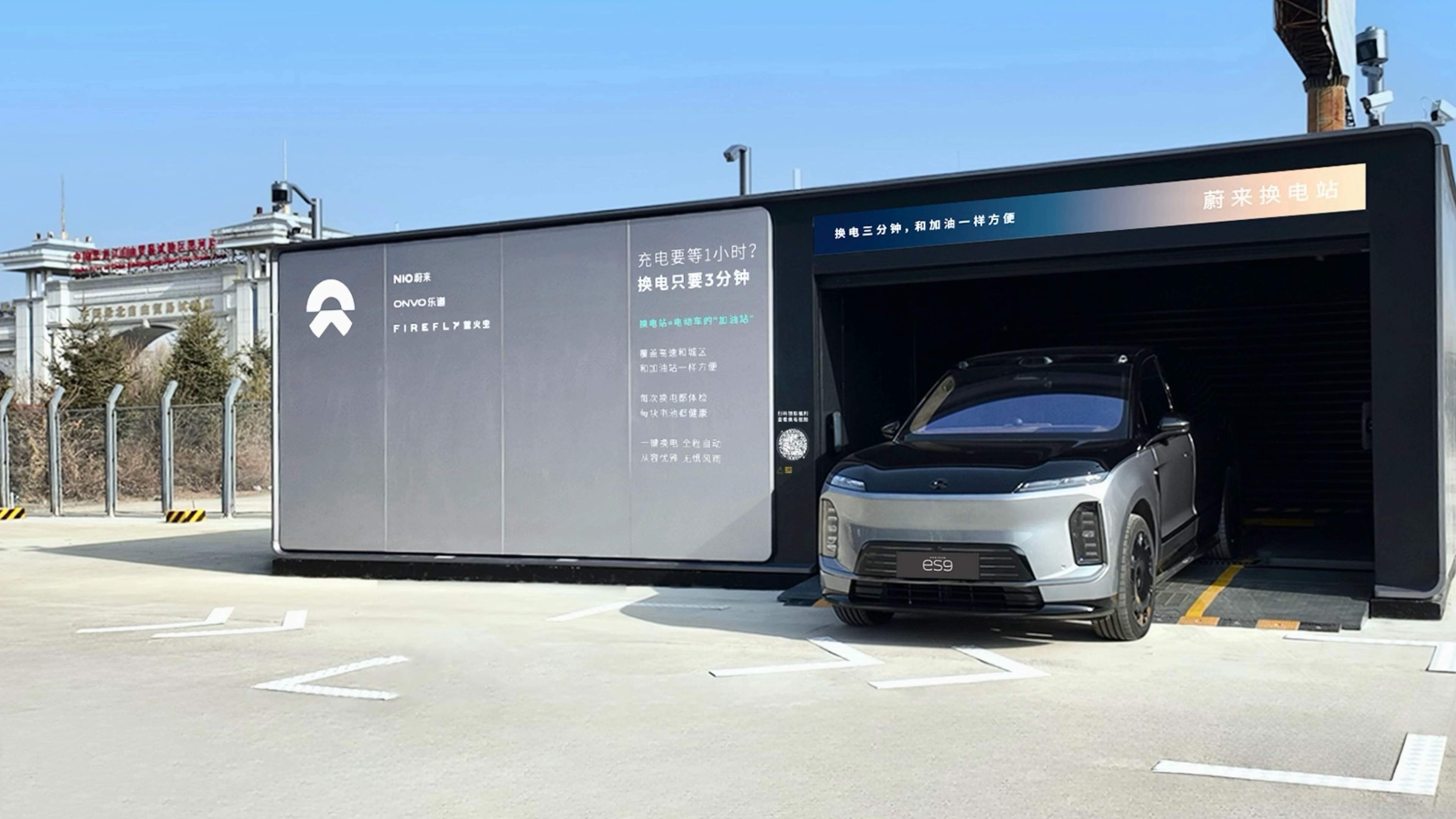
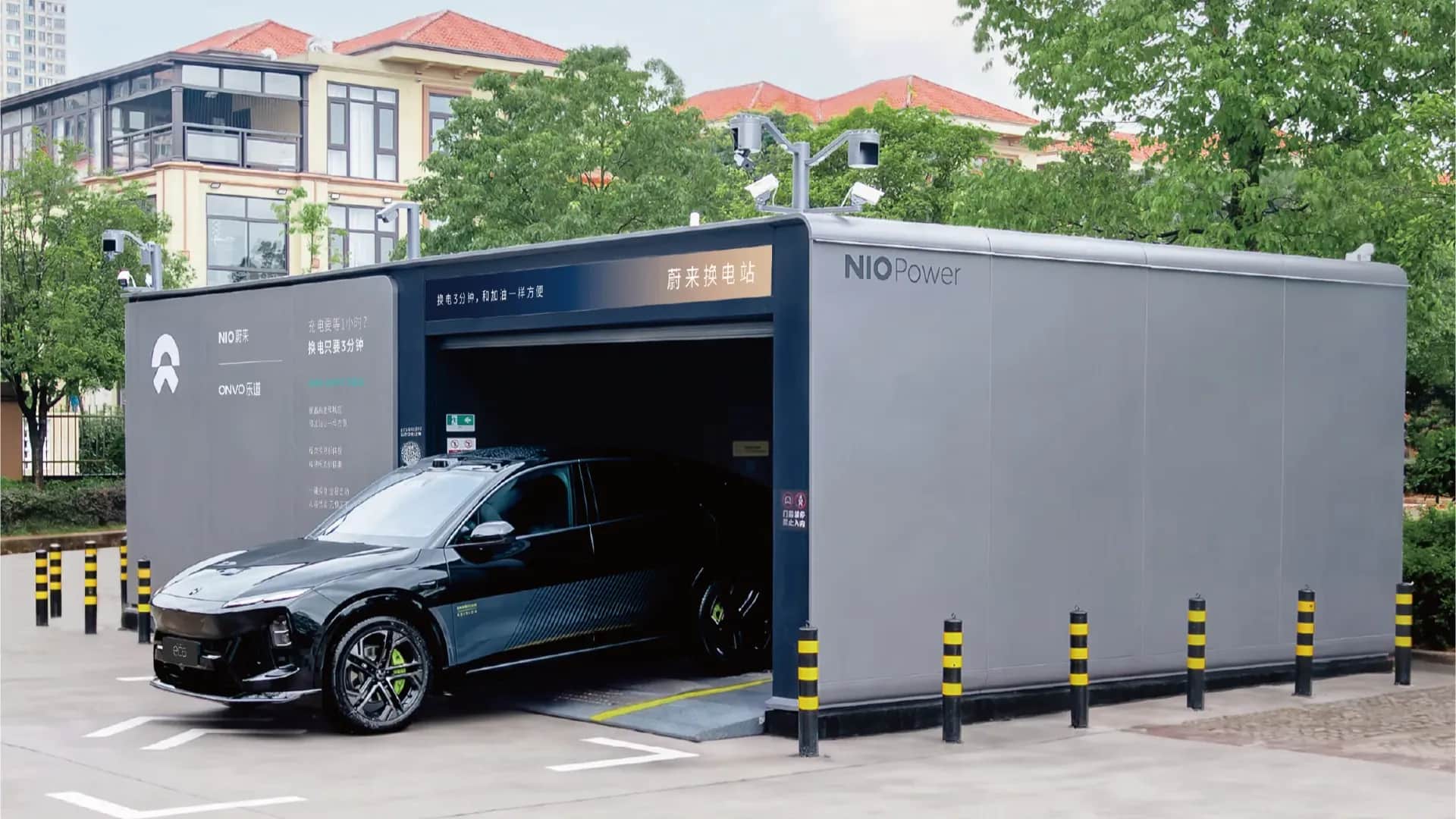
NIO (NYSE: NIO) wants to operate more than 10,000 battery swap stations by 2030, more than double the 4,285 it runs in China today. The target, set out at the company's NIO IN technology day in Guangzhou on November 25, 2026, would need a build pace NIO has not reached so far, and it comes from a company that missed its last big swap station goal.
NIO Power, the company's energy arm, also expects to manage more than 350 billion CNY ($52.2 billion) of battery assets by 2030 and to deliver more than 10 billion kWh of energy a year through charging and battery swapping. The event marked NIO's 12th anniversary and came two days before the Guangzhou auto show opens.

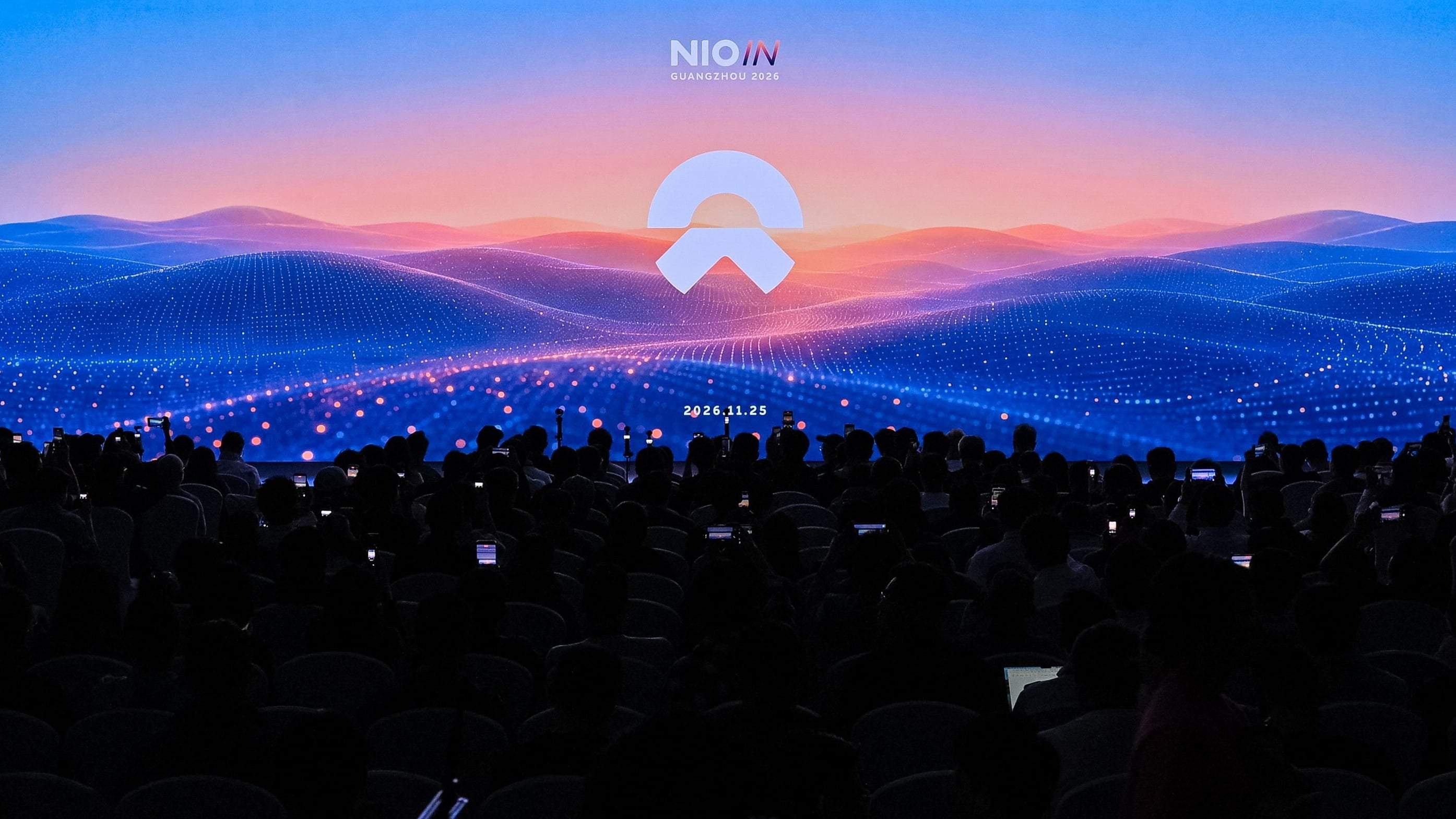
NIO held its third NIO IN technology day in Guangzhou on November 25, 2026 (NIO)
From 4,285 to 10,000
As of November 25, NIO had 4,285 battery swap stations in China, along with 5,611 charging stations and 32,869 charging piles, and had completed more than 130 million battery swaps. On October 11 it had 4,176 swap stations, of which 1,073 were on highways.
That is 109 new swap stations in 45 days, or a pace of about 880 a year, by our calculation. Reaching 10,000 means adding 5,715 more. Spread evenly to the end of 2030, that is roughly 1,400 a year. If NIO means the start of 2030, it is closer to 1,840 a year, by our calculation.
NIO Power also projects more than 200 million charging and swapping services a year by 2030. The targets were presented by Stanley Qu, NIO's chief financial officer and head of NIO Power. NIO has not said how much of the network it plans to build outside China.
GCEV Weekly · Every Tuesday
China's EV industry in five minutes.
Launches, sales, batteries and policy — the week's stories that matter, with the context the headlines leave out.
Sent by GigaCharts Inc. Questions? Write to globalchinaev@gmail.com. Unsubscribe anytime. See our privacy policy.
The battery figure matters because the swap network is tied to NIO's Battery as a Service model, under which buyers can purchase a car without its pack and rent the battery instead. That means NIO Power and its partners own a large fleet of packs, both in customers' cars and sitting charged in stations. NIO has not said how much of the 350 billion CNY it expects to hold on its own books.
The last target slipped
NIO has set a big swap target before. At its first NIO Power Day in July 2021, it committed to more than 4,000 swap stations worldwide by the end of 2025, with around 1,000 of them outside China. At the time it had 301 swap stations, all in China.
It missed that date. NIO had 3,729 swap stations in China in February 2026, and only passed 4,000 in August. That left the network well short of the roughly 1,000 overseas stations the 2021 plan called for.
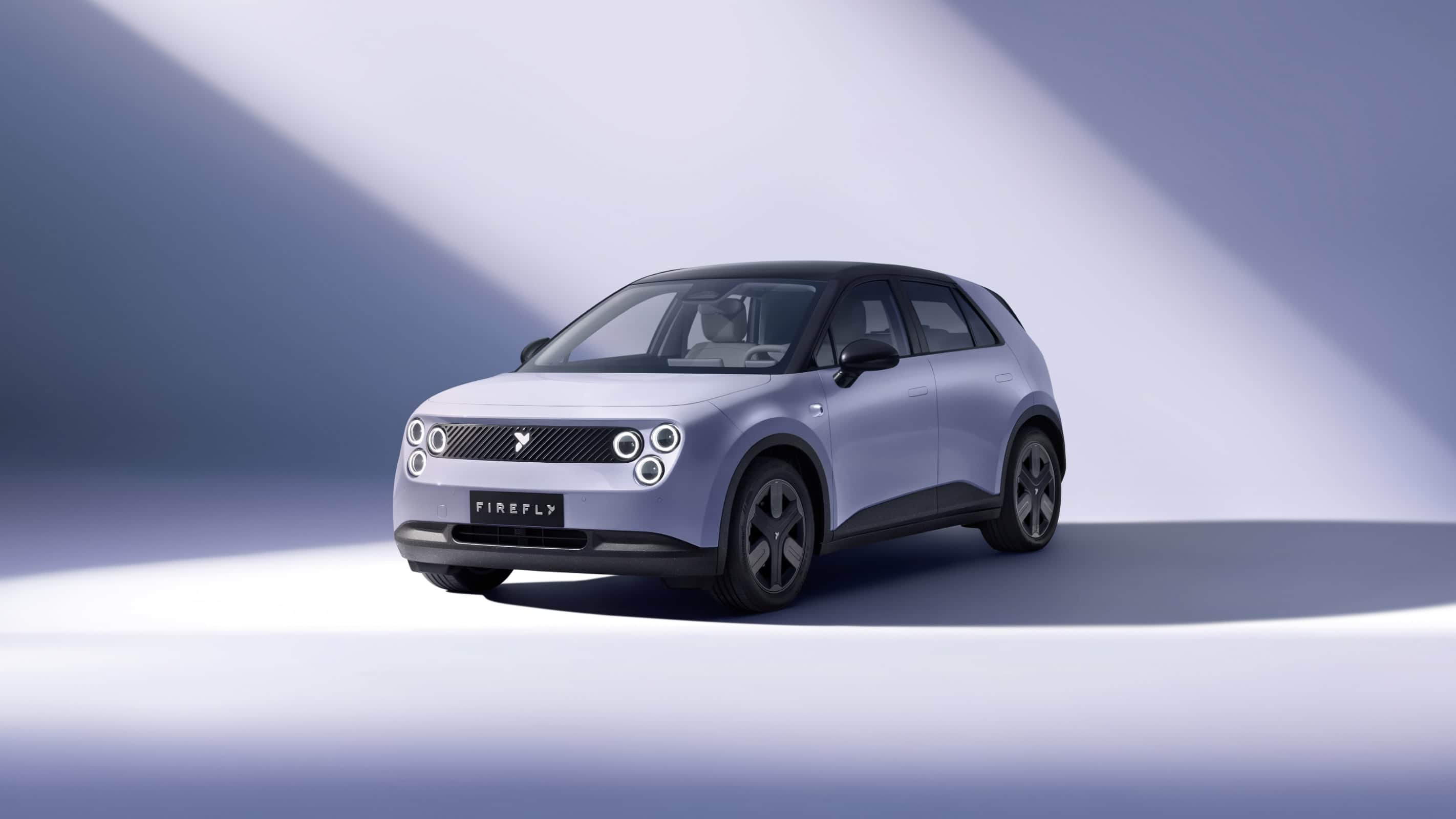
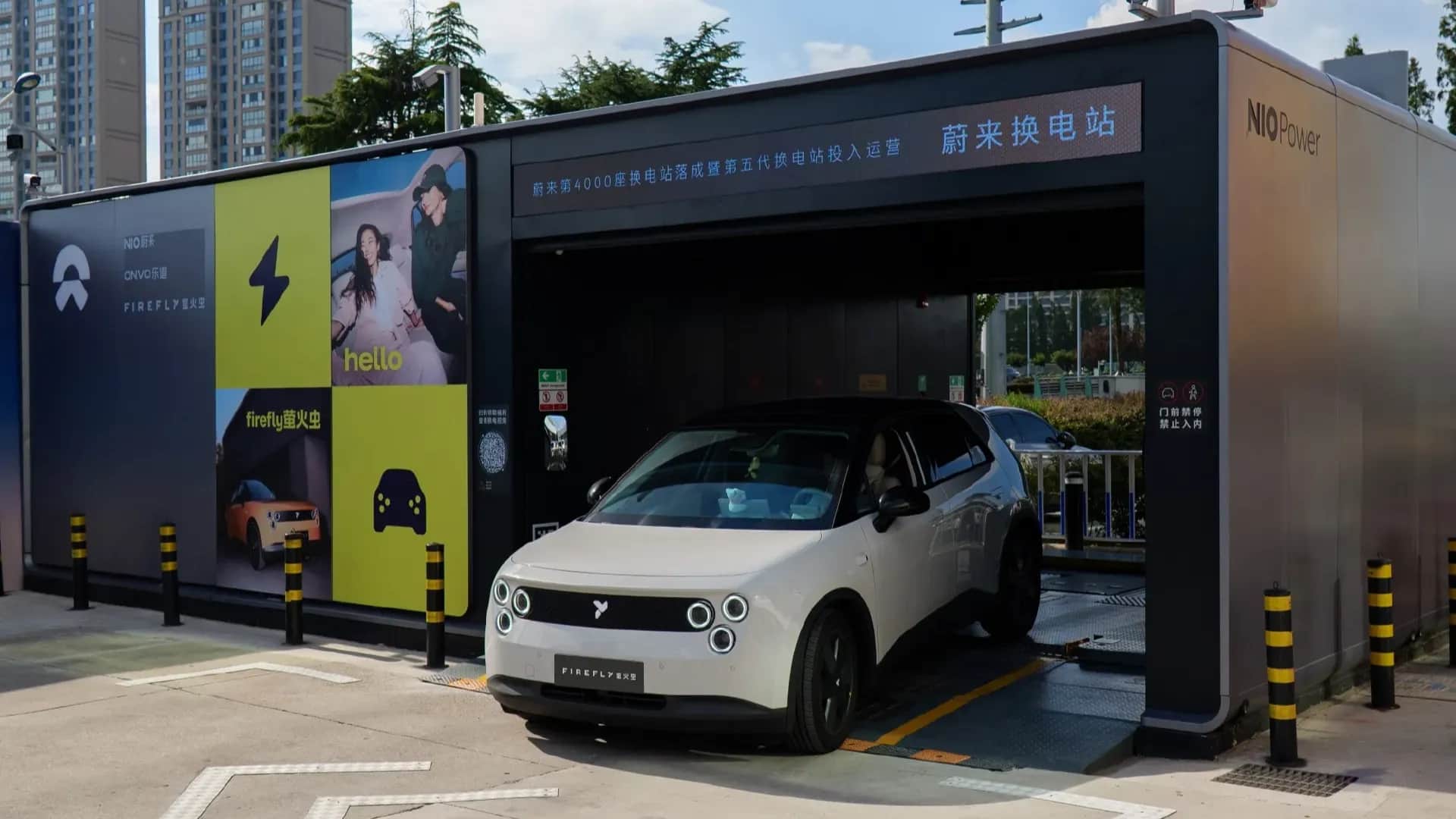
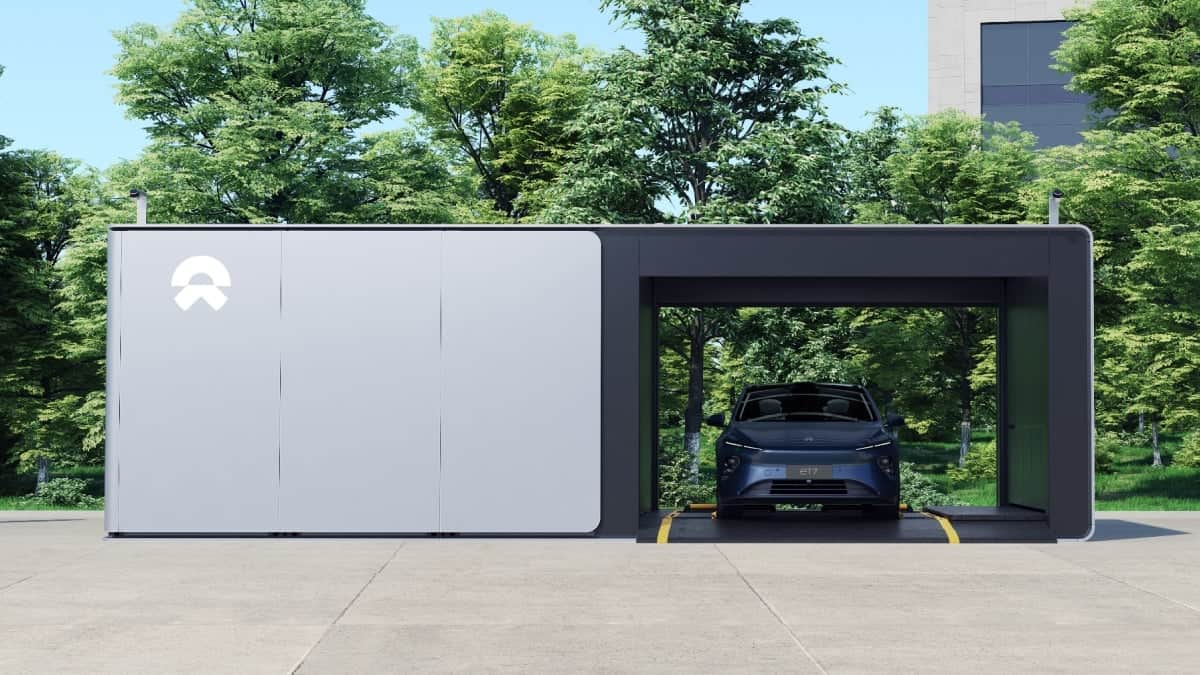
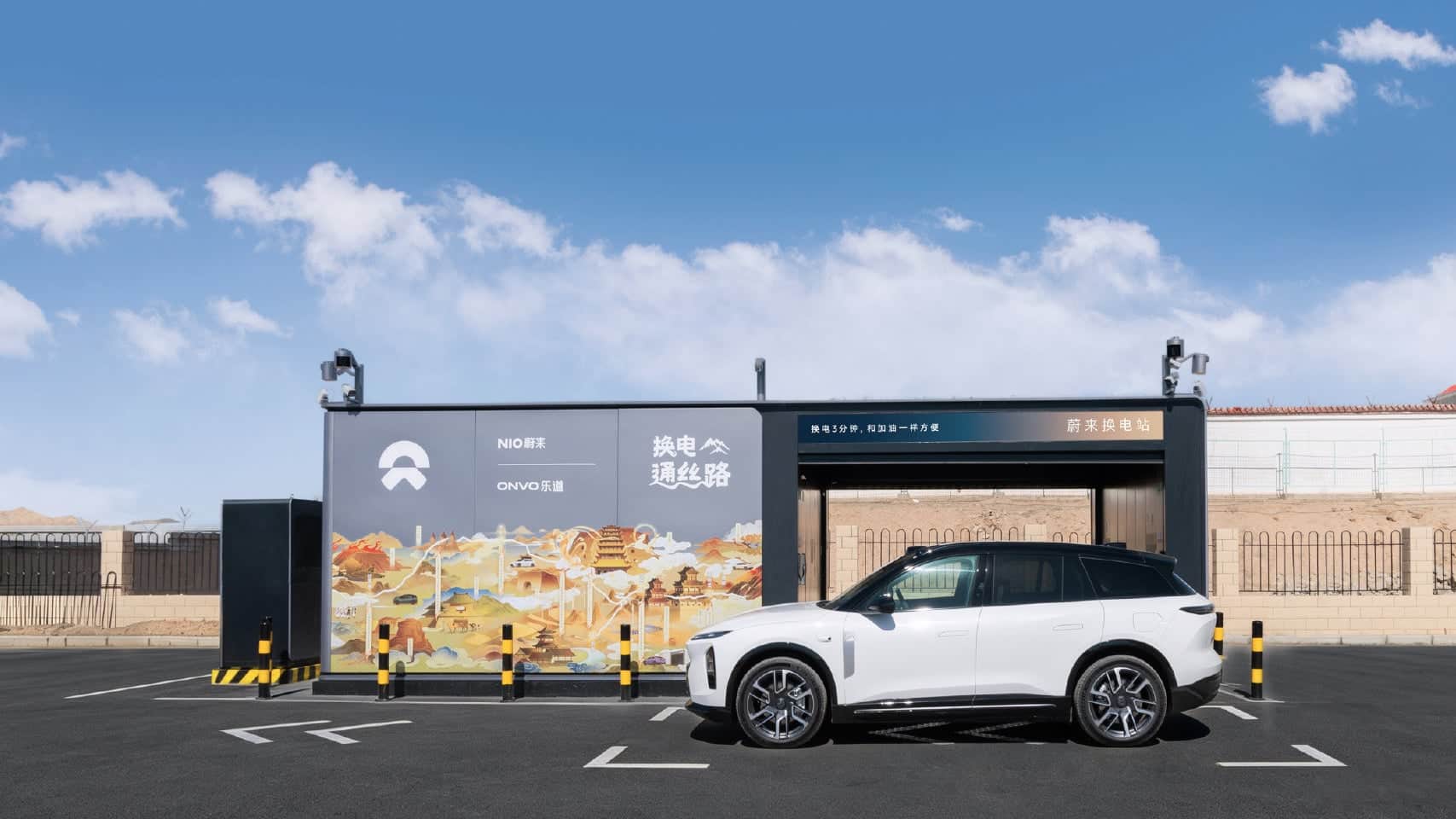
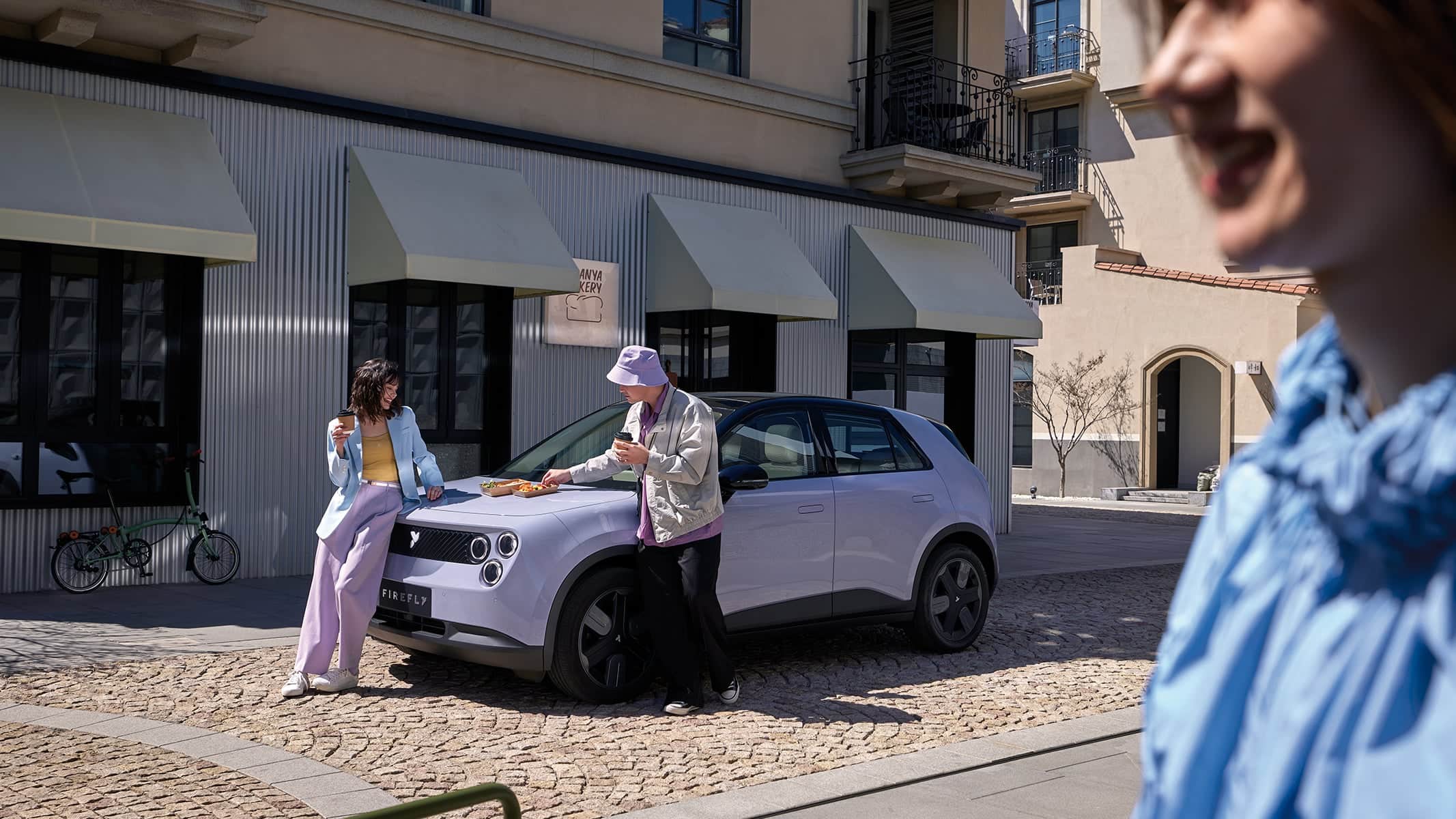
The economics have changed since then. NIO has been moving more of the capital cost onto partners, who own stations while NIO supplies the technology and runs them. NIO Power says it has co-built more than 900 swap stations with partners. Its fifth-generation stations, which first opened in August, are the first that can serve all three of its brands, including the compact firefly.
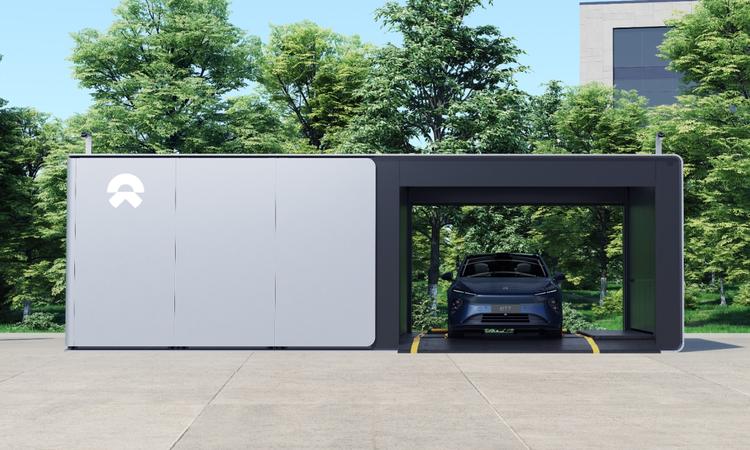
NIO is moving more of the cost of new swap stations onto partners (Brand rendering)
AI agents and a 10 point margin goal
Most of the event was about artificial intelligence. Founder and chief executive William Li said NIO has deployed more than 7,500 AI agents across research, manufacturing, logistics and user services, with more than 2.9 million executions so far. He put the global auto industry's value at about $7 trillion to $9 trillion, and said AI could add more than $1.2 trillion of value if it lifted that by 15%.
Li also told reporters that NIO could raise its gross profit margin by 10 percentage points over the long run as it deploys AI across its business units. He did not give a timeline. NIO Power is one of the first units run this way, using AI agents to manage battery value, station operations and energy efficiency.
What drivers get, and when
NIO launched NIO WorldModel 3.0, the third version of its driver assistance model. It says the system needs 40% fewer driver interventions than the previous version, cuts overall vehicle control latency by 54% and chassis control latency by 78%, and trains five times more efficiently. NIO did not say what intervention rate it started from.
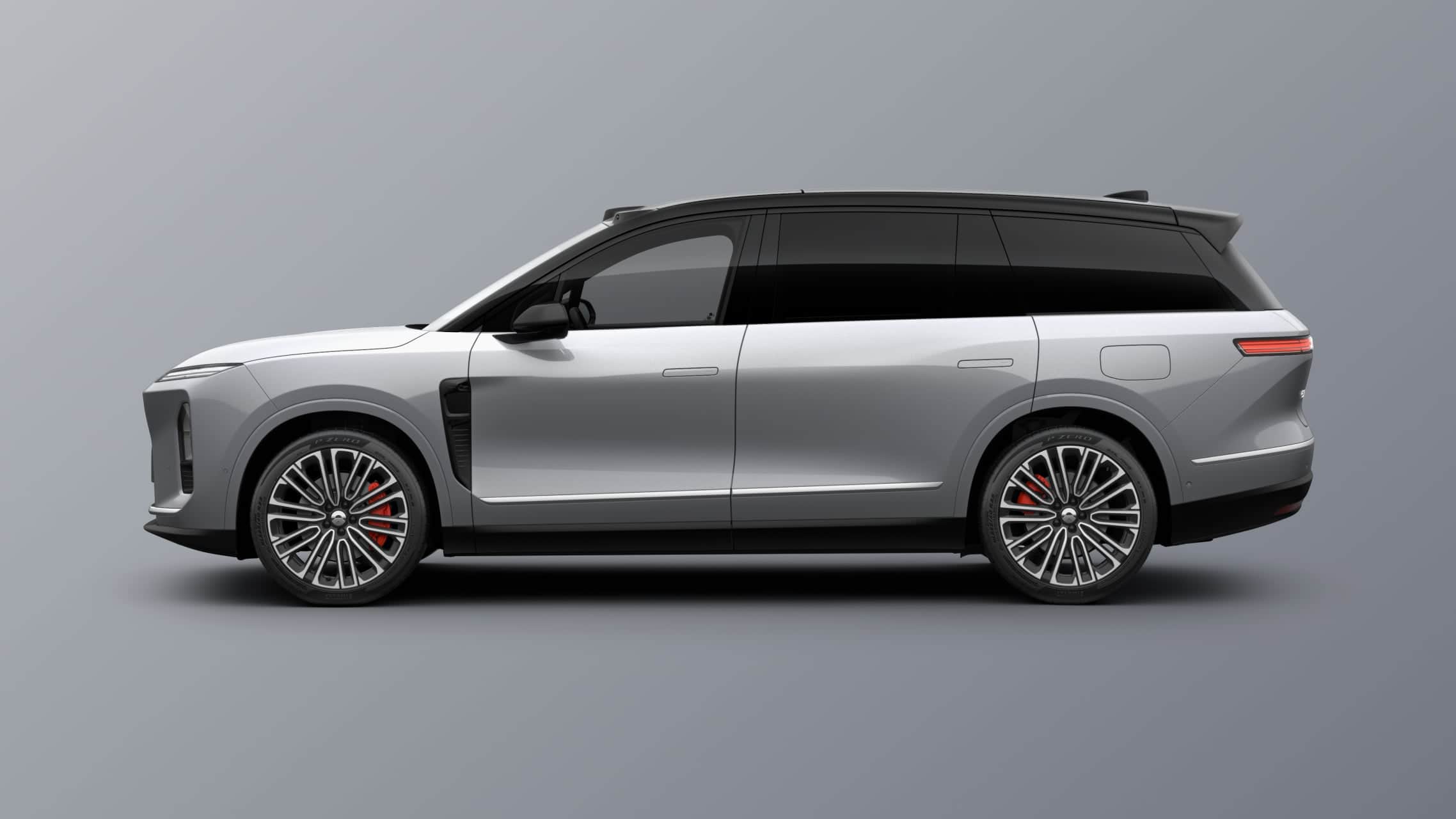
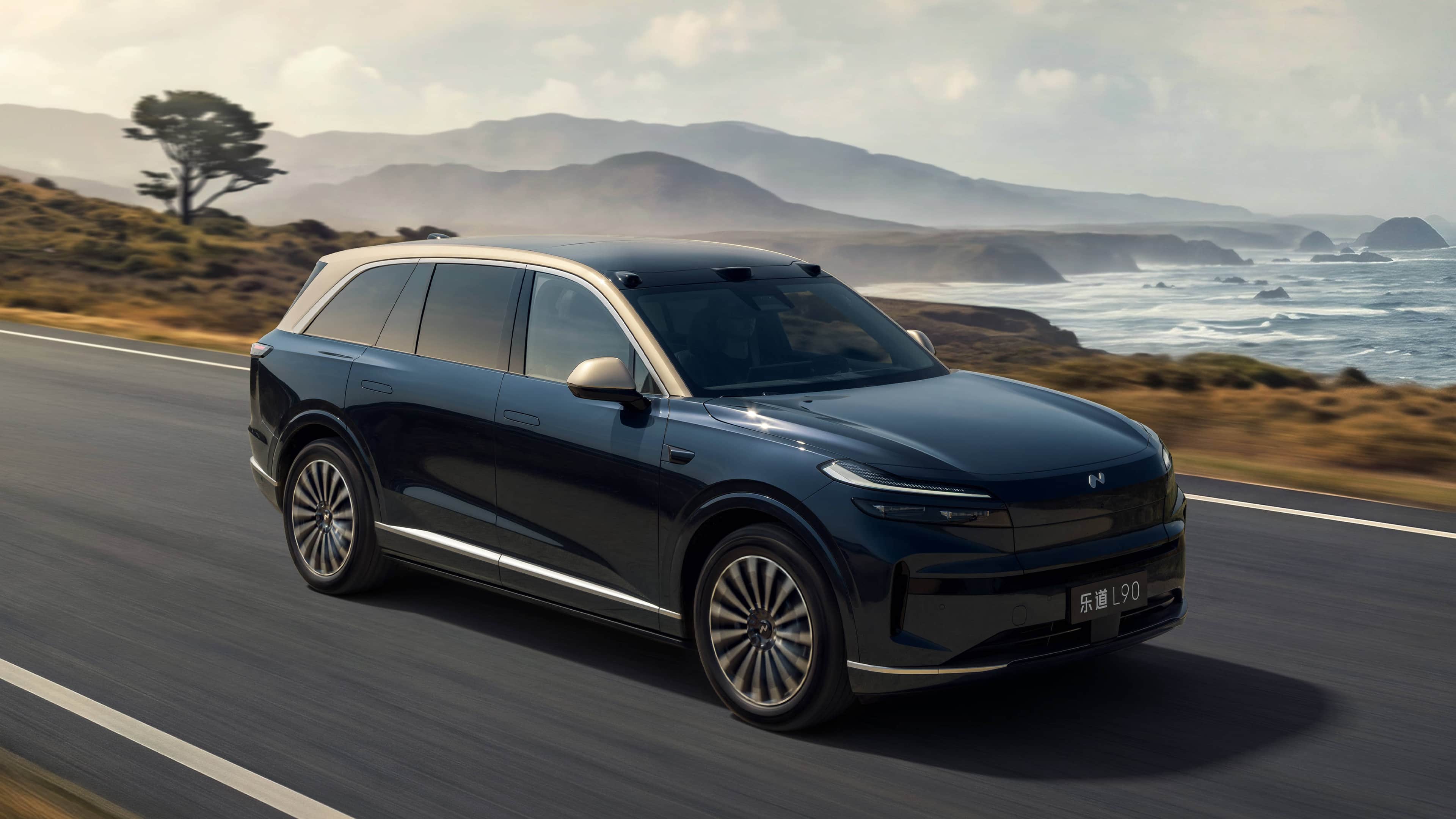
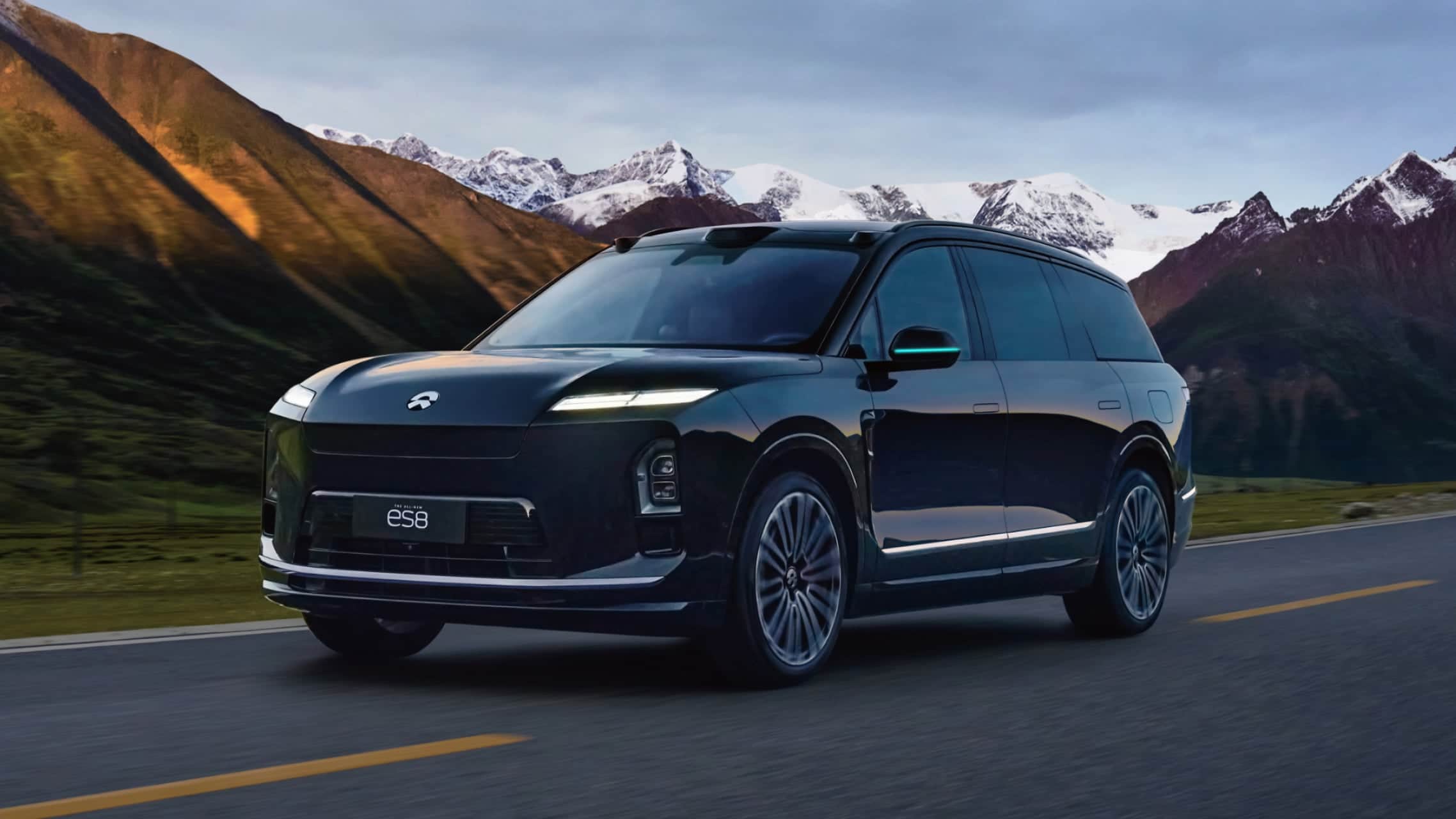
NIO says NWM 3.0 will roll out from December to cars on the Banyan, Cedar, Cedar S and Coconut+ systems, once it clears regulatory filing. Banyan, Cedar and Cedar S run NIO-brand cars, while Coconut+ is used by ONVO.
The company also unveiled NOMI Intelligence 4.0, a rebuild of its in-car assistant around an AI agent framework that can plan and carry out tasks on its own. The first release, Cedar 2.0.0, will be filed in early December, with rollout after clearance. Cars on Cedar S and Banyan are expected to get it in the second quarter of 2027, followed later by ONVO models.
Deliveries cooled in October
The targets arrive as NIO's volume softens. The company delivered 34,246 vehicles in October: 18,125 NIO-brand cars, 8,383 ONVOs and 7,738 fireflys. That was down 8.45% from September and 15.23% from a year earlier, the company's first year on year decline since February 2024.
The NIO brand fell 14.98% from September, while ONVO slipped 4.34%. Firefly rose 5.61% to a second straight monthly record. Over the first ten months, NIO delivered 334,547 vehicles, up 38.5% from a year earlier.
NIO will report third-quarter results on December 1 and hold its NIO Day event in Wuhan on December 19, where it plans to unveil the all-new ET5 Touring.
Conversion rate: 1 USD = 6.7088 CNY, the PBOC central parity for November 25, 2026.
GCEV Weekly · Every Tuesday
China's EV industry in five minutes.
Launches, sales, batteries and policy — the week's stories that matter, with the context the headlines leave out.
Sent by GigaCharts Inc. Questions? Write to globalchinaev@gmail.com. Unsubscribe anytime. See our privacy policy.