Geely buys 30% of NIO Power mostly with its ride-hailing swap network, not cash
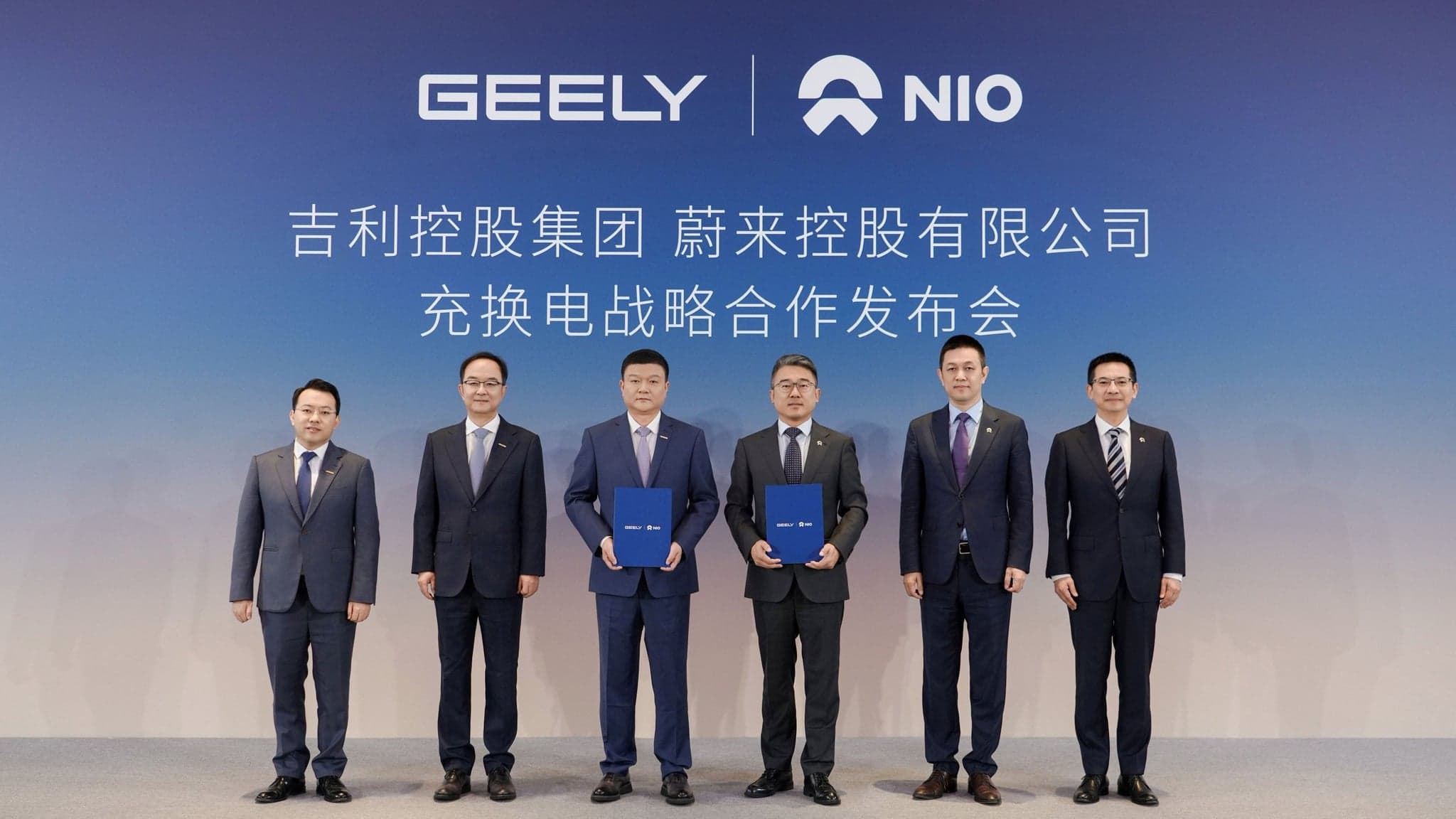
When Geely Holding agreed on September 28, 2026 to take 30% of NIO Power, the battery swap and charging unit of NIO (NYSE: NIO), the headline number was a post-money valuation of about 16 billion CNY (c. $2.38 billion). The more telling figure is how little of Geely's payment is cash. At that valuation, Geely's stake is worth roughly 4.8 billion CNY (c. $715 million), and only 640 million CNY (c. $95 million) of it arrives as money. The other 87% is E-Energy, Geely's ride-hailing and taxi battery swap operator, which the deal implicitly values at about 4.16 billion CNY (c. $620 million).
That split makes the deal look less like a capital raise and more like a purchase of traffic. A swap station carries most of its cost the day it opens: land, equipment, spare batteries and maintenance. Whether it makes money depends almost entirely on how many cars pull in each day, and Geely is paying in the one currency NIO's network is short of: vehicles that need energy several times a day.
Advertisement – Continue scrolling for more
Under the definitive agreements, NIO China keeps 63.6% of NIO Power, Geely's subsidiary holds 30% and the Wuhan Guangchuang venture fund holds 6.4%. Geely's stake is tied to operating milestones and can be cut to no less than 20% if the business underperforms, while a two-year option lets Geely invest another 640 million CNY and lift its holding to 34%. In a mirror transaction, NIO China will take 10% of Zhejiang Haohan Energy, Geely's charging arm, which will use the subscription money to buy some of NIO's charging assets. Both transactions still need regulatory approval.
NIO executives have said a fourth-generation station roughly breaks even at 40 to 50 swaps a day, a level reached so far only by some stations in core regions such as the Yangtze River Delta. NIO's own car sales are not growing fast enough to lift the whole network to that line. The group delivered 35,836 vehicles in August, essentially flat against 35,934 in July, while its swap network had grown to 4,126 stations.
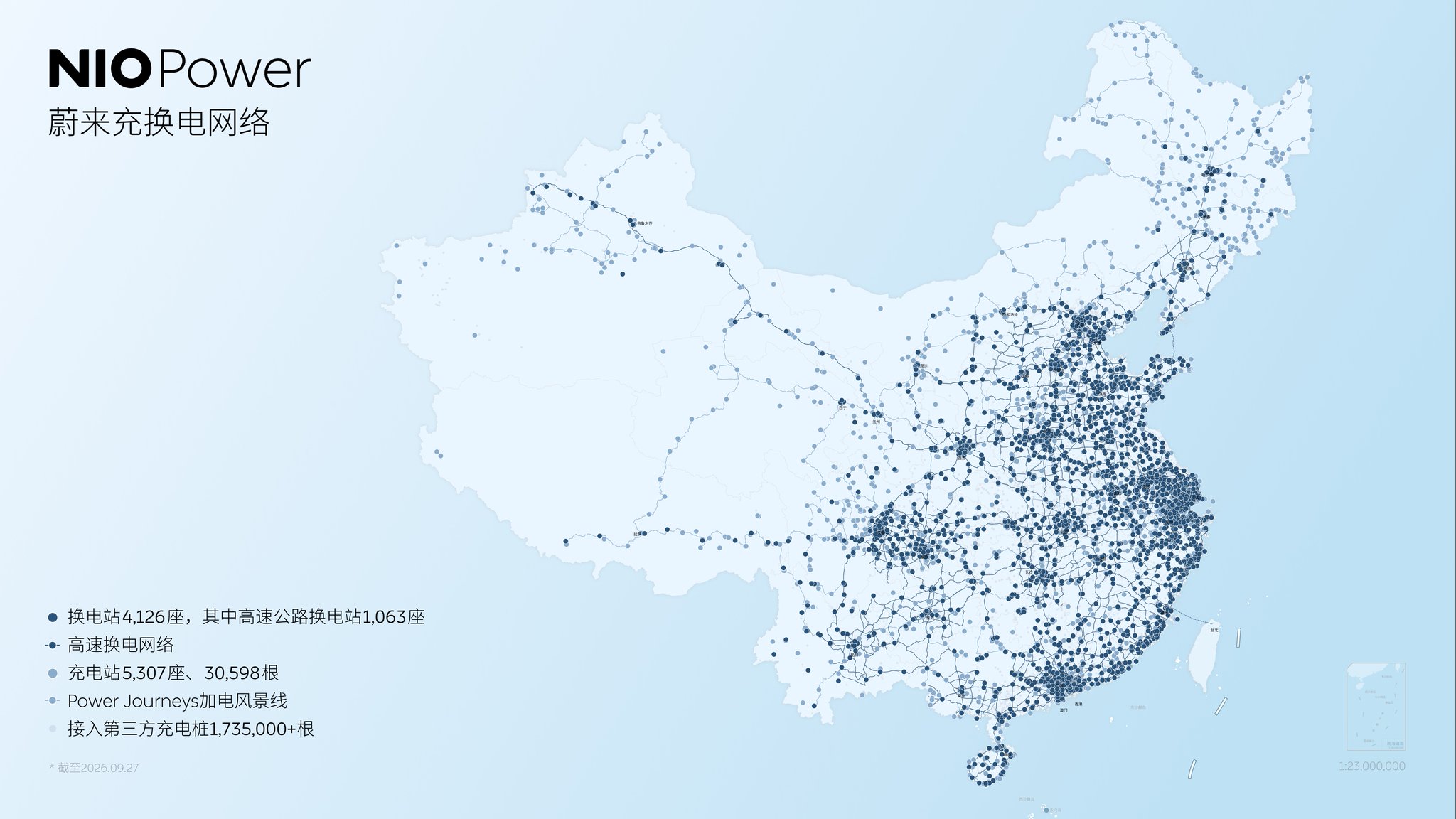
NIO Power counted 1,063 highway swap stations within its 4,126-station network as of September 27, 2026 (NIO)
Fleet vehicles behave very differently. E-Energy had built 446 swap stations by the end of 2025 and completed 38.6 million swaps. As early as 2023, its 300-plus stations were handling more than 20,000 swaps a day, or 60 to 70 per station, already above NIO's break-even range. Geely CEO An Conghui said the whole Cao Cao Mobility (HKG: 2643) fleet, currently more than 42,000 custom vehicles, will switch to NIO Power swaps, and that Geely's robotaxis, with 140 in test operation and a target of 100,000 by 2030, will also be swap-based.
Advertisement – Continue scrolling for more
NIO President Qin Lihong called commercial vehicles a scenario that lets the network scale especially fast. NIO estimates that a ride-hailing car can save up to 90 minutes a day by swapping instead of charging, raising driver revenue by 15% to 20%. Driverless cars sharpen the argument, since a robotaxi has nobody on board to plug in a cable.
The catch is that none of this traffic reaches NIO's existing stations yet. E-Energy's fleet stations and battery packs use different specifications from NIO's, and NIO founder William Li acknowledged that NIO Power will run separate consumer and fleet networks after closing. The near-term savings therefore sit behind the stations, in shared R&D, supply chain, manufacturing and maintenance, rather than in more swaps per NIO bay. A unified consumer swap standard is promised, but Geely's consumer swap models are still described as a preliminary plan, with no named model or launch date.
Advertisement – Continue scrolling for more
The valuation still marks a clear step up. Wuhan Guangchuang agreed in May 2024 to pay 1 billion CNY for 10% of NIO Power, a post-money valuation of about 10 billion CNY (c. $1.49 billion), so the unit's price has risen 60% in a little over two years. Public markets were less excited. NIO's US shares were up 0.42% on September 28 after paring an intraday gain of 2.8%, while Geely Automobile (HKG: 0175) rose 3.65% in Hong Kong.
The bigger question is capital. The partners now target 10,000 swap stations by 2030, with network demand expected to exceed 10 billion kWh a year, or roughly 2,700 kWh per station per day. Reaching that count means building nearly 5,900 more stations in about four years. At about 1.4 million CNY (c. $208,600) per fifth-generation station, the equipment alone would cost more than 8 billion CNY (c. $1.19 billion), over 12 times Geely's cash injection.
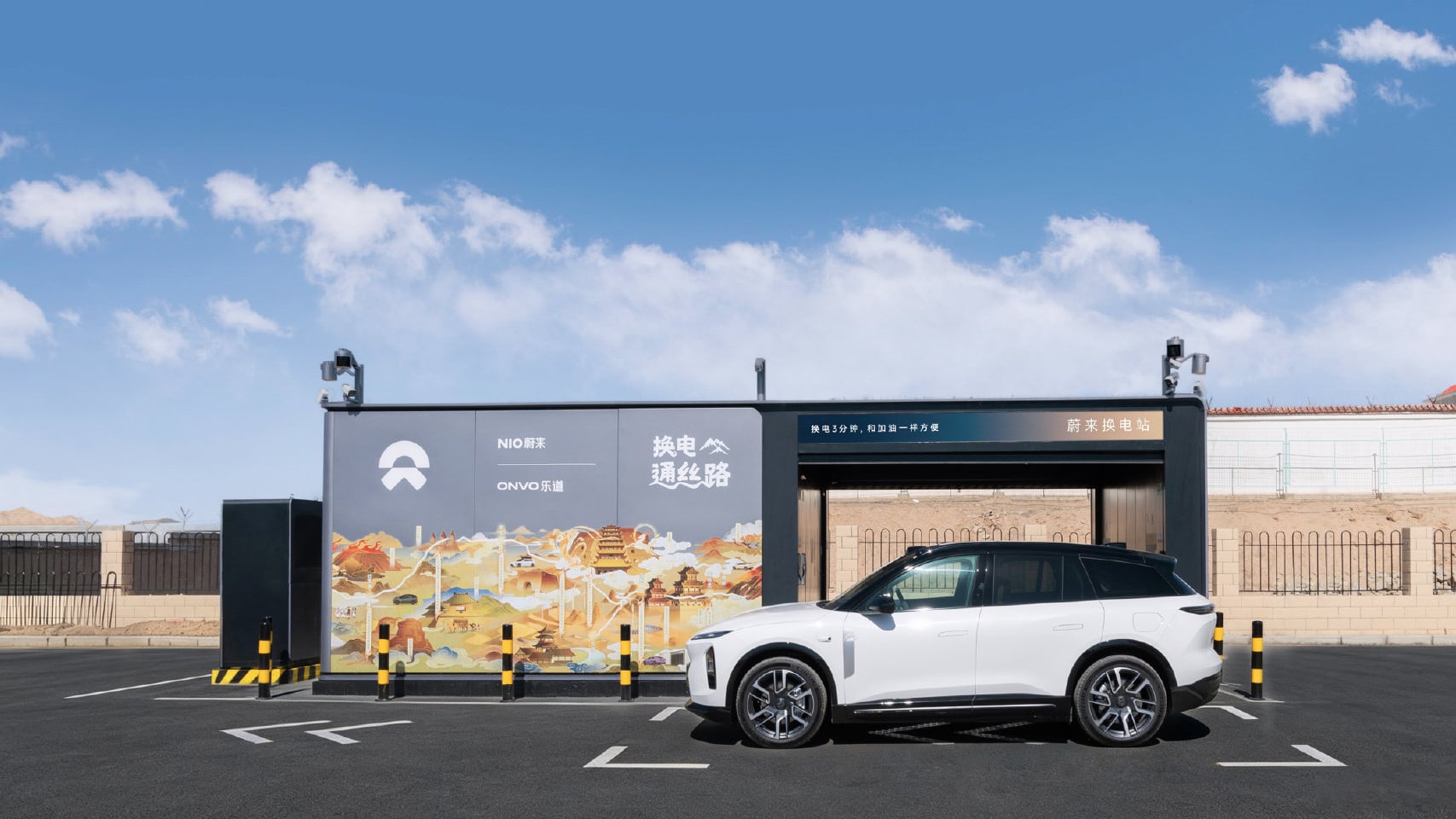
A NIO Power swap station at Xingxingxia on the Xinjiang-Gansu border, part of the network NIO plans to grow to 10,000 sites by 2030 (NIO)
That gap explains the structure more than any headline valuation. Geely's option can be exercised before NIO Power's next funding round, wording that assumes the unit will keep raising money as a standalone company. An independent valuation and an automaker shareholder give NIO Power a way to fund stations without routing every build through NIO's own balance sheet.
Advertisement – Continue scrolling for more
The competitive clock is set by CATL (SZSE: 300750). Its Choco-Swap network aims for more than 3,000 stations in about 216 cities by the end of 2026, although only four models currently carry its swappable pack. A March 2025 plan for CATL to invest up to 2.5 billion CNY (c. $372 million) in NIO Power is nowhere in the new cap table, which lists only NIO China, Geely and Wuhan Guangchuang. Li said Chinese automakers, having tested competing technical routes separately, now need to converge and cut duplicated investment.
On charging, the flow runs the other way. NIO operates more than 5,300 charging stations, roughly double Geely's current 2,500-plus, yet it is selling part of that estate into Haohan, which targets 22,000 stations by the end of 2027. NIO appears to be concentrating its infrastructure spending on swapping and letting Geely own the plug.
Whether the tie-up becomes China's swap standard now depends on a car that does not exist yet: the first Geely consumer model able to pull into a NIO station, and whether it arrives before CATL signs up the rest of the market.
Conversion rate: 1 USD = 6.7115 CNY as of September 28, 2026.
Advertisement – Continue scrolling for more