NIO's swap records still leave stations at 41 swaps a day, below breakeven
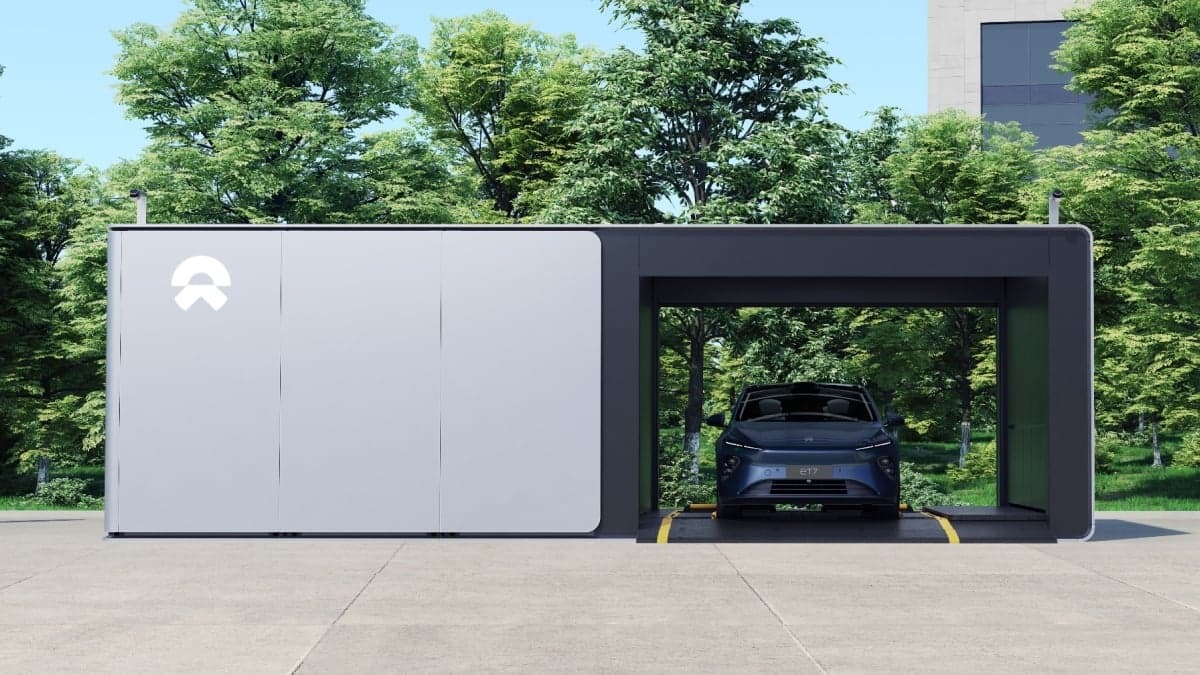
NIO (NYSE: NIO) set two daily battery swap records over China's National Day Golden Week, but the per-station numbers tell a quieter story. Its 4,168 swap stations completed 1,192,221 swaps from October 1 to 7, 2026. That works out to about 41 swaps per station per day, below the 60 to 70 a day that NIO's finance chief has cited as a station's breakeven point.
The first record, 183,469 swaps, came on October 1 as holiday traffic left the cities. It fell four days later when return traffic pushed the daily total to 183,664, which NIO said meant a car finished a swap every 0.47 seconds. Holiday swap volume rose 22% from the same period in 2025, according to the company.
Advertisement – Continue scrolling for more
Most of that growth came from more stations rather than busier ones. During the 2025 holiday, NIO ran 3,520 swap stations and averaged about 137,000 swaps a day, or roughly 39 per station. This year's average of about 170,300 a day across 4,168 stations comes to roughly 41, so the network grew 18% while use per station rose about 5%.
On a per-station basis, the new daily record only matched the spring peak. On May 1, 2026, NIO's 3,839 stations handled 170,585 swaps, about 44 each. Spread across 4,168 stations, the October 5 record also comes to about 44.
Stanley Qu, NIO's chief financial officer, also heads NIO Power, and he has said a station breaks even at 60 to 70 swaps a day. On ordinary days the network has been handling a little over 100,000 swaps, or about 27 per station. The holiday lifted that average by roughly half, yet the typical station still finished about 20 to 30 swaps a day short of the line. Utilization is uneven, too: in early 2025, NIO staff put traffic at one of Shanghai's three busiest stations at about 300 swaps a day.
Advertisement – Continue scrolling for more
Peak days also expose the model's physical limit. Every pack swapped out has to return to the rack, recharge and pass a check before it can go into another car, so a busy station can run short of charged batteries and drivers end up waiting. Yuan Zhao, who runs NIO Power in Anhui, said the company added batteries before the holiday and used traffic forecasts to move charged packs in from neighbouring stations.
Highways carried a large part of the load. NIO's expressway charging and swap sites supplied 24.83 million kWh over the seven days, up 30.8% from a year earlier and equal to 13.7% of all electricity delivered on China's expressways. Over the May Day holiday that share was 16.3%, and national expressway charging volume in the first three days of the October break rose faster, reaching 71.62 million kWh, up 49.39%.
Of NIO's 1,073 highway swap stations, 250 set daily records, and the G15 Shenyang-Haikou, G3 Beijing-Taipei and G50 Shanghai-Chongqing expressways were the busiest corridors, peaking at 3,831, 2,356 and 2,308 swaps a day. A total of 203,581 users relied only on swaps for their road trips, and 197,684 drove more than 1,000 km (621 miles) over the holiday. Drivers of NIO, ONVO and firefly cars covered more than 714 million km (444 million miles) in all.
Advertisement – Continue scrolling for more
Coverage keeps widening. On September 26, NIO completed a Silk Road swap route from Xi'an to Horgos in Xinjiang covering 3,605 km (2,240 miles) with 33 stations, which the company says lets drivers reach every provincial-level region of the Chinese mainland using swaps alone. Its charging service separately passed 100 million sessions on October 3.
Charging is where NIO's network serves outsiders. Its 5,399 charging stations and 31,091 charging piles are open to every EV, and 86.69% of the electricity they delivered went to drivers of brands outside NIO's group. The swap stations, by contrast, serve only NIO, ONVO and firefly cars, so their traffic rises and falls with NIO's own sales.
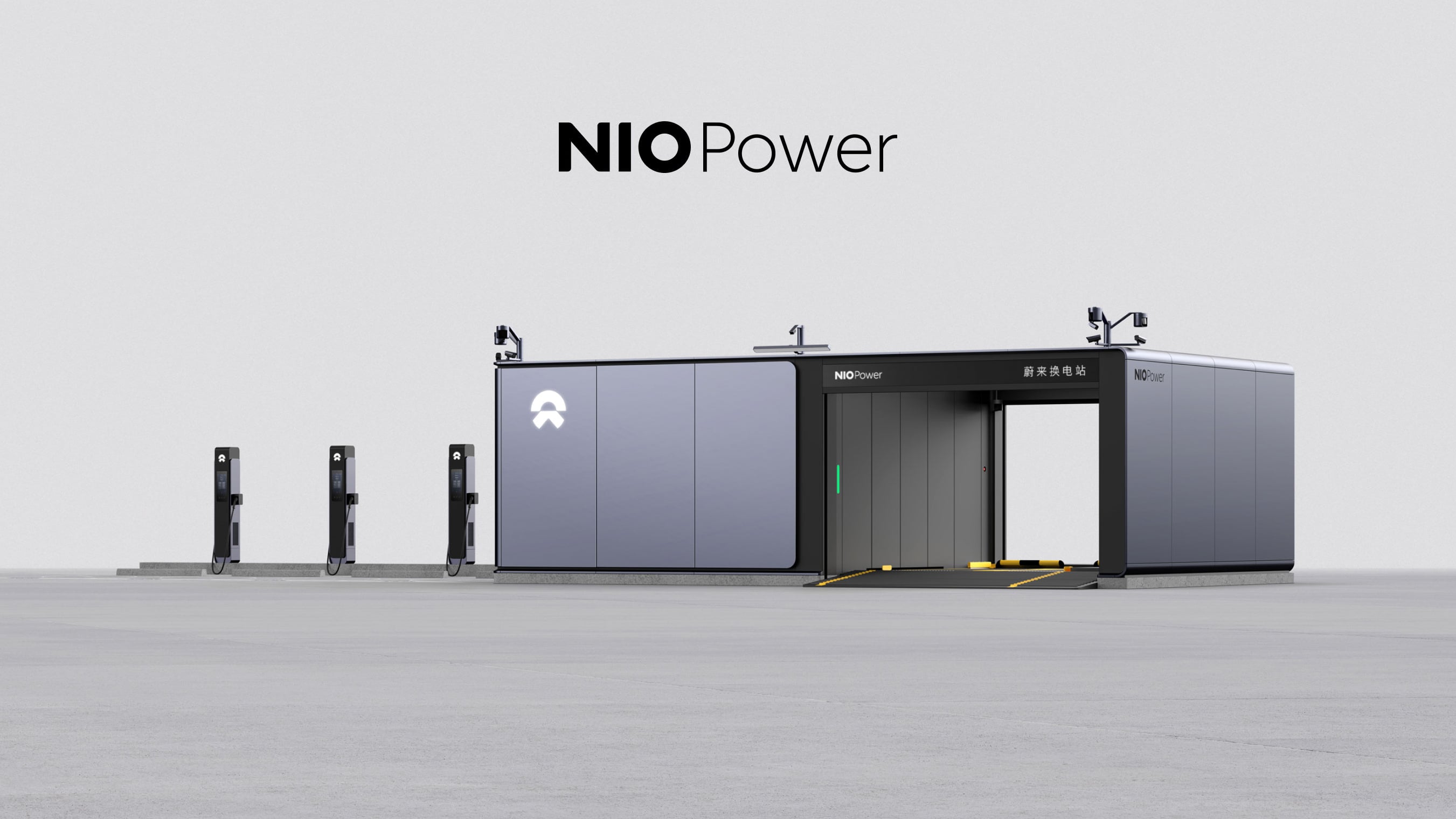
NIO pairs swap stations with chargers; its 31,091 charging piles are open to all EV brands (rendering, NIO)
Those sales edged up in September. NIO Inc. delivered 37,408 vehicles, up 4.4% from 35,836 in August. The NIO brand handed over 21,318 cars against 21,174, ONVO slipped to 8,763 from 8,810, and firefly climbed 25% to 7,327 from 5,852. Over the first nine months of 2026, the group delivered 300,301 vehicles, up 49.2% year on year.
NIO is also looking beyond its own brands for swap traffic. Under a September 28, 2026 agreement, Geely Holding Group will put all of its Yiyi Power subsidiary plus 640 million CNY (c. $95 million) in cash into NIO Power for a 30% stake, folding Yiyi's commercial fleet swapping into NIO's network. Geely will also develop consumer models built for swapping, though no timing has been given for them.
Geely's stake can float between 20% and 34% depending on results, and the transaction still needs regulatory approval. The deal values NIO Power at about 16 billion CNY (c. $2.38 billion) after the investment, against the more than 20 billion CNY (c. $2.97 billion) NIO has spent building the network.
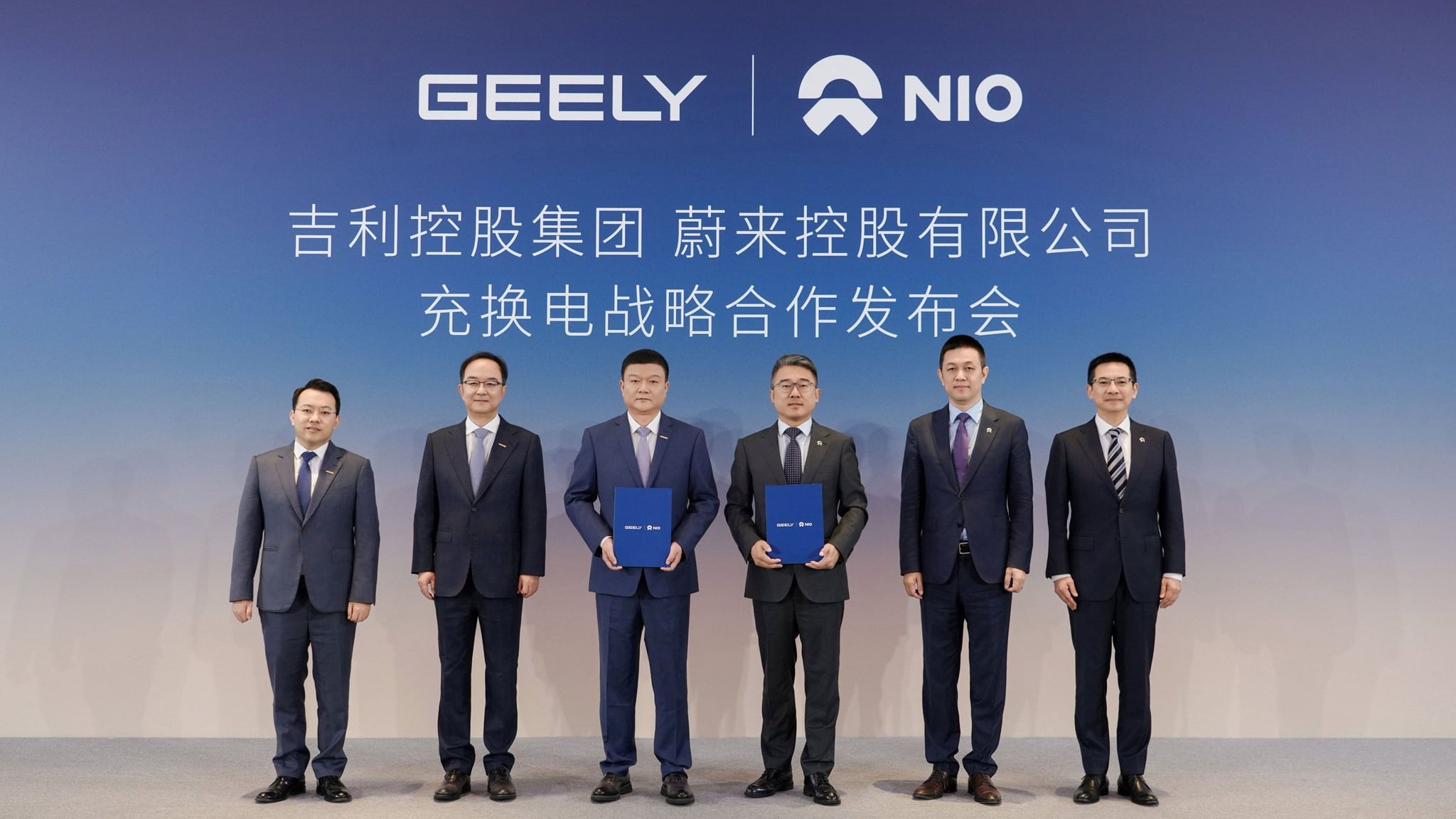
The NIO and Geely Holding agreement exchange in Hangzhou on September 28, 2026, pending regulatory approval (NIO)
William Li, NIO's founder and CEO, said the partners aim to build and run 10,000 swap stations by 2030, about 2.4 times today's count. After closing, NIO and Geely will run separate consumer and commercial swap networks, with the commercial side tied to Cao Cao Mobility and future robotaxi services.
Advertisement – Continue scrolling for more
Charging rivals are not standing still. BYD (HKG: 1211) has built more than 11,500 flash charging stations, and in September it announced plans for 90,000 charging stations over the next two-plus years. The charging platform of XPeng (NYSE: XPEV) logged 902,300 charging sessions from October 1 to 5 alone.
NIO's holiday showed that swap demand can scale, with 1,073 highway stations moving drivers between more than 550 cities. Whether Geely's ride-hailing fleets and future swappable cars can lift the average station from 41 swaps a day toward 60 is the figure to watch by the next holiday peak.
Conversion rate: 1 USD = 6.7330 CNY as of October 9, 2026 (central parity rate, China Foreign Exchange Trade System).
Advertisement – Continue scrolling for more