China-only BYD Sealion 06 reportedly spotted testing in Markham, Ontario
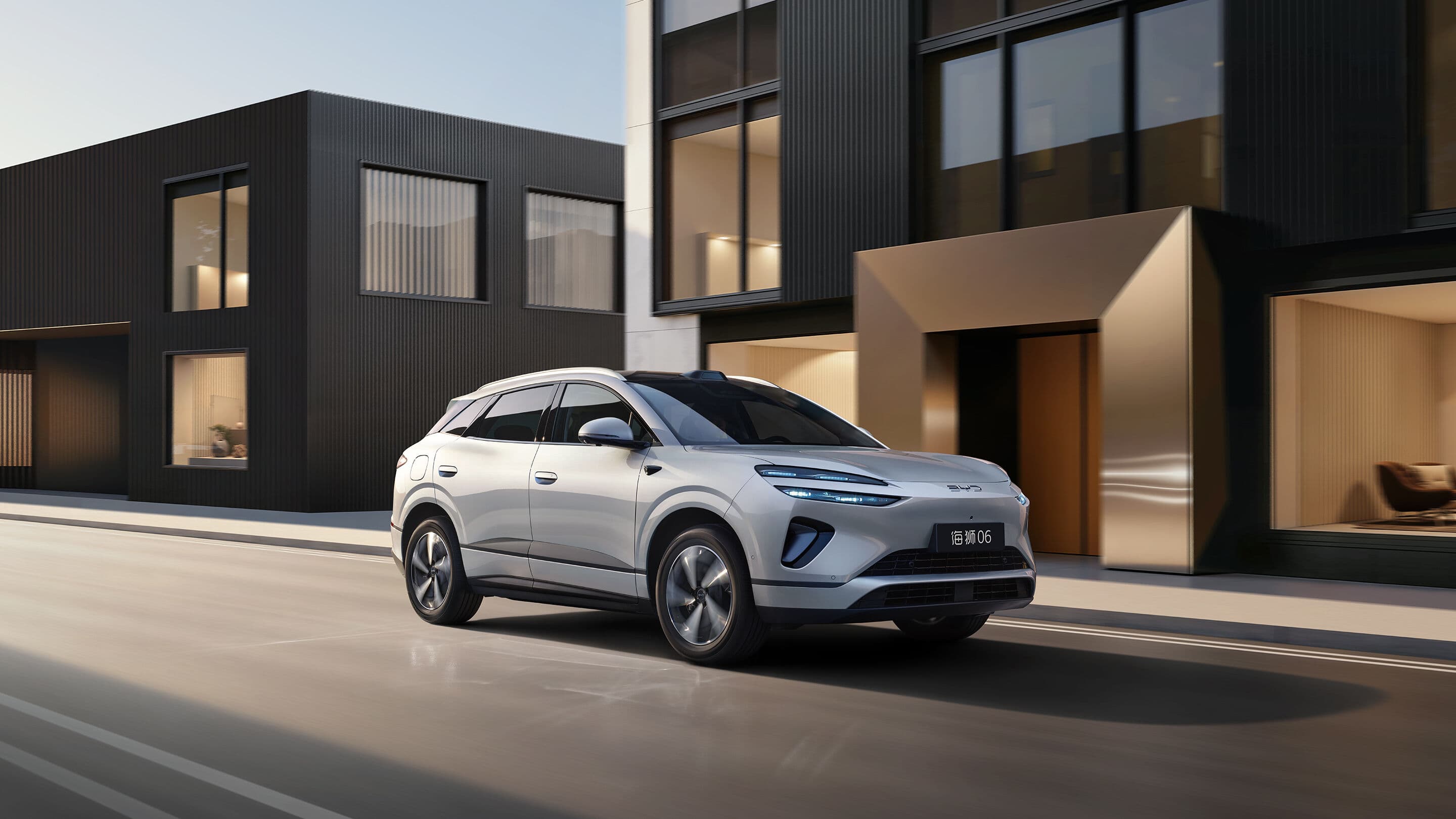
BYD (HKG: 1211) appears to be testing its China-only Sealion 06 in Ontario. A camouflaged white SUV photographed in Markham in late September 2026 looks like the refreshed model, though black tape over the badges leaves the identification unconfirmed. If BYD brings it to Canada, a Chinese-built Sealion 06 would be ineligible for the federal rebates that many of its rivals can claim, and it would pay the quota's 6.1 per cent tariff.
The sighting comes from a photo posted to r/EVCanada that shows black tape over the emblems and model labels. It is the latest in a run of BYD test sightings: BYD is testing four models in Canada, including a Sealion 7 found in a Markham underground car park in September and a Sealion 06 EV spotted at a Montreal hotel in late August. None of the four appears in Transport Canada's pre-clearance filings, and BYD has not announced a Canadian line-up, price or launch date. BYD has also registered with Transport Canada but still needs approval for individual models.

Rear view of a camouflaged SUV in Markham, Ontario, with taped badges and a full-width light bar, posted in late September 2026 (Reddit user Exylem2468)
The China-spec Sealion 06 is not the Sealion 6 that BYD exports, which is sold in China as the Song Plus. Its 2,820 mm wheelbase is 55 mm longer than the export model's 2,765 mm, and it starts at 129,900 CNY (c. $27,700 CAD) as a plug-in hybrid and 159,900 CNY (c. $34,100 CAD) as an EV. The EV offers up to 710 km of CLTC range and flash charging rated at 10 to 70 per cent in five minutes, while the DM-i pairs a 38 kWh battery with 310 km of CLTC electric range. Demand holds up at home: the Sealion 06 retailed 13,887 units in China in August 2026, down 9.8% from 15,395 in July.
Advertisement – Continue scrolling for more
Canada's trade rules leave room for it. A 6.1 per cent tariff applies to Chinese-built vehicles inside a 49,000-vehicle annual quota, and plug-in hybrids qualify alongside battery-electric models. Global Affairs Canada issued permits for only 15,603 vehicles in the first six-month window, leaving 33,397 potential imports for the window that opened September 1, 2026. On China sticker prices, the tariff would add about $2,100 CAD to the EV and $1,700 CAD to the DM-i before freight, homologation and dealer margin.
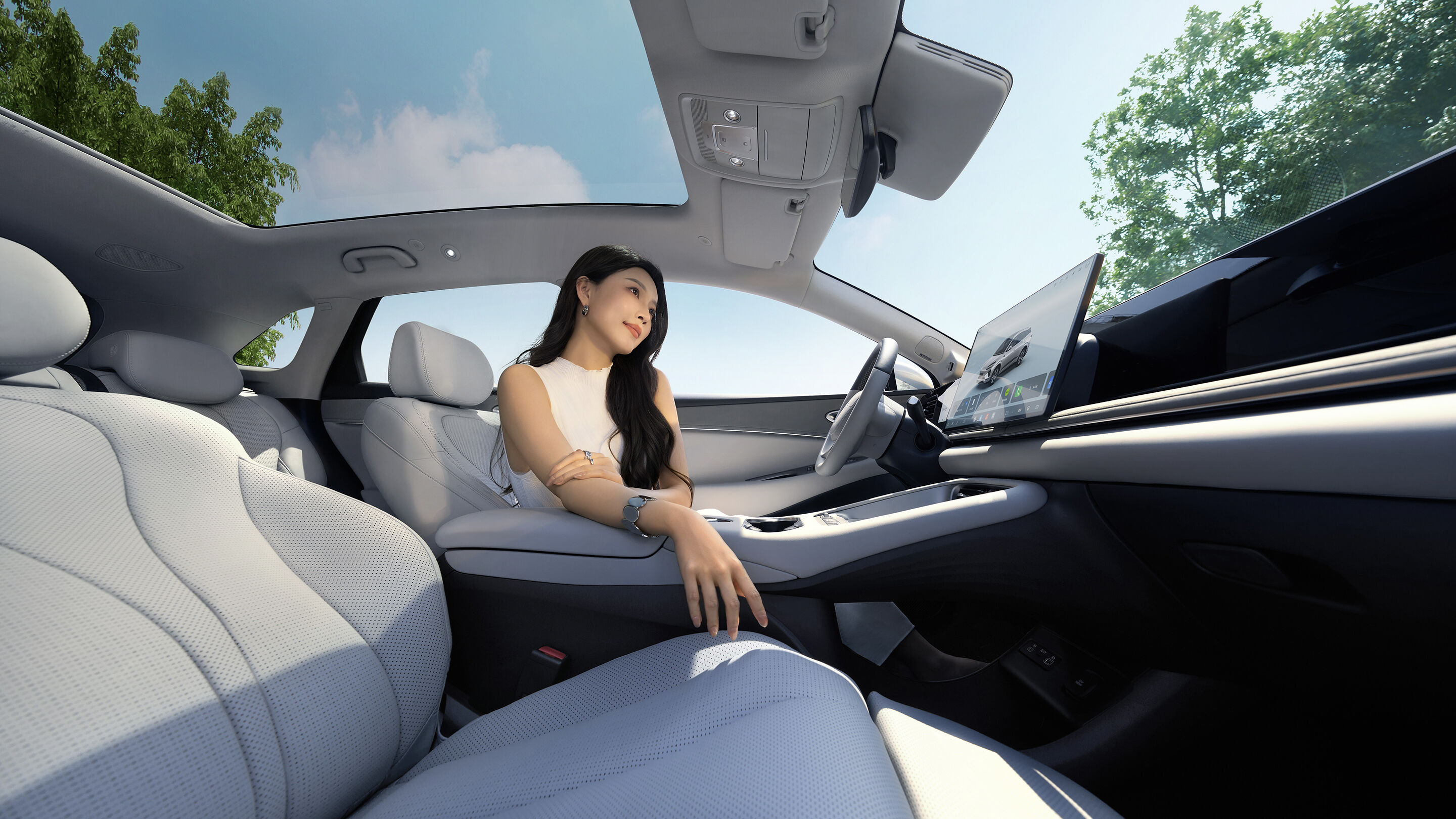
The Sealion 06 EV's 15.6-inch central screen runs BYD's DiLink software (BYD)
Federal incentives will not help it. Transport Canada's Electric Vehicle Affordability Program pays $5,000 CAD on an EV and $2,500 CAD on a plug-in hybrid in 2026, for vehicles made in Canada or in a free-trade partner country, with a final-price cap of $50,000 CAD that does not apply to Canadian-built models. Canada has no free-trade agreement with China, so a Chinese-built Sealion 06 would receive nothing. Quebec's provincial rebate offers $2,000 CAD on a new EV, but it ends on December 31, 2026.
Advertisement – Continue scrolling for more
The market it would enter is recovering. Registration data from Statistics Canada, which excludes Alberta and Newfoundland and Labrador, shows zero-emission vehicles at 9.5 per cent of new registrations in 2025, down from 14.6 per cent in 2024. The share rose to 10.7 per cent in the second quarter of 2026, or 58,811 vehicles, split between 40,585 battery-electric vehicles and 18,226 plug-in hybrids.
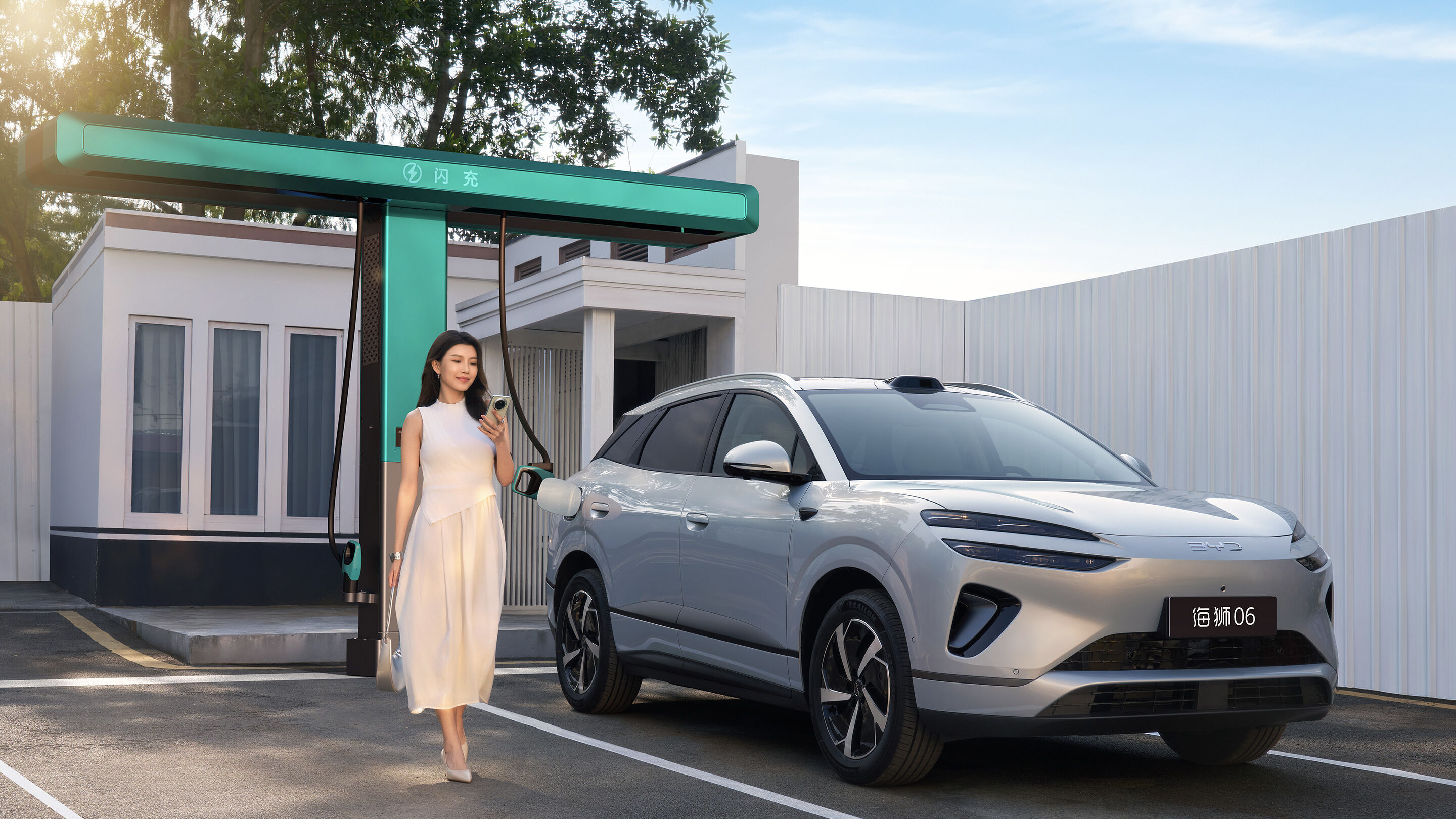
A Sealion 06 EV at a BYD flash-charging station, where the brand quotes 10 to 70 per cent in five minutes (BYD)
Plug-in rivals sell in far smaller volumes than the mainstream compact SUVs they compete with for buyers. The Toyota RAV4, Honda CR-V and Hyundai Tucson sold 75,573, 55,987 and 41,840 vehicles in 2025, a combined 173,400 across all powertrains, so they show the buyers BYD would have to win over rather than the plug-in market itself. The plug-in side is narrower. The Tesla Model Y at 13,057 units, the Chevrolet Equinox EV at 10,059 and the Mitsubishi Outlander PHEV at 8,899, the top two EVs and the best-selling plug-in hybrid, sold 32,015 combined in 2025.
Advertisement – Continue scrolling for more
For the EV, the closest benchmarks are Tesla's. The Model Y Standard costs $49,990 CAD, or $44,990 CAD after the rebate if the final price stays within the cap, while Tesla's Shanghai-built Model 3 launched at $39,490 CAD under the same quota with no rebate. Applying the tariff to the China sticker price puts a Sealion 06 EV near $36,200 CAD before freight, homologation and dealer margin. That leaves roughly $8,800 CAD of room against the Model Y but only about $3,300 CAD against the Model 3.
The plug-in hybrid has more room. The RAV4 Plug-in Hybrid starts at $48,750 CAD and the Outlander PHEV at $49,998 CAD, which could fall to $46,250 CAD and $47,498 CAD with the federal incentive for buyers who qualify. The China-spec DM-i would land near $29,400 CAD after the tariff, or about $16,900 CAD below the RAV4's net price. Both China entry prices also sit under the $35,000 CAD threshold for the quota's affordable-vehicle reserve, which rises from 10 per cent in year two to 50 per cent in year five.
Advertisement – Continue scrolling for more
These comparisons are directional. Chinese guide prices are domestic retail prices that exclude export freight, homologation and dealer margin, and the quota's threshold is set on a free-on-board price rather than a retail price. Rival prices are manufacturer suggested retail prices, which dealers may discount, and rebate eligibility depends on each buyer's final transaction value. Price is also only one factor, since BYD still needs model approvals and a dealer and service network.
BYD has not given a launch date, but reports say it plans about 20 dealers beginning in the Greater Toronto Area, and it had at least 14 open positions in Toronto as of September 12, 2026. The open question is whether it prices the Sealion 06 to ride the quota's affordable tier or to meet rebate-backed rivals head on.
Conversion rate: 1 CAD = 4.69 CNY as of October 5, 2026.
Advertisement – Continue scrolling for more