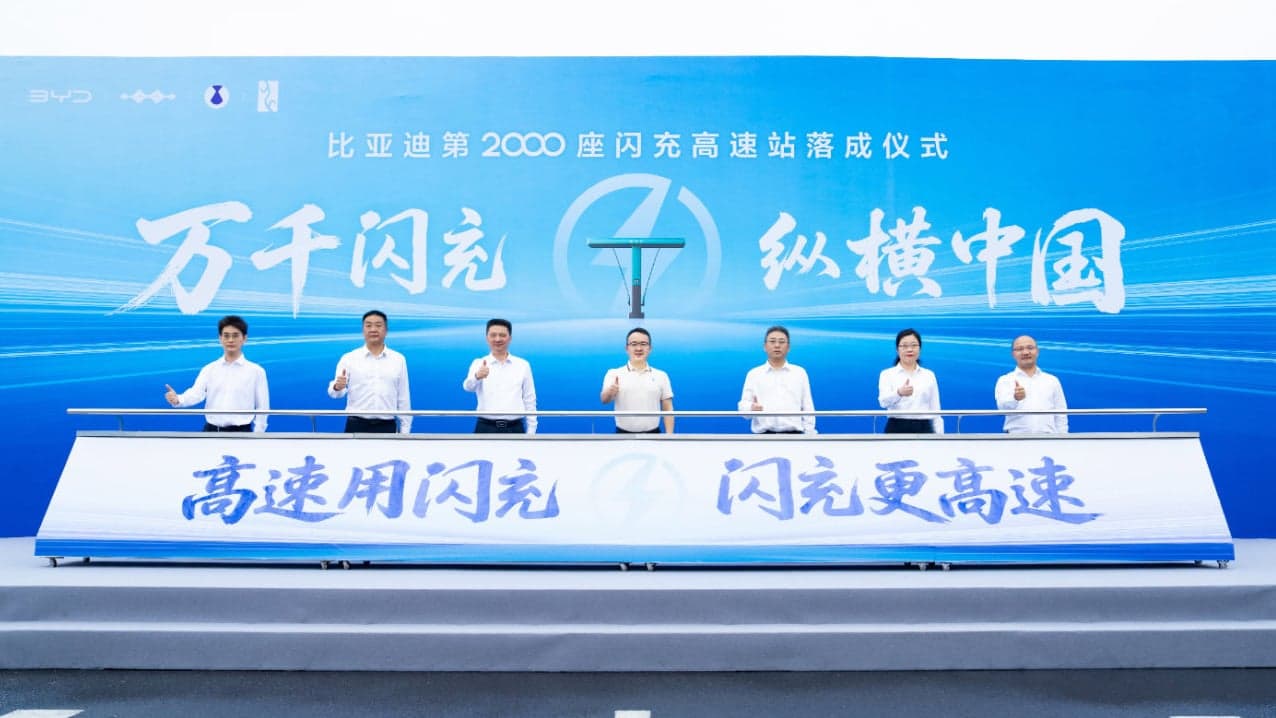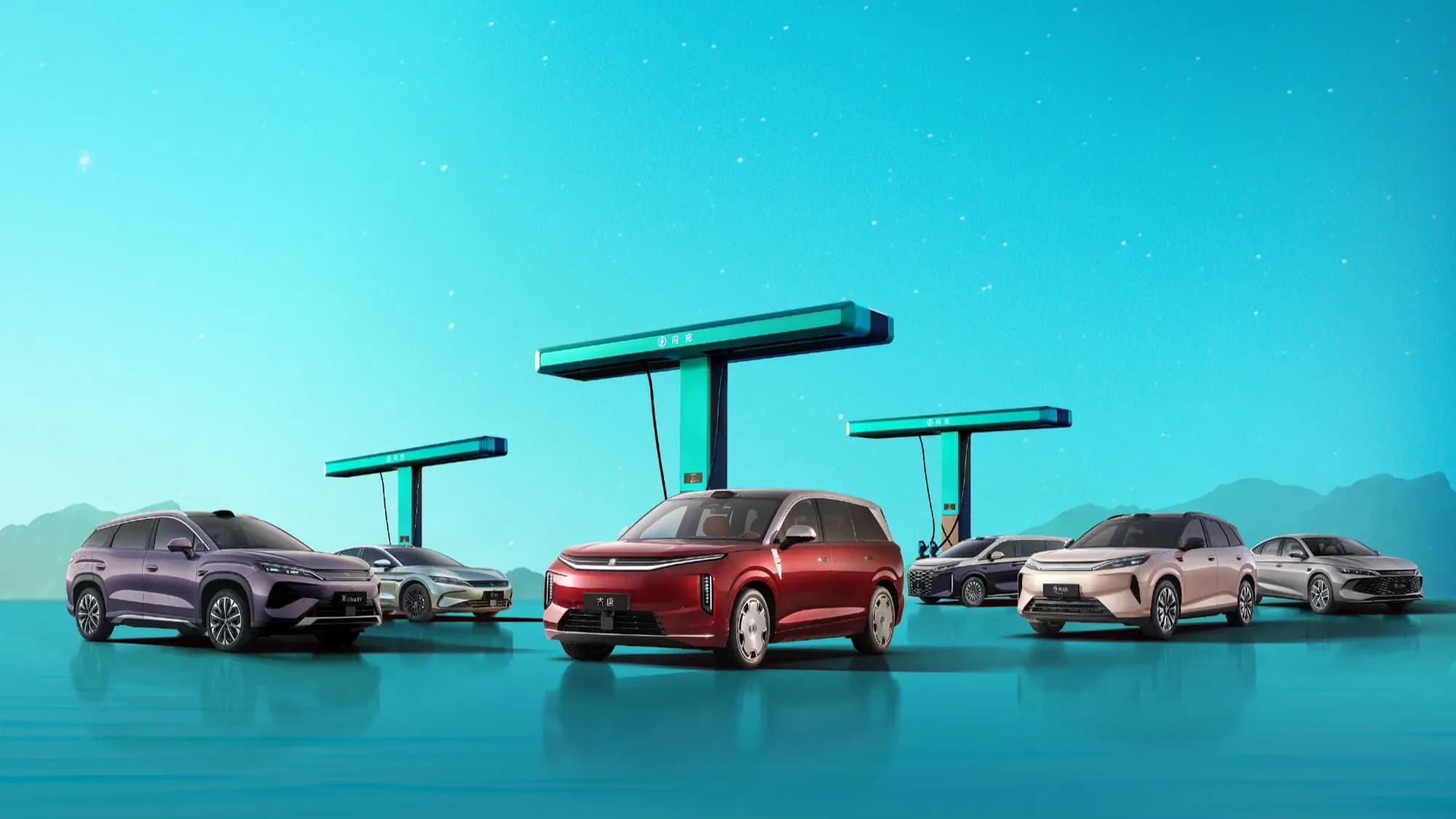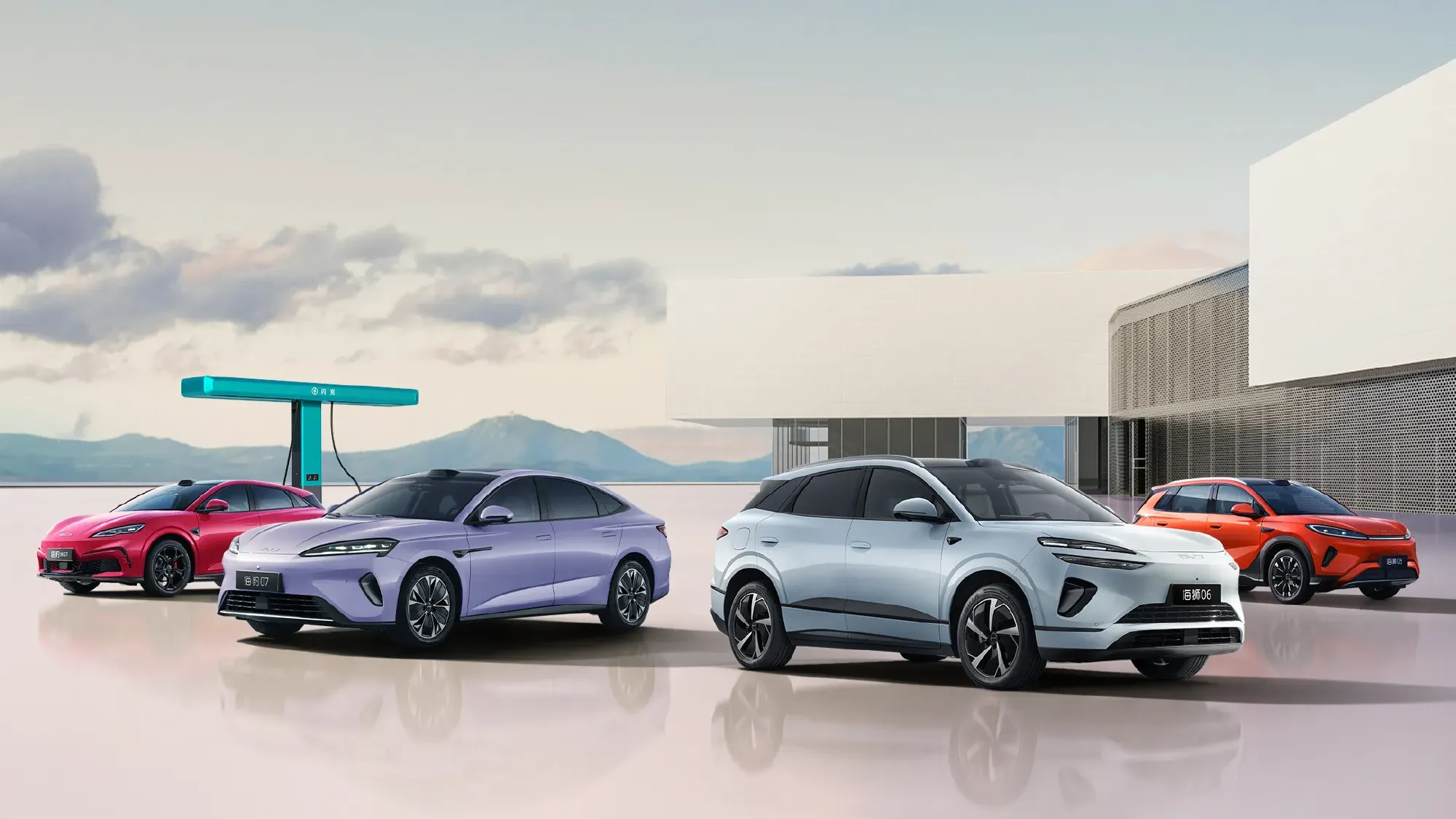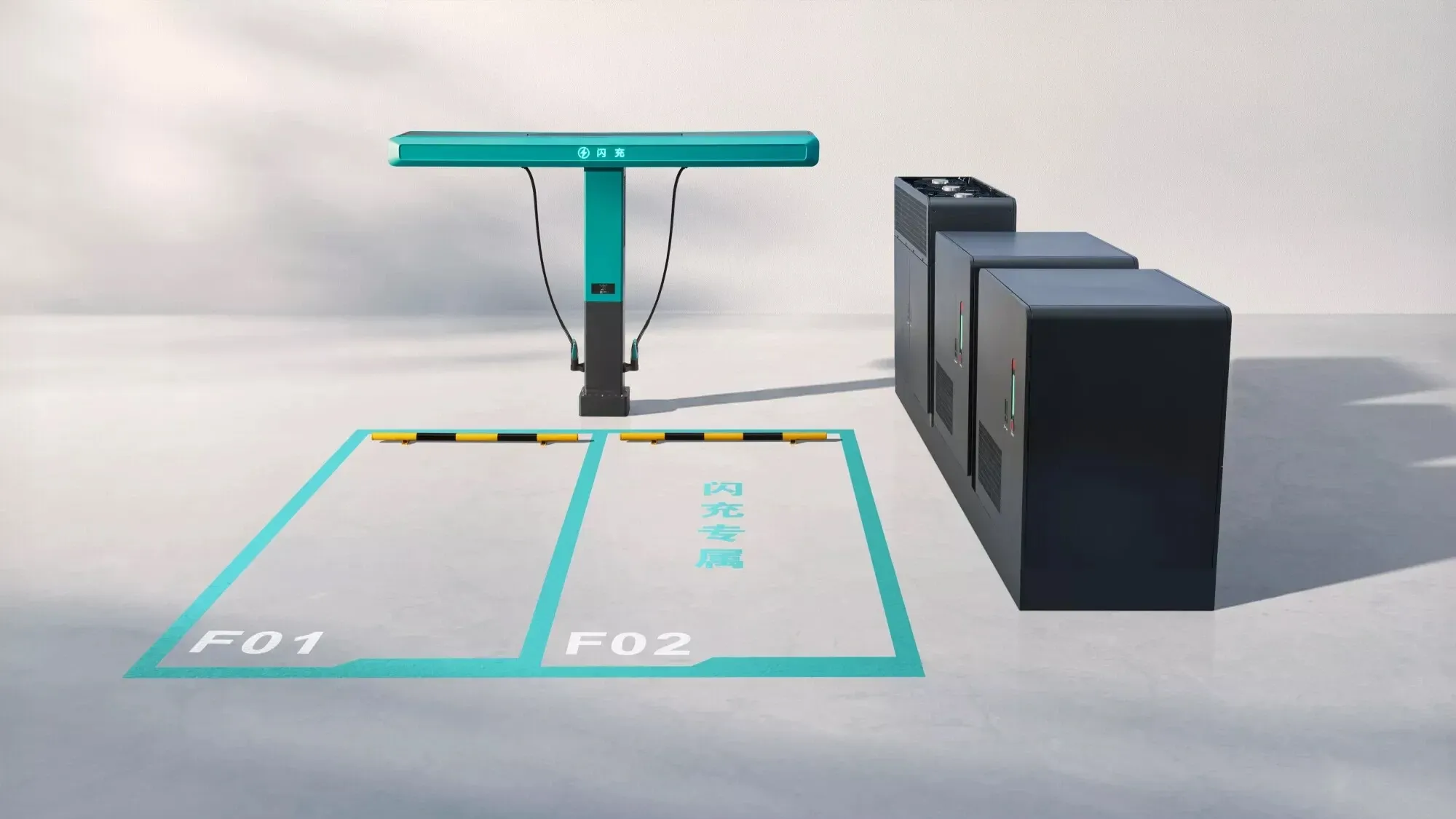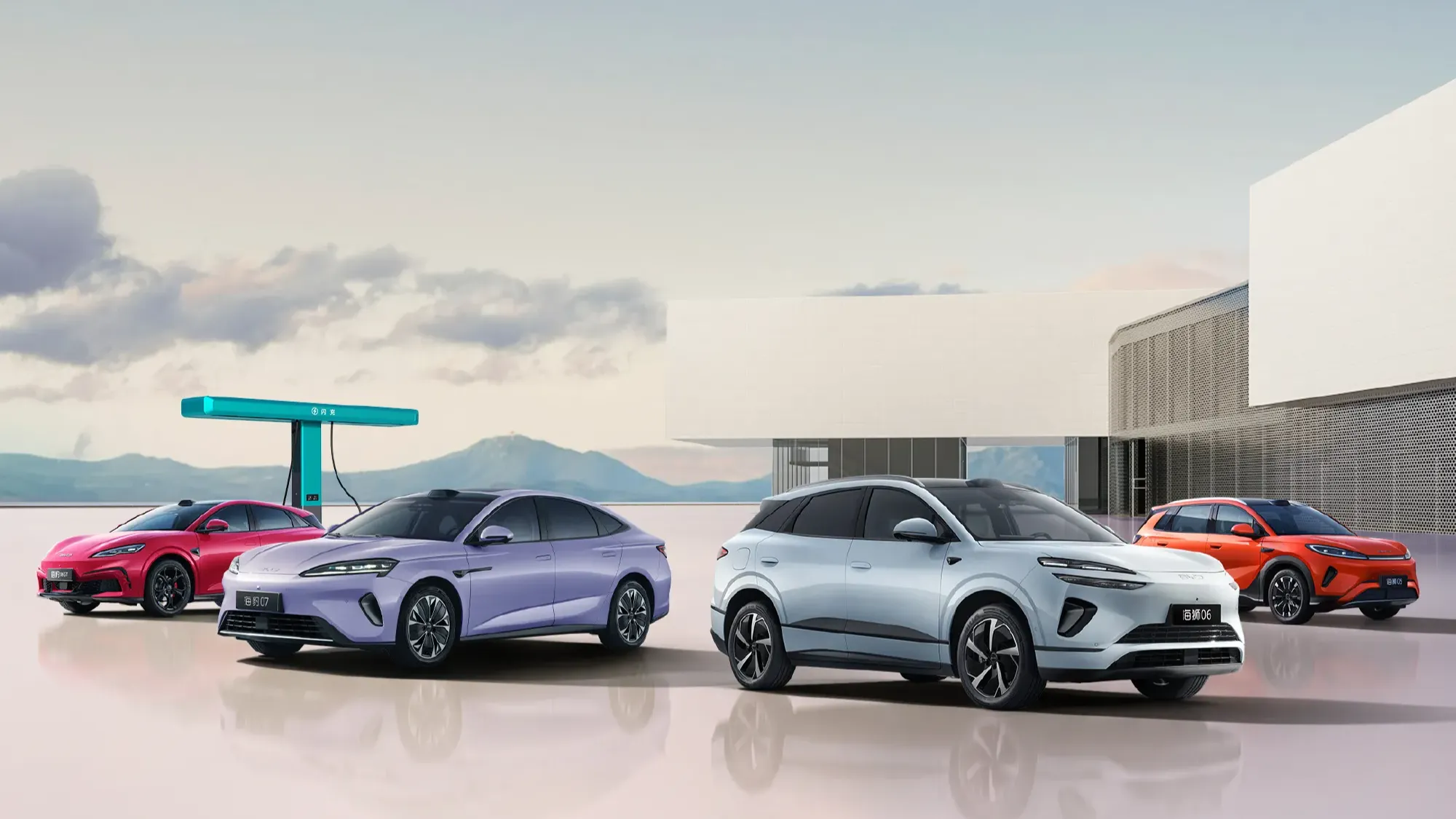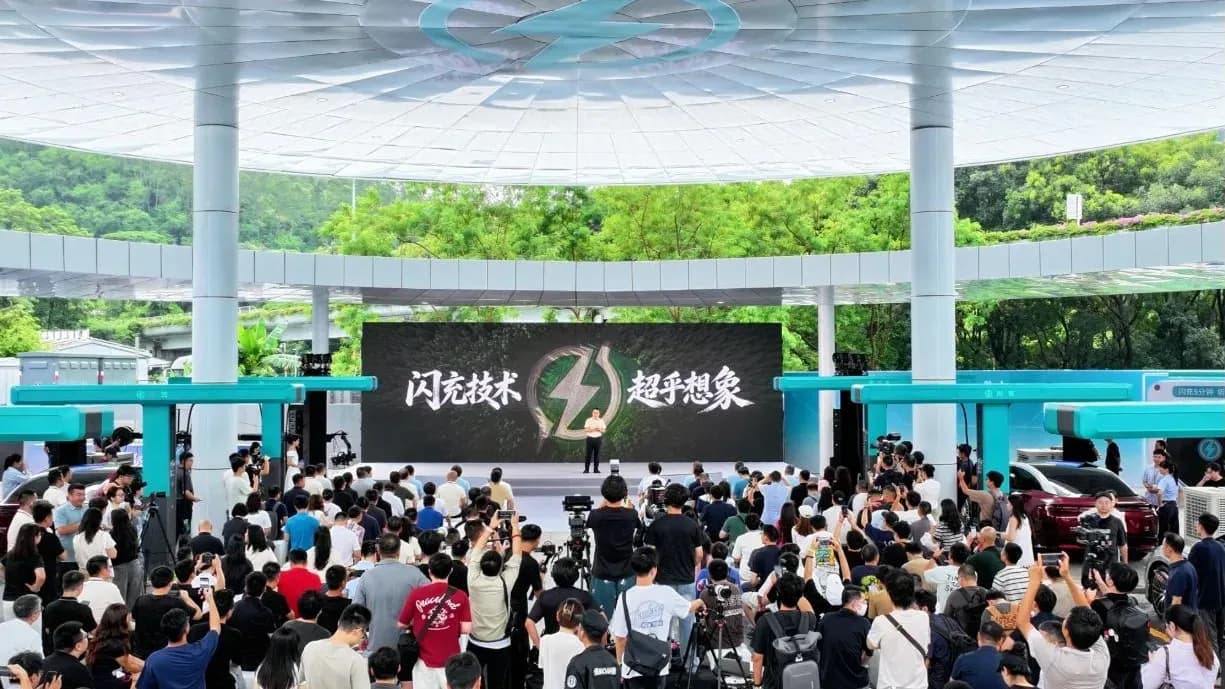
BYD marked a milestone in China's charging infrastructure on August 28, opening its 10,000th Flash Charging station at a ceremony held at the company's flagship site in Shenzhen's Longhua district. The rollout, which began in earnest in March, has now reached the halfway point toward BYD's stated goal of 20,000 stations nationwide by the end of 2026.
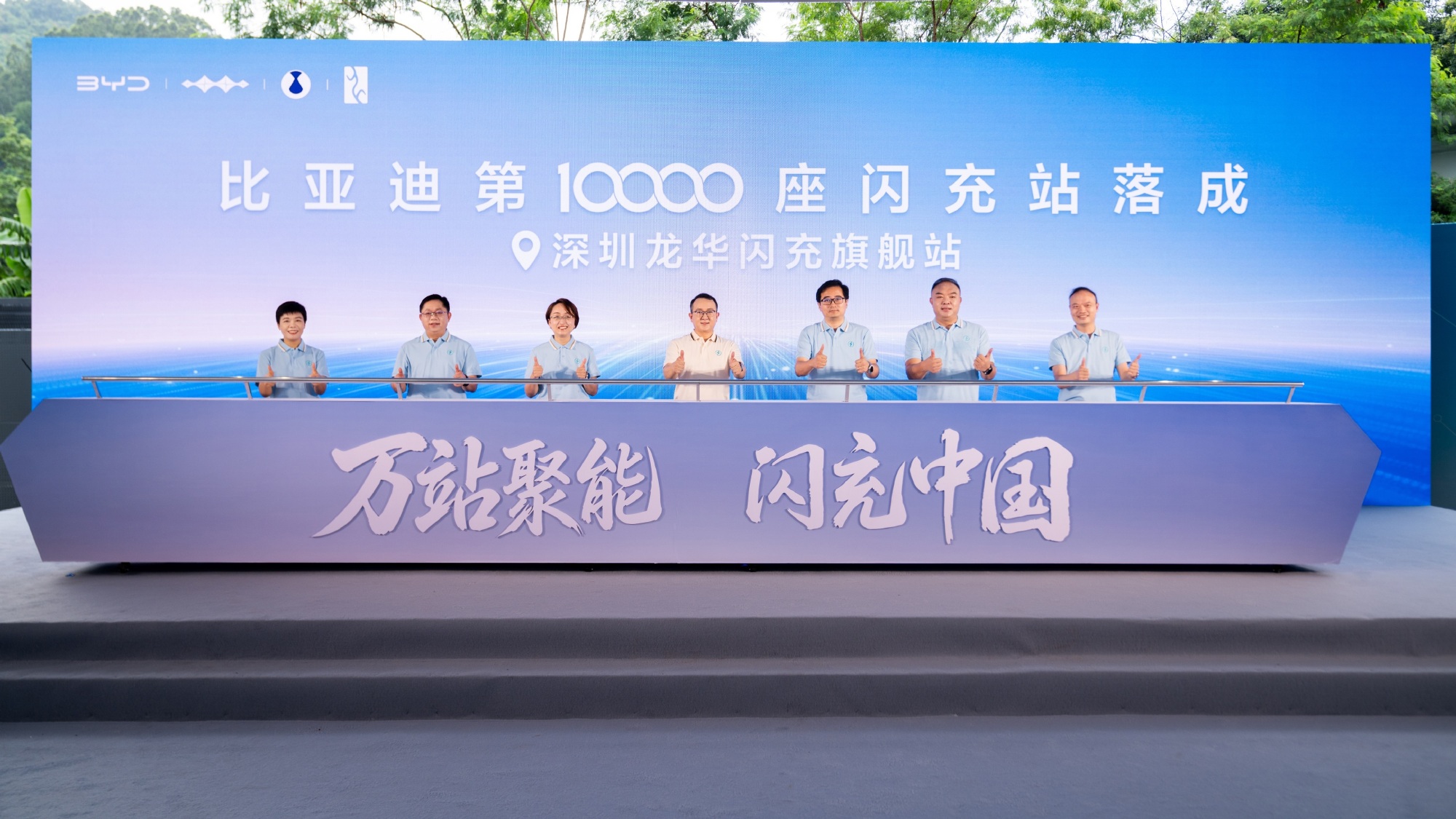
BYD's 10,000th Flash Charging station ribbon-cutting, Shenzhen Longhua, August 28, 2026 (BYD)
The 10,000-station threshold arrived in under six months, with the network expanding at an average pace of roughly 55 new sites per day since deployment began, according to BYD's disclosures. To hit 20,000 stations by December 31, BYD will need to roughly double that pace, adding close to 80 new stations a day for the rest of the year. The company's year-end target breaks down into 18,000 urban stations and 2,000 highway stations, a split meant to cover both daily commuting and long-distance road trips.
Advertisement – Continue scrolling for more
BYD says the network has already attracted 1.83 million registered users, with close to a third of them driving vehicles from other brands rather than BYD's own lineup. The company also reports 210 million kWh of cumulative electricity delivered through the stations to date. That non-BYD usage share suggests the network is functioning less like a proprietary perk and more like general-purpose charging infrastructure, a distinction BYD has leaned on as it argues Flash Charging benefits the wider EV market rather than just its own buyers.
Geographically, the buildout now reaches deep into China's frontier regions. Stations stand as far east as Shuangyashan in Heilongjiang, as far west as Kashgar in Xinjiang, as far south as Sanya in Hainan, and as far north as Hulunbuir in Inner Mongolia. BYD has also installed chargers in extreme conditions, including the desert heat of Turpan and the high-altitude Everest Base Camp, extending the network to roughly 325 cities nationwide.
Advertisement – Continue scrolling for more
Much of the recent expansion has leaned on partnerships with China's state energy giants. In June, BYD struck a deal with Sinopec to convert underused gas station lots into charging sites, pushing the network onto highway corridors and toward tourist routes. Coverage of the milestone also names PetroChina, CNOOC, charging operator TELD, and JD.com among the companies BYD has worked with to accelerate the buildout.
The chargers themselves run on BYD's next-generation Flash Charging hardware, rated at up to 1,500 kW across two connectors per unit. Paired with BYD's second-generation Blade Battery, the system can take a compatible vehicle from 10 percent to 97 percent charge in nine minutes, or to 70 percent in about five minutes, matching the time it typically takes to refuel a gasoline car.
Advertisement – Continue scrolling for more
BYD is not stopping at its home market. The company has said it plans to add roughly 3,000 Flash Charging points in Europe and another 3,000 across other overseas markets, following the same station-and-vehicle pairing it has used domestically, Electrek reported. Domestic rivals are chasing similar charging speeds without matching BYD's rollout pace: Geely has claimed a 10-to-70-percent charge in 4 minutes and 22 seconds, and CATL has said it is developing a battery capable of 10-to-80-percent in under four minutes. For comparison, Tesla's Supercharger network, built around up to 500kW V4 hardware, has grown to roughly 38,000 ports over 14 years, a scale BYD's newer, higher-power network reached a fraction of in under six months.
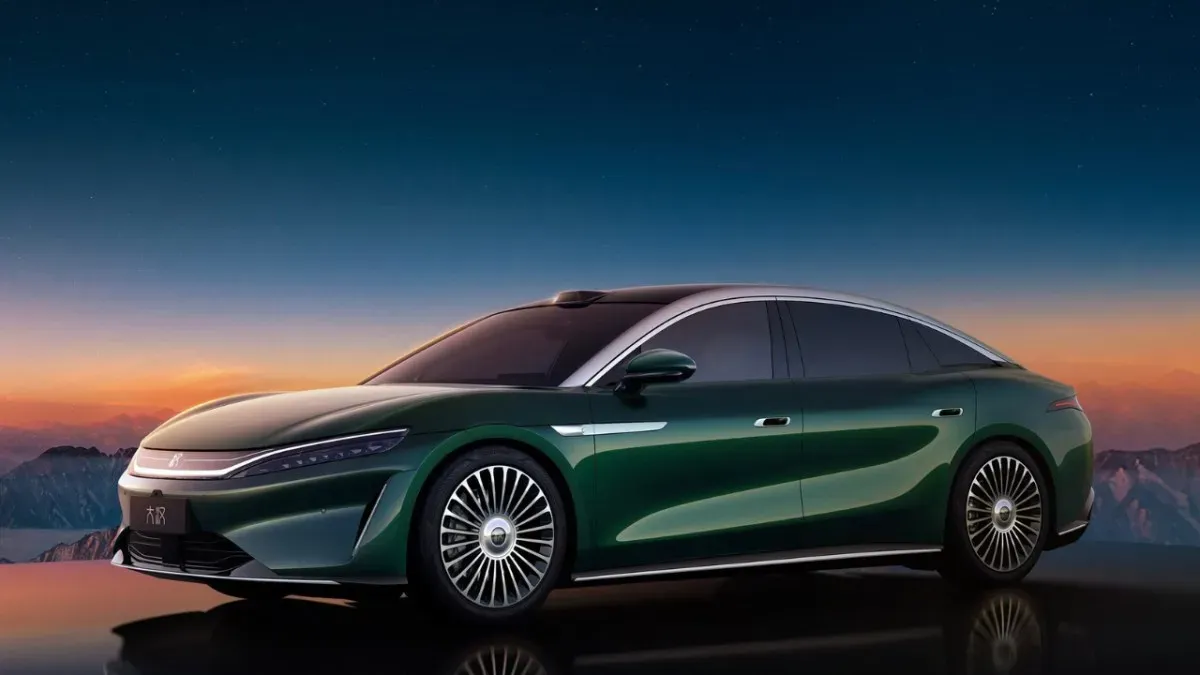
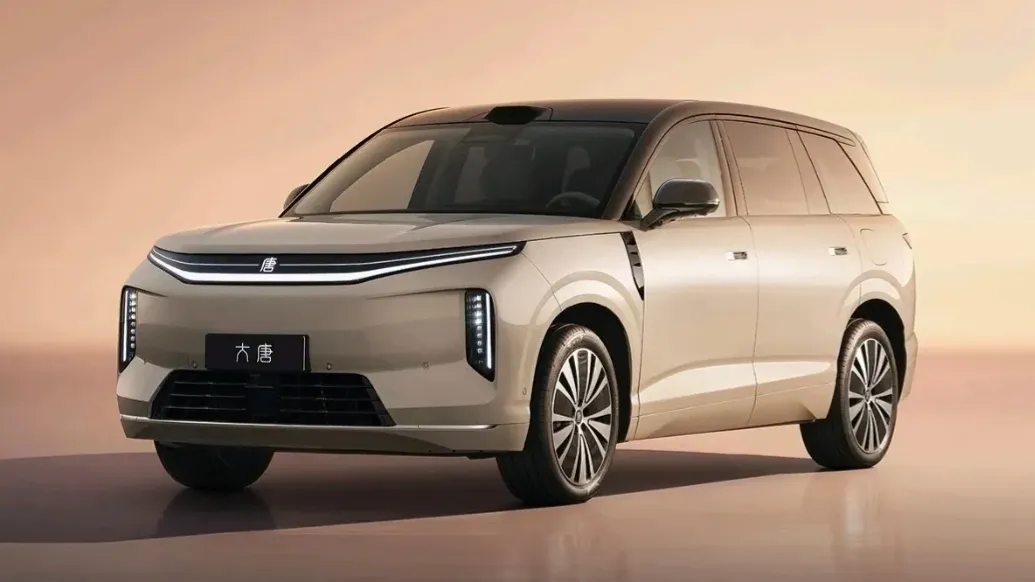
The flagship vehicle behind BYD's charging push is the Song Ultra EV, the first model built around the Flash Charging platform. Launched March 26, the mid-size electric SUV starts at ¥151,900 (about $22,600) and tops out at ¥179,900 (about $26,770) for its longest-range trim, positioning it as a mainstream family SUV rather than a flagship halo car.
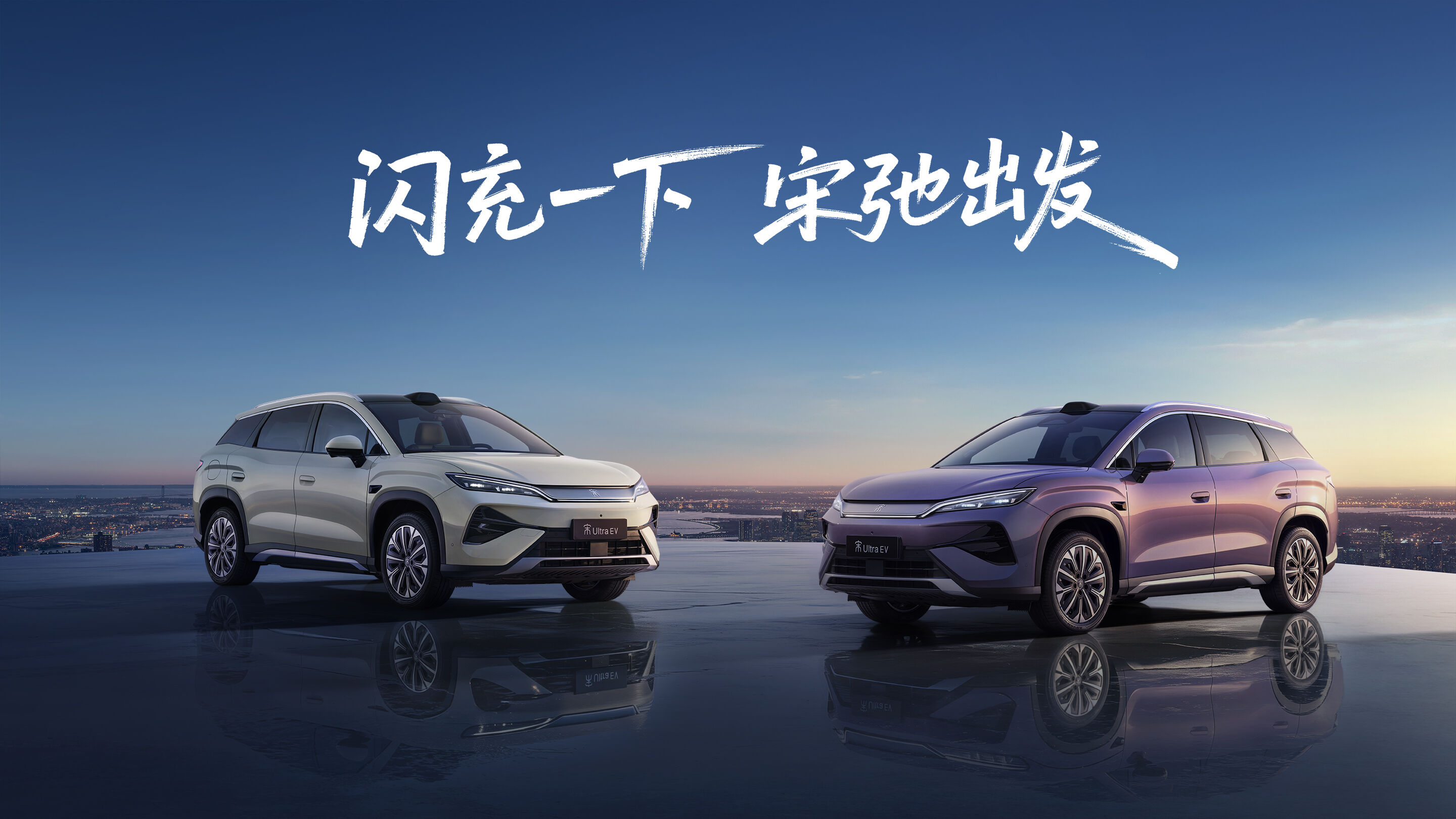
The Song Ultra EV, the first model built on BYD's Flash Charging platform (BYD)
BYD's own count puts cumulative Song Ultra EV sales above 70,000 units as of the August 28 announcement, building on a launch that drew more than 61,000 orders in its first month and, according to one dealer-network report, surpassed 100,000 cumulative orders by early August (orders and completed deliveries are tracked separately, so the two figures are not directly comparable). Owners also receive a year of free Flash Charging, a perk BYD has framed as making road trips essentially free to fuel as the station count climbs into five figures.
On spec, the Song Ultra EV comes in four trims: two rated at 605 km (376 miles) CLTC range with a 69.07 kWh battery pack, and two rated at 710 km (441 miles) with an 82.7 kWh pack. Both configurations are built around a 1,000V high-voltage architecture paired with the second-generation Blade Battery. The SUV rides on a 2,840mm wheelbase that BYD says gives rear-seat passengers more legroom than several joint-venture luxury midsize SUVs, and it adds touches like a one-key valet-prep mode, a knock-to-unlock front trunk, and a cabin nap setting.
Advertisement – Continue scrolling for more
Ride comfort and safety draw on BYD's DiSus-C adaptive damping system and a tire-blowout stability feature the company calls TBC, while an optional "God's Eye B" lidar-assisted driving package adds traffic-light recognition, automated U-turns on narrow roads, and parking assistance aimed at tight, older urban layouts, alongside highway navigation and automated parking aids.
BYD is framing the 10,000-station milestone as the point where Flash Charging stops being a showcase technology and becomes routine infrastructure for ordinary buyers, rather than a novelty reserved for flagship models. Whether the company can double its build-out pace to hit 20,000 stations by year-end, and whether that pace holds up once the network moves beyond easy urban sites and into harder-to-reach highway corridors, will determine how quickly that promise reaches the rest of the country.
Conversion rate: 1 USD = 6.72 CNY as of August 28, 2026.
Advertisement – Continue scrolling for more