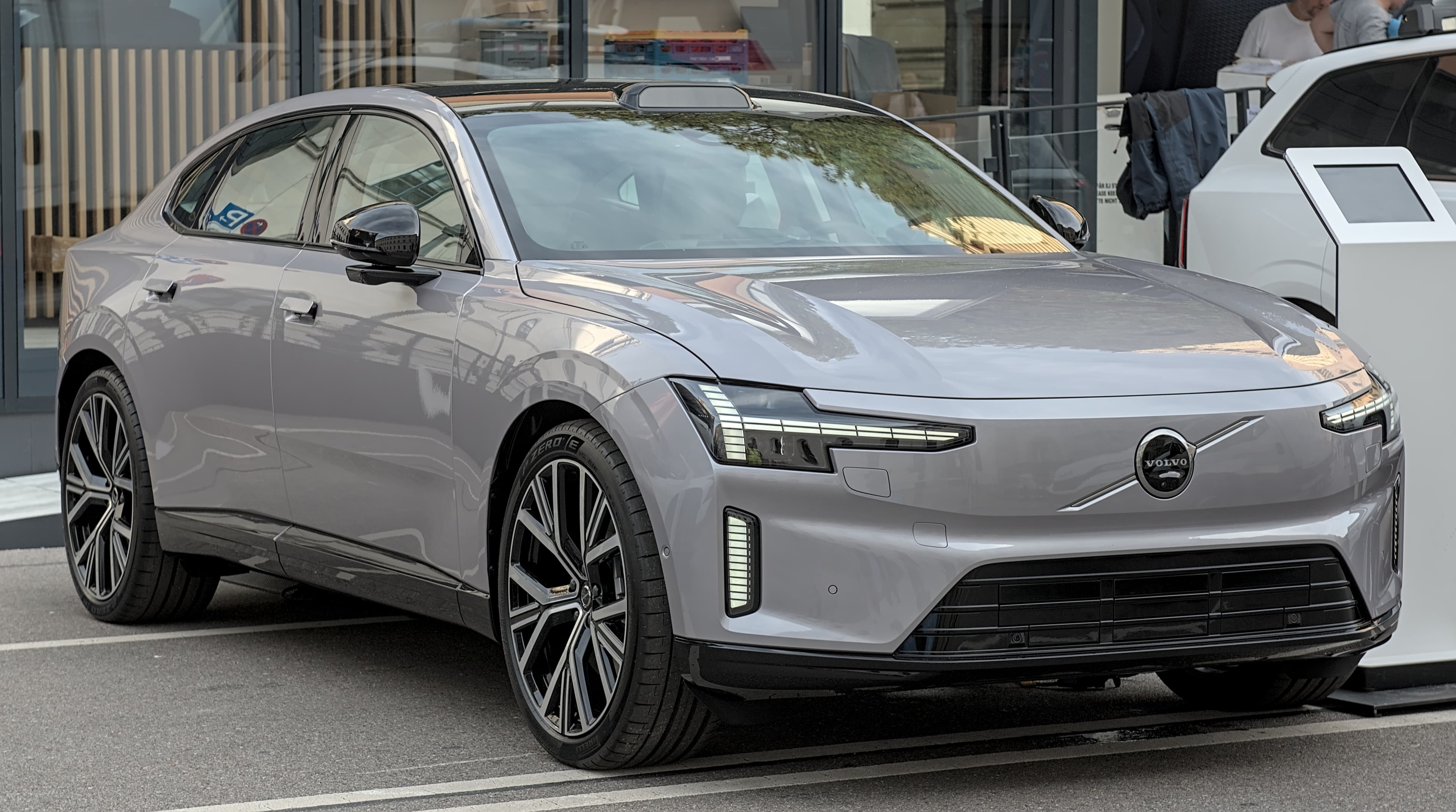
Geely Holding is preparing to pilot solid-state batteries across its portfolio of brands starting in 2027, according to reporting first published by InsideEVs. The cells are rated at 500 Wh/kg of energy density, roughly double the density of Geely's current Golden Brick liquid battery, and are designed to deliver more than 1,000 km (621 miles) of range on a single charge, described as comparable to a diesel-powered car, along with a design service life exceeding 1 million km (621,000 miles).
Volvo Car (STO: VOLCAR B), Geely's Swedish subsidiary, is among the brands positioned to receive the new cells first, though Geely has not publicly confirmed which brand will lead the rollout. The automaker's broader portfolio also includes Zeekr (NYSE: ZK), Polestar (NASDAQ: PSNY), Lynk & Co, Lotus, Smart, Proton, and Farizon, any of which could serve as an early platform for the technology once pilot units are ready.
Advertisement – Continue scrolling for more
Geely's timeline traces back to a January 22, 2026, strategy briefing in Beijing, where Geely Automobile Group (HKG: 0175) chief executive Gan Jiayue said the company's self-developed all-solid-state batteries would complete their first production pack before the end of 2026, with vehicle installation validation to follow. Real-world road testing of the cells was reported underway by August 2026, setting up the planned 2027 pilot deployment across Geely Holding's brands.
A solid-state architecture also promises weight and packaging gains beyond the headline range figure. Because the cells replace the liquid electrolyte with a solid one, engineers can stack them more densely and cut the flammable materials that force today's packs to carry extra cooling and structural reinforcement, which in turn frees up mass that can go toward either a smaller, lighter pack or additional range at the same weight. Faster charge and discharge rates have also been cited as a secondary benefit of the chemistry Geely is developing, though the company has not published charging-time figures for the 2027 cells.
Two internal platforms underpin the development effort: Zhejiang Green Smart Technology, a wholly owned Geely subsidiary established in June 2022 to scale core-material synthesis and cell production, and the Huzhou Yaoning Solid-State Battery Research Institute, which handles fundamental research. Geely disclosed in mid-2024 that a 20Ah solid-state cell had already exceeded 400 Wh/kg in lab testing, a figure the company has since pushed toward the 500 Wh/kg target it is citing for the 2027 pilot cells.
Advertisement – Continue scrolling for more
Dow (NYSE: DOW) is supplying materials for the battery packs, including an adhesive engineered to remain stable across a temperature range of minus 40 degrees Celsius to 120 degrees Celsius (minus 40 degrees Fahrenheit to 248 degrees Fahrenheit). Neither company has disclosed whether the cells use a sulfide or oxide solid electrolyte or detailed the anode chemistry.
The 500 Wh/kg target marks a sharp jump from Geely's current production battery. The Shendun Jinzhuan, or Golden Brick, liquid battery entered mass production in March 2026 and powers models such as the Galaxy M7 plug-in hybrid, which offers 225 km (140 miles) of pure-electric range and 1,730 km (1,075 miles) of combined range on a full charge and tank. Geely has said the Golden Brick pack passed extreme validation including crushing, puncture, and ballistic tests without combustion, and its cells run at roughly 250 Wh/kg, about half the density Geely is now targeting for its solid-state generation.
Advertisement – Continue scrolling for more
Geely consolidated its battery operations under Zhejiang Jiyao Tonghang Energy Technology in January 2025, unifying eight production facilities with a combined theoretical capacity of 70 GWh. That restructuring gave Geely in-house cell self-supply at scale, a capability the company has pointed to as it works toward commercializing solid-state technology domestically rather than relying solely on outside cell suppliers.
Geely is not alone in targeting 2027 for solid-state milestones. CATL (SZSE: 300750) and BYD (HKG: 1211) have each reiterated 2027 trial-production timelines, though neither has published an energy density figure to match Geely's 500 Wh/kg claim. SAIC Motor (SHA: 600104) has said it aims for full solid-state mass production by 2027, while Chery has separately unveiled a solid-state cell it says is rated for 1,300 km of range. Battery suppliers Farasis Energy, CALB, Gotion High-Tech (SHE: 002074), and EVE Energy (SZSE: 300014) have also outlined solid-state validation plans clustered around 2027, though most point to full commercial ramp-up only toward the end of the decade.
Advertisement – Continue scrolling for more
Industry observers have cautioned that a low-volume pilot across a handful of vehicles is not the same as mass production reaching dealer lots. Commentary circulating alongside the Geely reports has invoked Elon Musk's observation that building a prototype is comparatively easy while scaling manufacturing is the harder problem, a distinction several Chinese outlets have applied to Geely's own 2027 target. Geely has not disclosed pricing, initial production volumes, or which specific model will carry the first solid-state pack off the line.
Volvo's inclusion in the speculation is not incidental. The brand has built its modern identity around safety engineering and has pushed an aggressive electrification timeline since Geely took full ownership of the automaker's product strategy, making a lower-risk, higher-density pack a natural fit for its next-generation platforms. Zeekr, Geely's premium EV brand, and Polestar have similarly staked their positioning on performance and range, giving Geely more than one plausible launch partner if it wants to showcase the technology outside the China market.
Whether Volvo becomes the proving ground for Geely's solid-state push, or another portfolio brand gets there first, the 2027 pilot will offer the clearest public test yet of whether Geely's in-house battery bet can keep pace with the density and range targets its Chinese rivals, from CATL to SAIC to Chery, are chasing on roughly the same timeline.
Advertisement – Continue scrolling for more