
Great Wall's Wei blames fraud for slide to ninth as overseas sales top half

Great Wall Motor (HKG: 2333, SHA: 601633) chairman Wei Jianjun has blamed cut-throat competition, pressure from capital and financial fraud for what he described as his company's slide from first to ninth among Chinese brands. Speaking at the Guangzhou auto show on November 27, 2026, he said the car industry could not develop in a healthy way unless malicious competition was stamped out.
Wei said he was at peace with ranking ninth, adding that the others were the ones who could not sleep. The reports of his remarks did not identify which carmakers he had in mind.
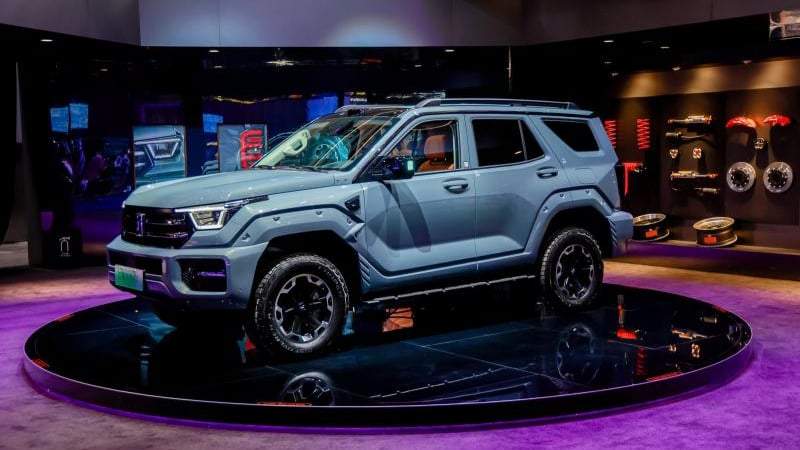
He first disclosed the slide days earlier, while visiting Yu Donglai, founder of the retailer Pang Dong Lai, in Xuchang. Yu had just announced that he would buy another 310 Tank 700 SUVs for his management team. Wei told him Great Wall had once been the best-selling Chinese brand and now ranked ninth, and that the pressure came from the media, from capital and from competitors who mocked the company. Yu's advice was to ignore the pressure and do things his own way.
The fraud charge builds on a campaign Wei has run for months. He has repeatedly criticised carmakers that inflate sales through related-party deals or dress up results with so-called zero-kilometre used cars, new vehicles that are registered and then resold as used. At the Wey Lanshan launch on December 22, 2025, he said such cars had cheated the state of subsidies, calling the practice despicable.
Great Wall's own numbers show the pressure. The company sold 120,374 vehicles in October 2026, wholesale figures that include overseas sales, up 4.7% from 114,944 in September by our calculation but down 15.87% from a year earlier. Its sales for January to October came to 1,040,676 vehicles, down 2.42%.
More than half of that volume now comes from outside China. Overseas sales reached 62,862 in October, up from 60,019 in September, or 52% of the month's total by our calculation. Over the first ten months, overseas sales totalled 538,839, about 51.8% of the company's volume by our calculation. That leaves roughly 57,500 vehicles sold in China in October, compared with about 54,900 in September, by our calculation.
GCEV Weekly · Every Tuesday
China's EV industry in five minutes.
Launches, sales, batteries and policy — the week's stories that matter, with the context the headlines leave out.
Sent by GigaCharts Inc. Questions? Write to globalchinaev@gmail.com. Unsubscribe anytime. See our privacy policy.
The brand split explains much of the slide at home. Haval, still the biggest brand, sold 71,027 vehicles in October, down 19.5% from a year earlier, while Tank fell 31.01% to 15,389 and Wey dropped 31.9% to 8,648. Ora was the outlier, more than doubling to 12,187. New energy vehicles accounted for 49,499 sales in October, up from 41,982 in September.
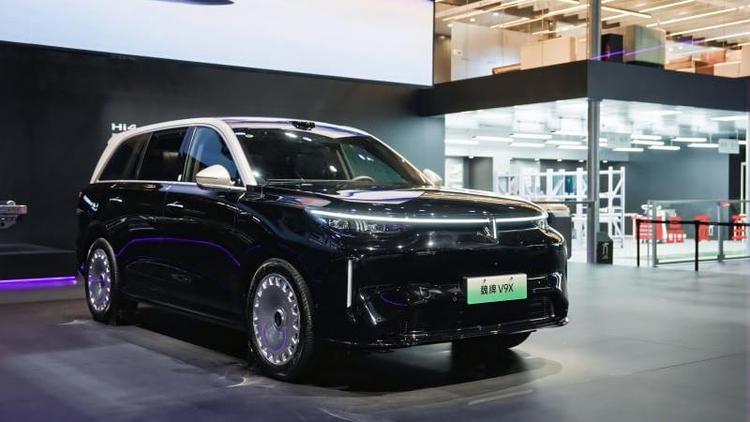
A Wey V9X at the Guangzhou auto show on November 27, 2026. Great Wall calls the V series EV Wey's first battery-electric flagship since the brand was founded ten years ago (GWM)
The year's goal now looks out of reach at home. Great Wall set a 2026 target of 1.8 million vehicles, split into 1.2 million in China and 600,000 overseas. After ten months, its overseas sales are already at about 90% of their goal, while sales in China stand at about 42% of theirs, by our calculation. By our calculation, hitting the full-year number would take roughly 380,000 vehicles a month in November and December, more than three times its October pace.
The gap to the leaders is wide. BYD (HKG: 1211) sold 3,621,744 vehicles from January to October, and Geely Automobile (HKG: 0175) sold 2,545,664. On group totals for the same period compiled by data provider China Automotive Data, Great Wall placed seventh, behind BYD, SAIC, Geely, Chery, Changan and BAIC, according to one report. That ranking is incomplete, leaving out GAC, FAW and Dongfeng because they had not yet released figures, and does not match the ninth place Wei cited among Chinese brands. Tesla China was eighth, and Leapmotor, at 772,700 vehicles, was ninth and growing by 65.9%.
Wei argues that volume is the wrong scoreboard. He said Great Wall chases value per vehicle rather than volume, with an average selling price of about 180,000 CNY (c. $26,840), while most rivals average 100,000 to 110,000 CNY (c. $14,910 to $16,400). Tank, its off-road brand, launched its 2027 Tank 400 on November 28 in five versions from 249,800 to 319,800 CNY (c. $37,240 to $47,680), including petrol, diesel and two plug-in hybrid drivetrains.
Electric cars are not yet paying their way at home. In a separate interview at the Guangzhou show, Wei said Great Wall does not yet make money selling electric vehicles in China, but that its battery-electric, petrol, hybrid and plug-in hybrid models are all profitable overseas. He cited the Ora 5, now offered with four powertrains and selling close to 20,000 units a month, more than 10,000 of them exported.
That is the thinking behind the company's push for more powertrains. Great Wall international vice president Wang Chao told the show that about 70% of buyers worldwide will still choose combustion power because of their energy mix and charging gaps, and called hybrids the inevitable choice for the third phase of Chinese carmakers going abroad. Wei said the Wey V9X will come as a battery-electric, plug-in hybrid and hybrid model, the last with a 3.6 kWh battery, against the 1 to 2 kWh typical of a conventional hybrid.
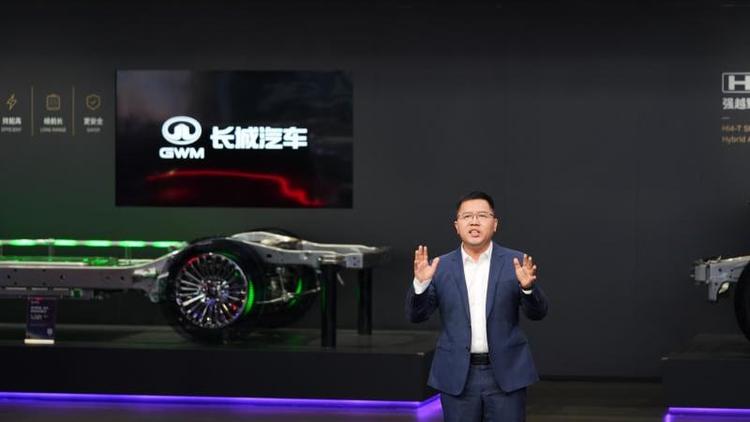
Wang Chao presenting Great Wall's Hi-HEV hybrid strategy at its Guangzhou launch event on November 27, 2026 (GWM)
The overseas push is moving from shipping cars to building them. Wei said the platform under the Ora 5 has about 95% commonality, letting it spawn both SUVs and low-slung sedans, and that related models are very likely to be built locally abroad, arguing that Chinese carmakers have to export industry, technology and ecosystems, not just vehicles. Wey, which sells MPVs, SUVs and boxy luxury SUVs, plans to enter 17 countries and regions in 2027.
Great Wall is betting it can keep growing abroad while it waits out the fight at home. Can a carmaker that sells more cars outside China than inside it win back its rank on the domestic charts without joining the price war its chairman keeps condemning?
Conversion rate: 1 USD = 6.7075 CNY as of November 27, 2026.
GCEV Weekly · Every Tuesday
China's EV industry in five minutes.
Launches, sales, batteries and policy — the week's stories that matter, with the context the headlines leave out.
Sent by GigaCharts Inc. Questions? Write to globalchinaev@gmail.com. Unsubscribe anytime. See our privacy policy.