On December 2, Chinese automotive platform Autohome has released its much-anticipated winter range test results, revealing a mix of surprises and disappointments.
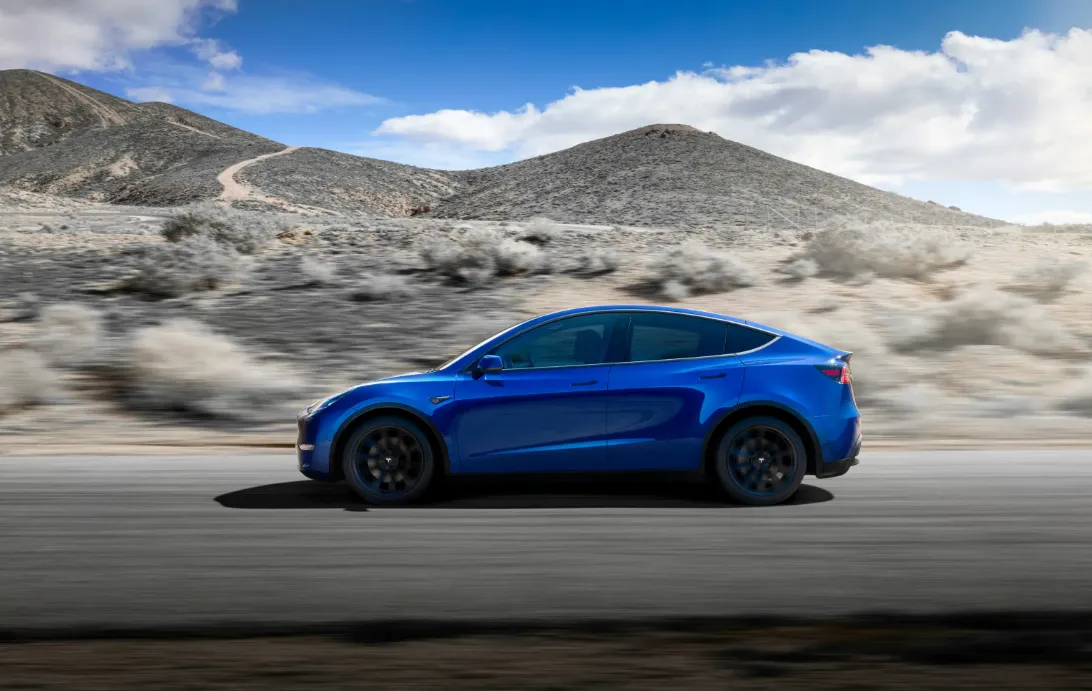
Though Tesla Model Y/3 are unquestionably one of, if not the most efficient electric vehicles on the market, in this Autohome winter test, energy consumption figures severely deteriorated under extreme cold conditions.
Advertisement – Continue scrolling for more
This year, Autohome ran two winter tests, measuring driving range performance at mild cold temperature (5 to 15°C) and extreme cold (-20 to -15°C) to reflect real-world conditions across 80% of China’s diverse climates.
A total of 23 electric vehicles were selected to be part of the experiment, including popular models such as the Tesla Model 3 and Model Y, Xiaomi SU7, Onvo L60, Zeekr 7X, Luxeed R7, BYD Sealion 07 EV, Qin PLUS EV, and Seagull, XPeng MONA M03, and Galaxy E8.
Advertisement – Continue scrolling for more
The vehicles were preconditioned in a warm garage and fully charged before the test, each carrying three passengers, with cabin temperatures set to 23°C on auto climate control.
The drive modes were set to energy-saving, regenerative braking was at its maximum, and a mix of low- and high-speed driving was used until either the battery was fully depleted or the vehicle entered limp mode.
Mild Cold Temperature (5 to 15°C) Test
-1734626566213.webp "WINTER TEST | MILD COLD (5 TO 15 °C)")
Among the 23 models tested, only one vehicle was technically able to deliver the full claimed driving range and it was the BMW i5 with 566.1 km real-world out of 567 km claimed.
The Tesla Model Y AWD Long Range version ranked 15th with 585 km driven, representing 85% of the 688 km claimed CLTC range.
Of the 23 tested electric cars, four were mid-size SUVs benchmarked against the Model Y: Onvo L60, Zeekr 7X, Luxeed R7, and BYD Sealion 07.
Advertisement – Continue scrolling for more
The Onvo L60 (RWD 85 kWh version) achieved the highest range retention rate at 93.3% and achieved 681 km of 730 km claimed.
Zeekr 7X and BYD Sealion 07 followed at 88.8% and 86,4%, respectively.
Luxeed R7, which featured the highest claimed range of 802 km, achieved an 84.9% retention rate and real-world range of 681.2 km.
Advertisement – Continue scrolling for more
Of all electric vehicles, Tesla Model 3 ranked first with the lowest energy consumption rate of 11.56 kWh/100km.
Tesla Model Y placed 9th at 13.78 kWh/100km, second to only the Onvo L60’s 11.97 kWh/100km in the mid-size SUV segment.
Extreme Cold Temperature (-20 to -15°C) Test
-1734627591874.webp "WINTER TEST | EXTREME COLD (-20 TO -15 °C)")
Under extreme cold temperature, energy efficiency and real-world range tanked for virtually all electric vehicles in the experiment.
Only 5 models achieved over 50% of their claimed range, the Galaxy E5, BYD Qin PLUS, Zeekr 7X, BYD Sealion 07, and Luxeed R7.
Surprisingly, Tesla Model 3 RWD performed the worst under extreme conditions, reaching only 234 km of real world range (38.6% of claimed 606 km CLTC range).
Advertisement – Continue scrolling for more
Tesla Model Y also only reached 41.6% of claimed range, ranking 18th on the list.
The lowest energy consumption rates were mostly achieved by relatively smaller cars, including the AION V, BYD Seagull, and Geely Xingyuan.
Among mid-size SUVs benchmarked against the Model Y, the Luxeed R7 achieved the lowest energy consumption rate at 24 kWh/100km, followed by the Onvo L60 with 24.71 kWh/100km, Zeekr 7X with 27.76 kWh/100km, and BYD Sealion 07 EV with 29.06 kWh/100km.
Tesla Model Y and Tesla Model 3 were the worst performers of all cars in terms of energy consumption rates at 30.15 kWh and 30.45 kWh per 100km, respectively.
Advertisement – Continue scrolling for more
Another letdown came from the Stelato S9, a high-end luxury sedan borne from the Huawei HIMA alliance.
The S9 ranked 19th with a 39.2% range retention rate and abysmal energy efficiency of 29.64 kWh/100km for a vehicle priced above 400,000 CNY.
Despite being equipped with a ternary lithium battery and a heat pump system, the S9’s thermal management appears to have faltered.
Tesla Model Y Falls Short In Extreme Conditions
-1734638052174.webp "WINTER TEST | ENERGY CONSUMPTION RATE (kWh/100km)")
Though the Model Y ranked second in energy efficiency compared to its mid-size SUV counterparts during the mild cold winter test at 13.78 kWh/100km, it performed the worst in extreme cold at 30.15 kWh/100km.
Notably, Luxeed R7 ranked first ahead of the Onvo L60 under the extreme cold (-20 TO -15 °C).
Advertisement – Continue scrolling for more
The broader takeaway from Autohome’s test is that most EVs cannot achieve even half of their claimed range under the -15°C conditions, despite being optimized for efficiency.
While automakers tout advancements in thermal management and battery technology, these results suggest there’s still a long way to go.