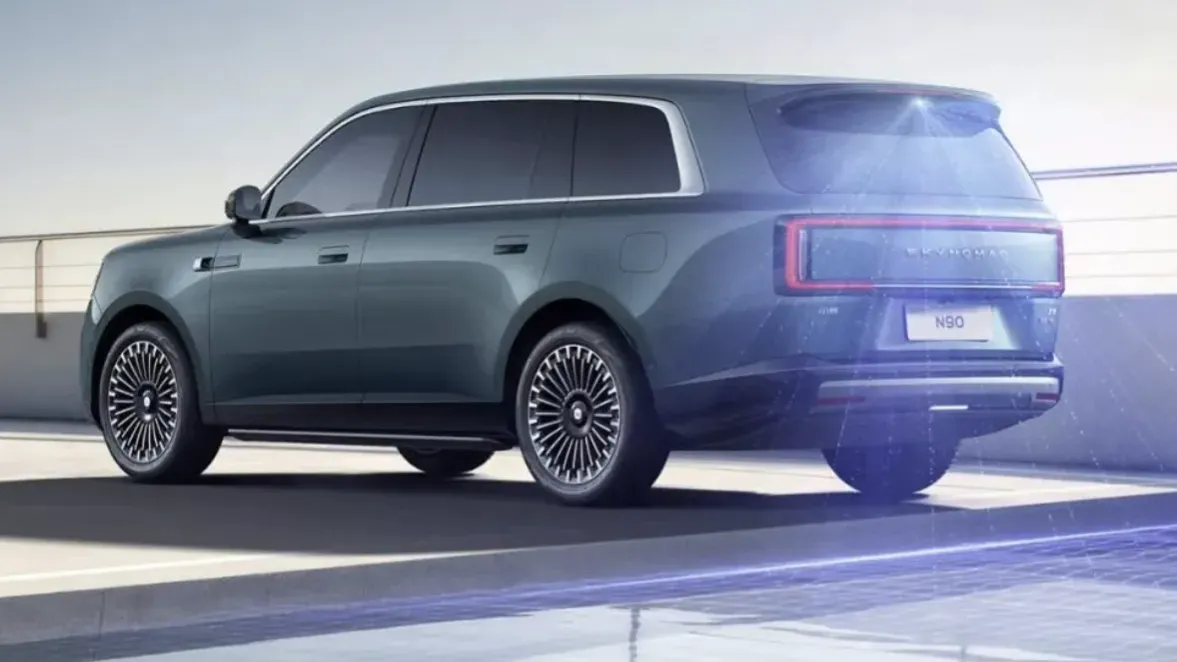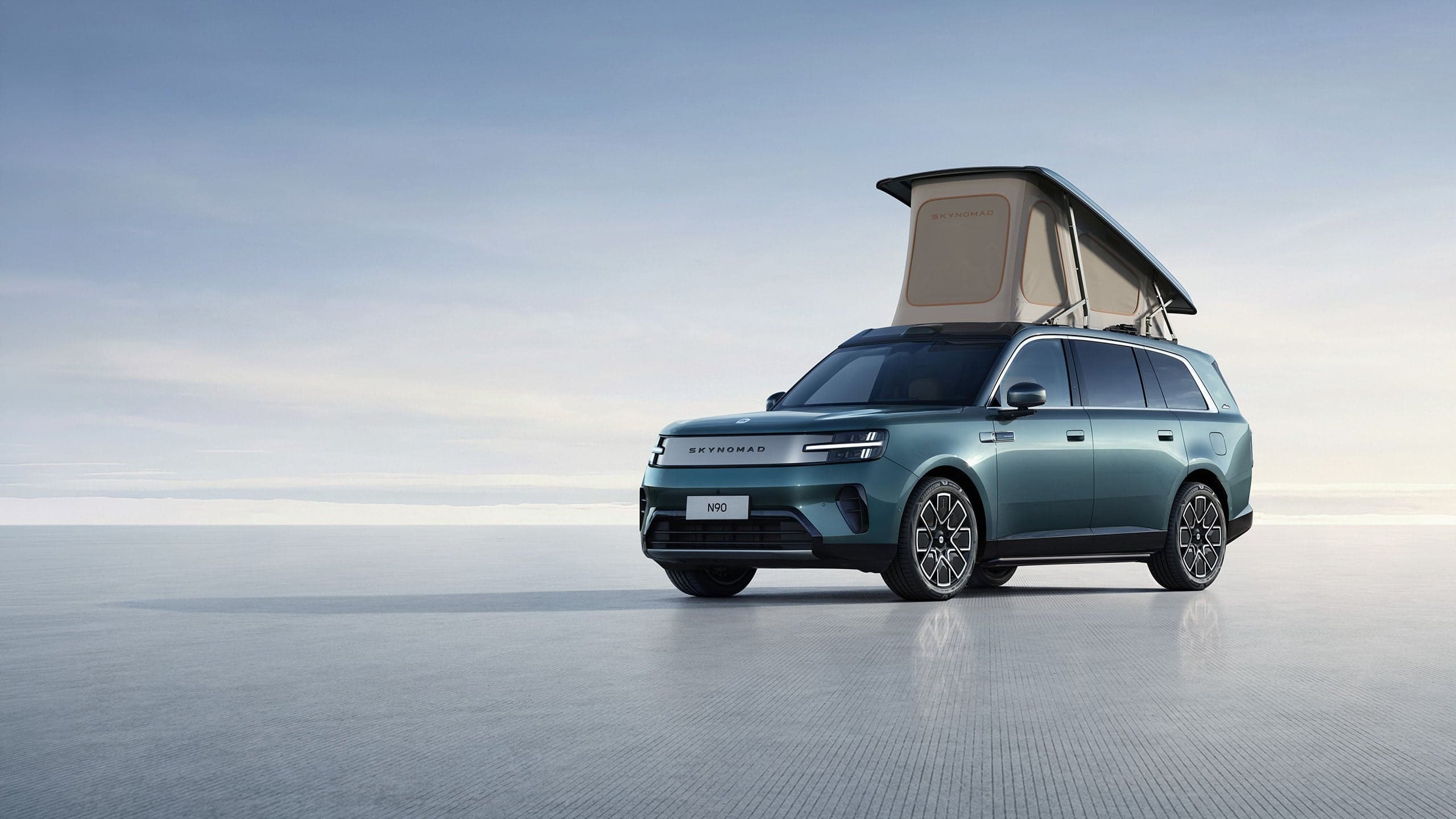
Xiaomi used its September 7, 2026 autumn product conference to launch the SkyNomad N90 Max lineup, a large extended-range SUV that adds a factory-built electric pop-up roof and a one-touch camping bed to Xiaomi's growing vehicle roster. The Explorer Edition variant is the headline act: its second-row bench folds flat into a 1.87-meter by 1.24-meter mattress in 30 seconds, and its roof rises to create a two-level cabin tall enough to stand up in.
The lineup splits into two trims. The standard N90 Max keeps a conventional 2+2+3 seven-seat layout and starts at 269,900 yuan (roughly $40,200), while the five-seat Explorer Edition trades the third row for the camping hardware and is priced at 299,900 yuan (about $44,700). Both share the same extended-range powertrain and battery, with the price difference covering the roof mechanism, the underfloor heating, and the trim-specific cabin materials.
Advertisement – Continue scrolling for more
The roof itself is the part worth lingering on. Closed, it adds just 100mm to the vehicle's height and keeps the drag coefficient at 0.245. Raised, it opens into a loft roughly two square meters in area with a 200kg weight limit, five mesh-screened windows, and 1.7 square meters of skylight coverage. Interior standing height reaches 2,294mm at its tallest point, enough for a passenger up to about 1.8 meters tall to stand upright inside. The loft gets its own lighting, dual air conditioning vents, and an 18W USB-C port, and the whole assembly can be raised by voice command or a physical button, though only while the vehicle is parked in gear.
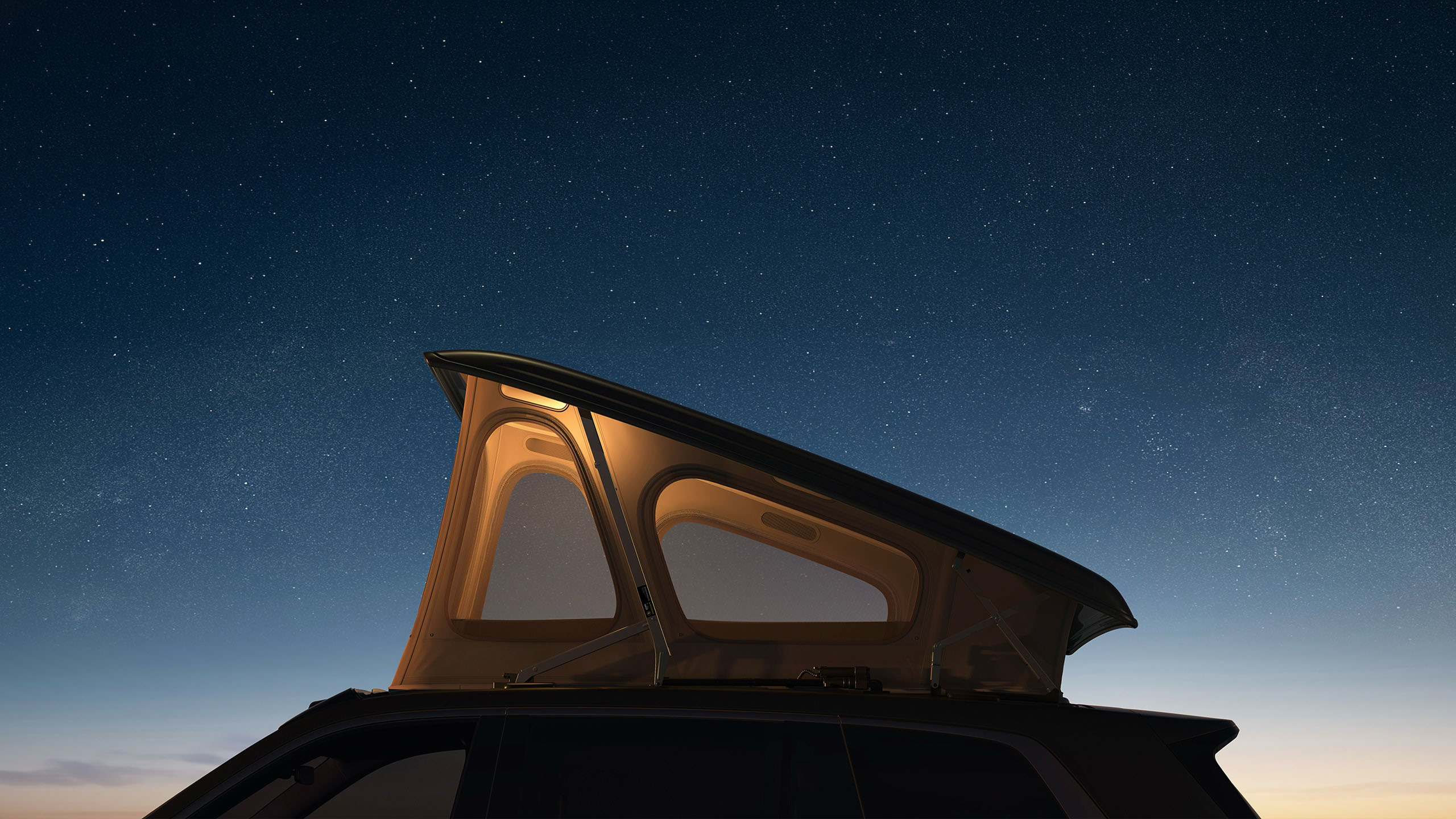
The pop-up roof adds only 100mm to overall height when closed, keeping drag coefficient at 0.245. (Xiaomi)
Downstairs, the bed conversion is the more practical party trick. The second-row seats fold electrically into that 1.87m by 1.24m flat sleeping surface without removing any hardware, sitting on wood-grain aluminum composite flooring with underfloor heating that runs up to 38 degrees Celsius. A 30-inch pull-down projector rated at 1080p and 650 lumens turns the cabin into a screening room, and a nine-liter compressor refrigerator sits built into the center console rather than a cooler bag. Xiaomi also fitted built-in wardrobe storage and a lit vanity mirror, treating the cabin less like a converted family hauler and more like a small studio apartment.
Advertisement – Continue scrolling for more
Away from the camping gear, the cabin runs the same tech stack Xiaomi has built across its car lineup. A 16.1-inch HyperOS touchscreen running on a Qualcomm Snapdragon 8650 chip anchors the dashboard, backed by a 21.4-inch rear entertainment display and a 20-inch head-up display for the driver. Front seats swivel 180 degrees when the SUV is parked, turning the cabin into a face-to-face lounge, and a 25-speaker audio system fills the space regardless of whether the roof is up or down.
Xiaomi clearly anticipated skepticism about a moving roof structure holding an adult's body weight. The company says the mechanism carries 19 separate safety features, including child locks, a descent-detection sensor, a rainfall alert, and a warning for low garage clearances, and that it was tested through 10,000 open-and-close cycles and 12,000 simulated step-load cycles on the upper platform before production. That kind of durability testing is normally reserved for door hinges and window regulators, not a piece of furniture that only exists when the car is camping.
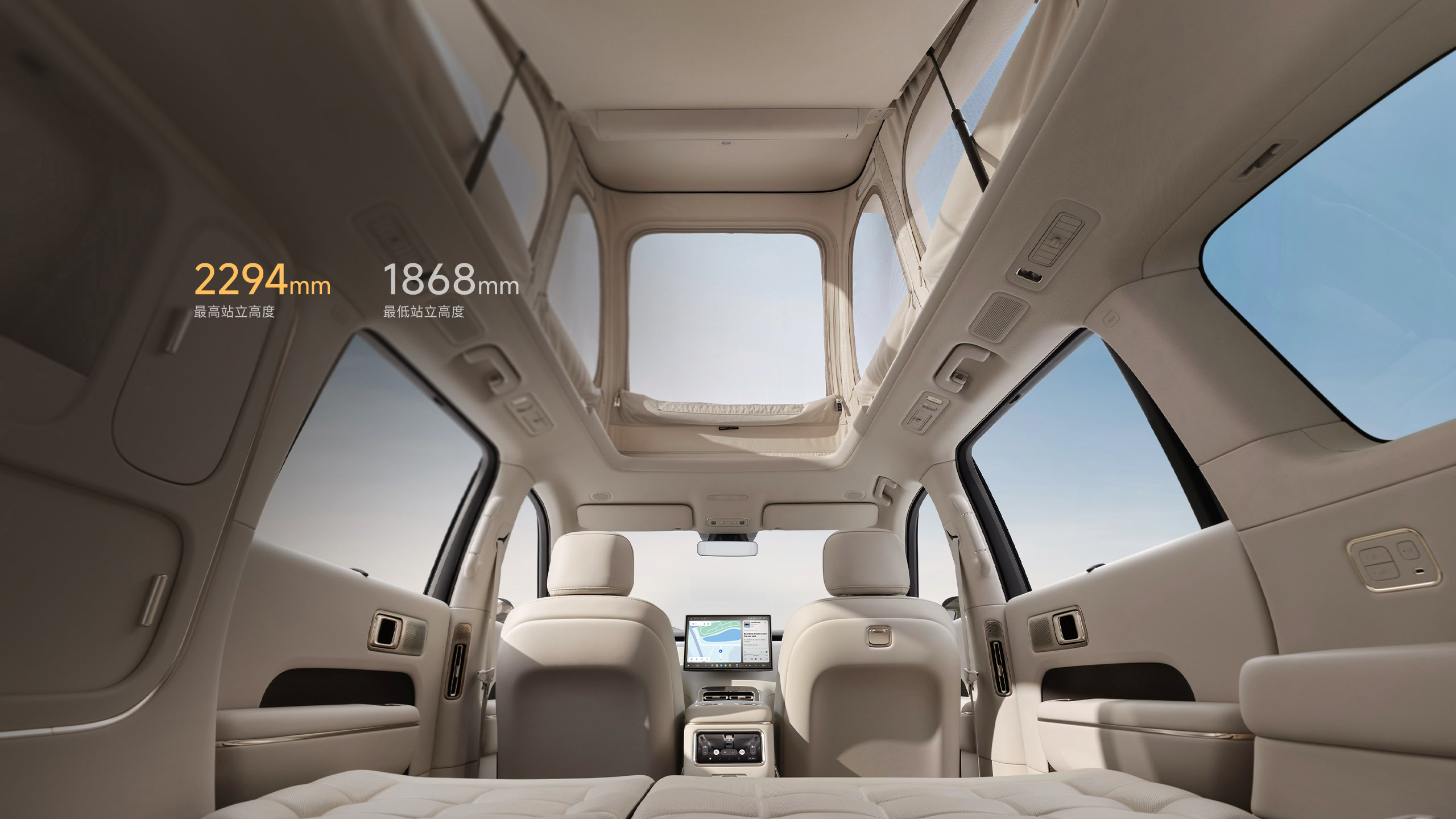
Standing height inside the raised loft reaches 2,294mm, tall enough for most adults to stand upright. (Xiaomi)
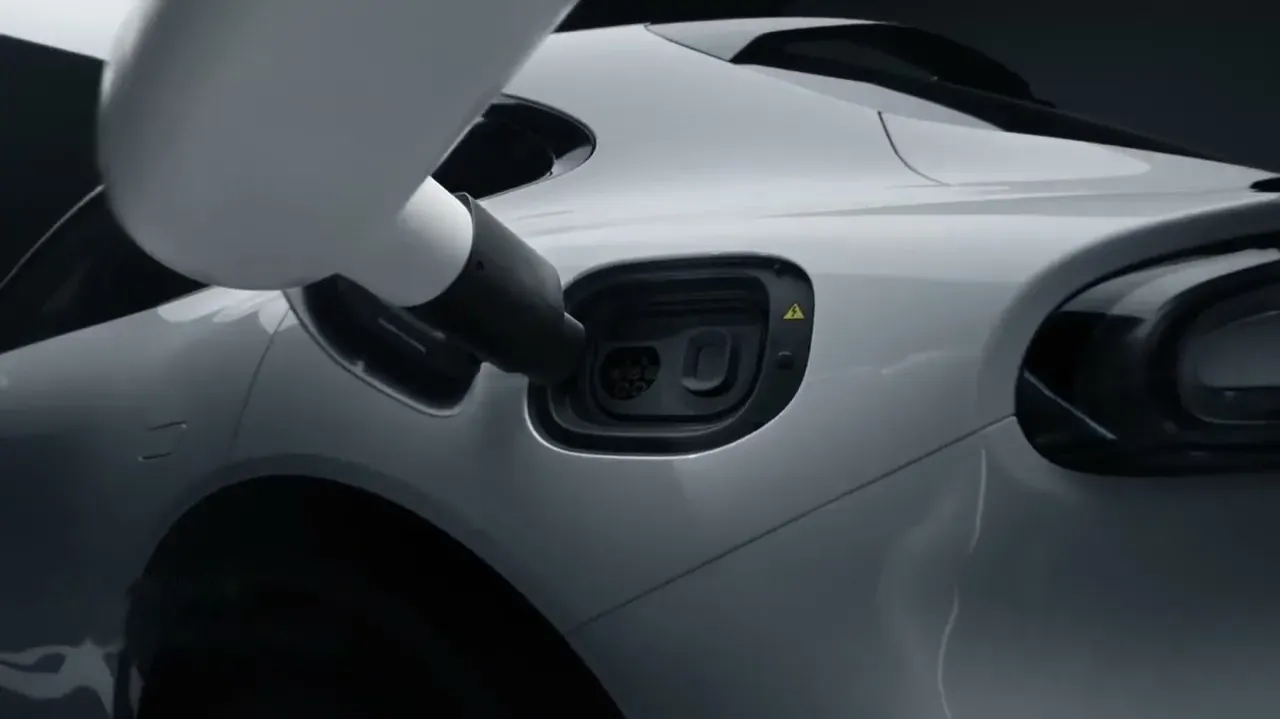
Under the skin, the N90 Max runs Xiaomi's extended-range setup: a 76kWh ternary lithium pack the company calls its Dragon Armor battery, paired with a 1.5-liter, 112kW range-extender engine that tops up the battery rather than driving the wheels directly. Xiaomi rates the pack for 464km of pure-electric range on the CLTC cycle and 1,705km combined once the 60-liter fuel tank is factored in. Fast charging adds 285km of range in 15 minutes. A dual-motor all-wheel-drive system produces a combined 310kW, enough for a 5.9-second 0-100km/h run in a vehicle built around a fold-out bed.
Advertisement – Continue scrolling for more
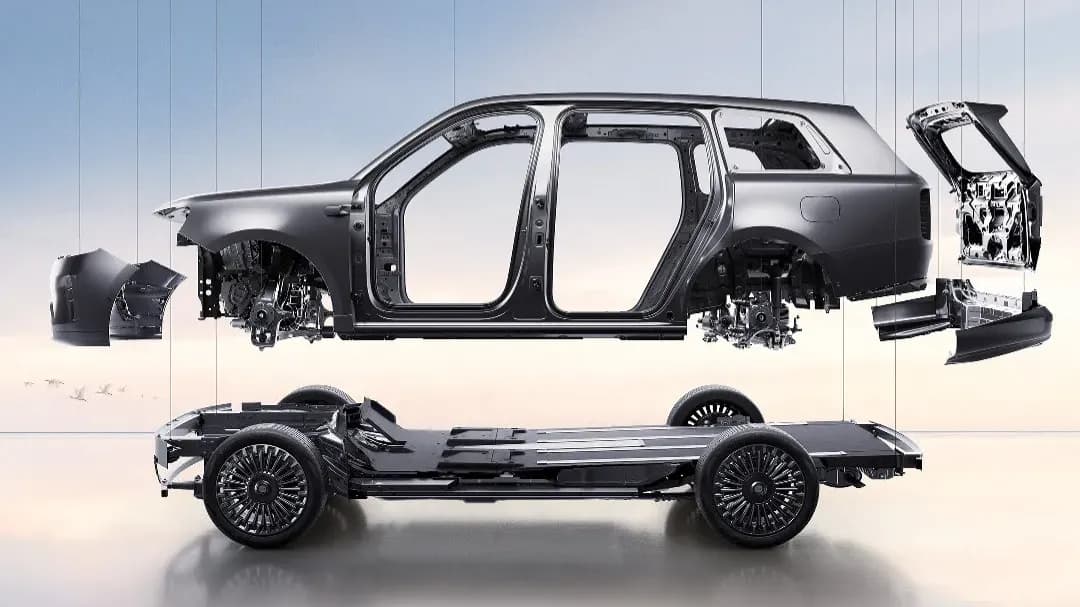
The SUV rides on Xiaomi's new Kunlun platform, which the company built with a flat floor and sliding cabin rails to support the multiple furniture configurations the camping trims need. Dimensions run 5,285mm long with a 3,080mm wheelbase, and the base N90 Max stands 1,825mm tall against the Explorer Edition's 1,925mm with the roof stowed. Xiaomi also carried over its advanced driver-assistance stack from its passenger cars, built around a 700 TOPS Nvidia Thor chip with lidar and radar, and cargo capacity in the base trim tops out at 1,831 liters across eleven seating and storage layouts.
Pricing puts real distance between the N90 Max and the two flagship SUVs it appears to be chasing. Li Auto's updated L9 starts at 459,800 yuan (about $68,500), and the Huawei-backed AITO M9 starts at 479,800 yuan (about $71,500). Even the Explorer Edition's 299,900 yuan sticker lands well under half of either rival's base price, though neither the L9 nor the M9 offers a factory pop-up camper roof, so the comparison is really about extended-range SUV positioning rather than a like-for-like feature match.
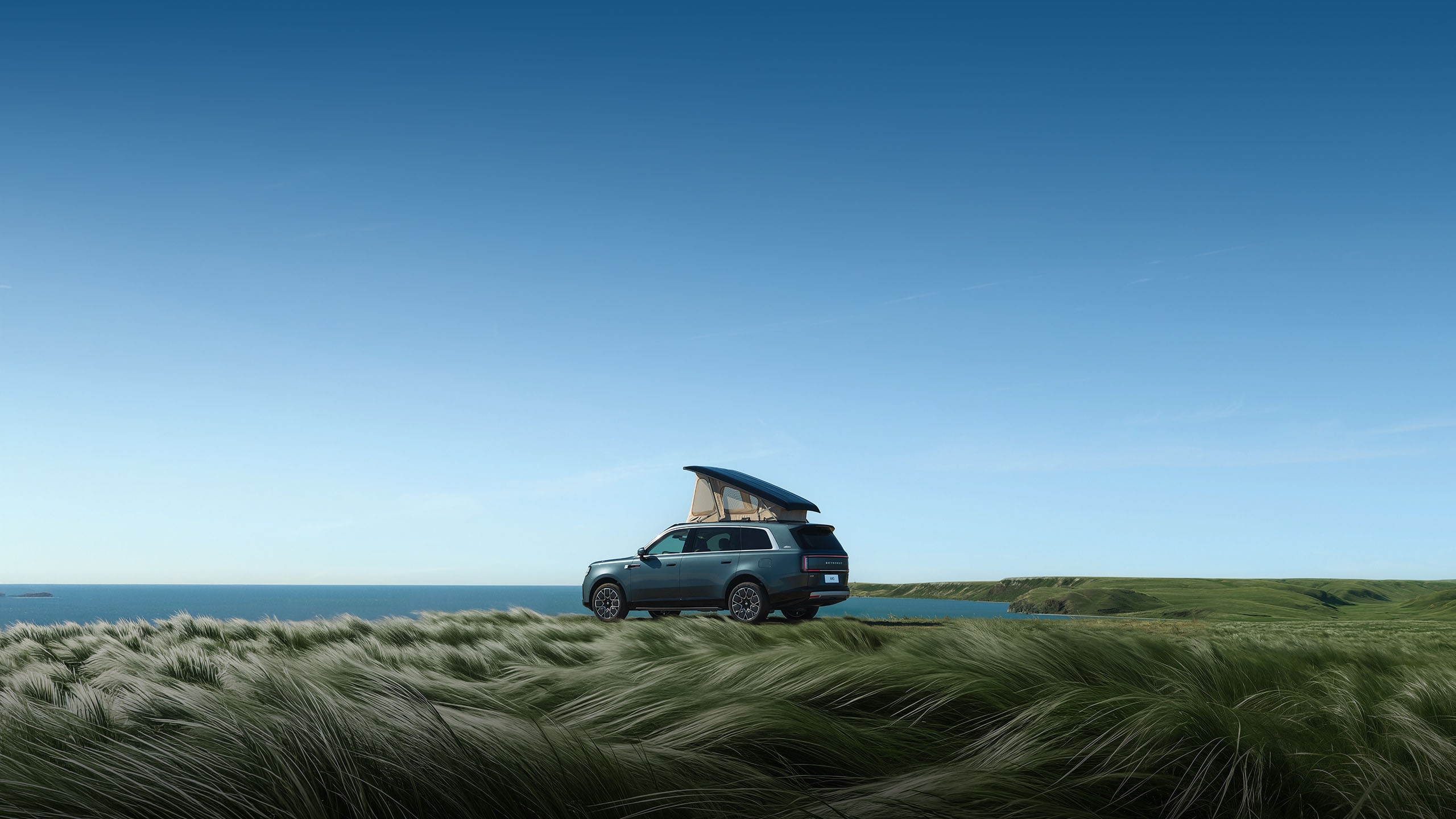
The Explorer Edition trades the standard car's third-row seats for the camping hardware. (Xiaomi)
The Explorer Edition ships in four exterior colors: Remote Mountain Green, Butterfly Valley Blue, Cool Khaki, and Volcanic Grey. Deliveries in China are expected to begin in November or December 2026, and the lineup is currently sold only in the domestic market, with European availability floated for sometime next year.
Whether the pop-up roof and one-touch bed prove durable in daily use is something only owners will be able to answer once deliveries start. But the pitch is clear: Xiaomi is betting that a family SUV buyer who might otherwise tow a trailer or rent a rooftop tent would rather have the whole system built in, tested to five figures of cycles, and priced under $45,000.
Conversion rate: 1 USD = 6.71036 CNY as of September 9, 2026.
Advertisement – Continue scrolling for more