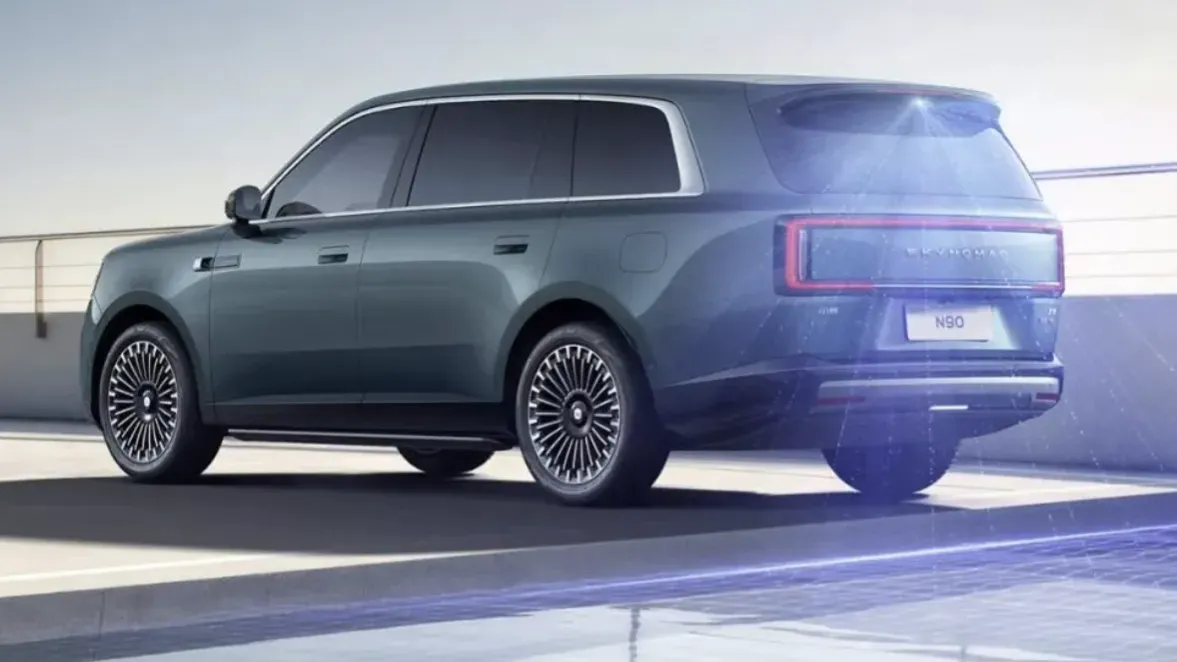
Xiaomi (HKG: 1810) disclosed the smart hardware and software configuration for its SkyNomad SUV lineup on July 29, 2026, a day ahead of the series' full technical launch event. The flagship N90 Max picks up a rear-facing solid-state LiDAR sensor that its smaller sibling, the N70 Max, does not get.
The extra sensor sits at the tail of the seven-seat N90 Max specifically to close a perception blind spot behind the longer body, sharpening detection during reversing, lane changes and low-speed maneuvering. Xiaomi left the rear unit off the five-seat N70 Max, whose shorter rear overhang evidently does not need the added coverage.
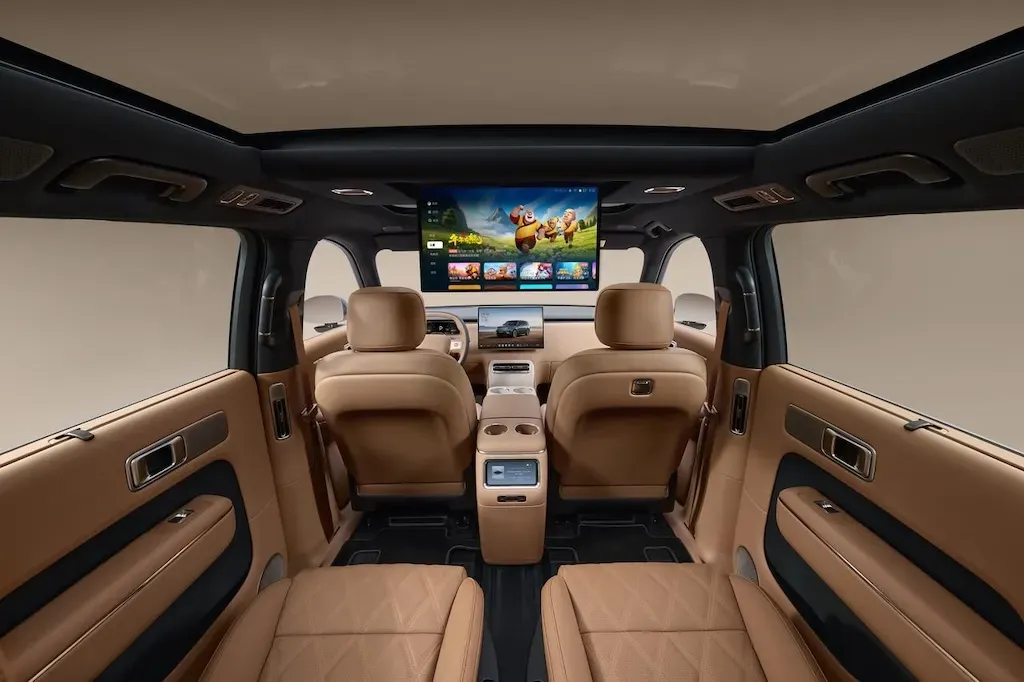
Xiaomi Skynomad N90 interior (Xiaomi)
Both SkyNomad models otherwise share the same perception hardware: a 700 TOPS Nvidia Thor chip, a roof-mounted LiDAR, 4D millimeter-wave radar, 11 high-definition cameras and 12 ultrasonic radars. That stack runs Xiaomi's HAD (Hyper Assisted Driving) system alongside its XLA cognitive large language model, which the company markets as a fully equipped driver-assistance package standard on every SkyNomad trim.
Advertisement – Continue scrolling for more
4D millimeter-wave radar adds elevation data to the speed-and-distance readings of a conventional radar unit, letting the system distinguish a low obstacle from a vehicle ahead at highway speed. It is a capability increasingly common on China's newest driver-assistance stacks, and it works alongside the LiDAR and camera array rather than replacing either.
Solid-state LiDAR units carry no moving parts, letting automakers tuck them into slimmer housings than the spinning mechanical units common on earlier-generation ADAS hardware. Mounting one at the rear, rather than relying solely on roof and fender-mounted units, is still uncommon among the SkyNomad's intended rivals, giving Xiaomi a talking point against the Li Auto (NASDAQ: LI) L9 and the Huawei-backed AITO M9, both of which lean on front- and roof-mounted LiDAR alone. Chinese automakers have added LiDAR to mainstream family SUVs at a fast clip over the past two years, but pairing a rear unit specifically for parking and low-speed safety remains a comparatively rare configuration.
The added rear coverage could matter beyond city streets. Xiaomi has also detailed an N90 Max Camping Edition with a pop-up roof and rooftop bed platform, aimed at exactly the kind of tight campsite parking and trailer-adjacent maneuvering where rear blind-spot coverage counts most.
Advertisement – Continue scrolling for more
Inside, the two SUVs share a 16.1-inch 3K central touchscreen, an 8.88-inch instrument cluster and a 21.4-inch rear-seat entertainment display, backed by a 20-inch head-up display. The front passenger seatback folds out into a tablet that doubles as a control screen for rear occupants.
A third-generation Snapdragon 8 automotive chip runs the cabin electronics and ties into Xiaomi's CarIoT ecosystem. Xiaomi's Super Xiao Ai voice assistant comes standard on both trims, supporting multi-zone voice recognition inside the cabin as well as spoken commands from outside the vehicle.
The sensor and software reveal is the latest in a run of pre-launch disclosures. Xiaomi has drip-fed details on SkyNomad's range-extender engine, its Changan-built powertrain partnership and its interior packaging over the past two weeks, building toward Thursday's event without yet naming a price.
Advertisement – Continue scrolling for more
SkyNomad is Xiaomi's second vehicle series after the SU7 sedan and YU7 SUV, pitched as a smart, reconfigurable large-space SUV aimed at families. Wednesday's hardware disclosure sets up Xiaomi's second dedicated automotive technology event, following its first on December 28, 2023.

Xiaomi Skynomad N90 interior (Xiaomi)
The stakes are real for Xiaomi's push into extended-range SUVs. The automaker delivered 185,055 vehicles in the first half of 2026, up 17.2% year over year, against a full-year target of 550,000 units, and SkyNomad marks its first attempt to carry that momentum into a family-hauler segment long dominated by Li Auto and Huawei-backed brands.
Whether the added rear sensor becomes a genuine differentiator for family buyers weighing the N90 Max against the L9 and M9, or simply a spec-sheet checkbox, may not be clear until Xiaomi discloses full pricing and real-world reviews test the system beyond a parking lot.
Advertisement – Continue scrolling for more