
Voyah Dream enters Thailand at an expected 2.59 million baht as 1,000 ship
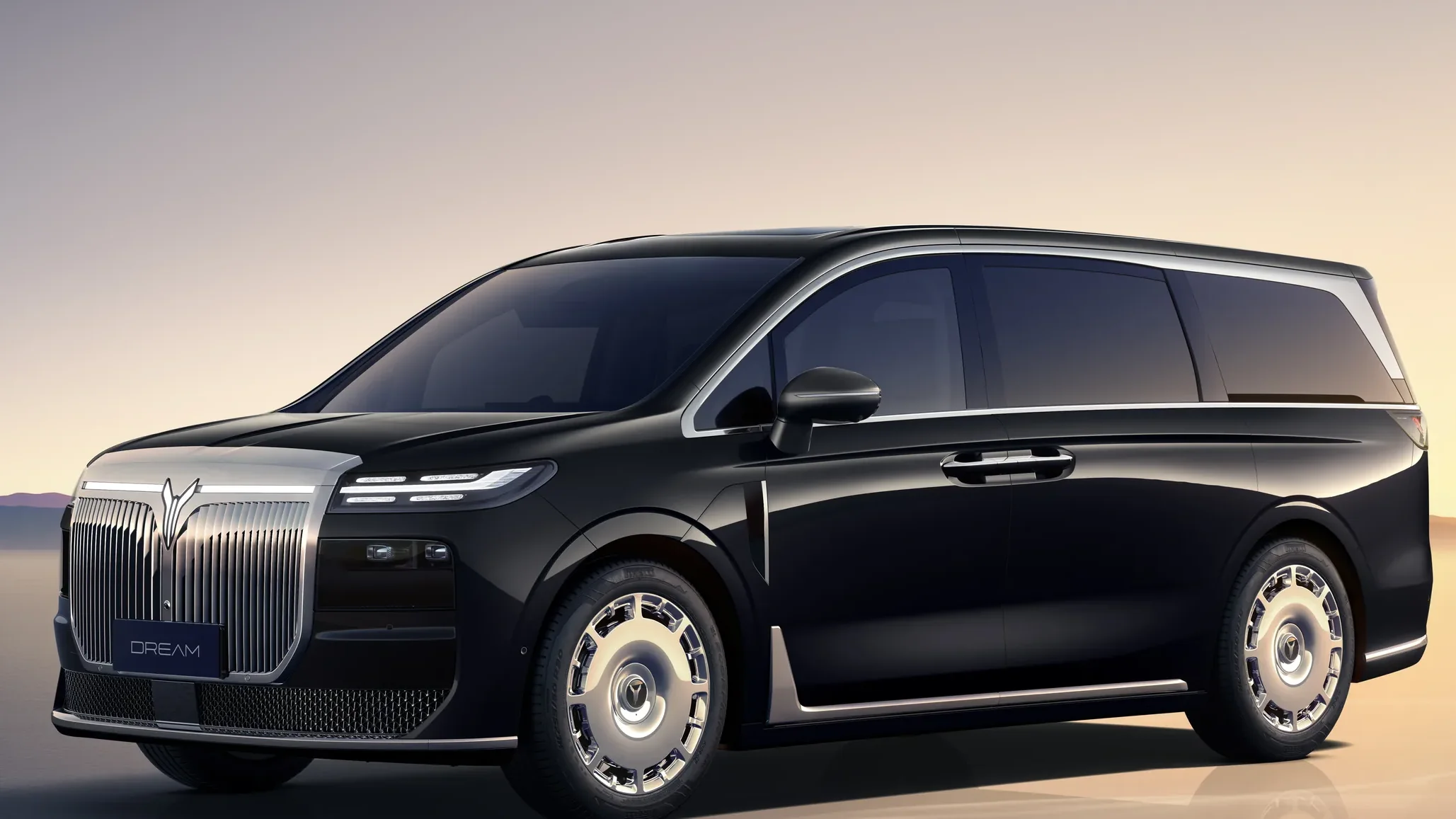

Voyah, the premium electric brand of China's state-owned Dongfeng Motor, launched in Thailand on November 20, 2026, opening orders for a right-hand-drive version of its Dream MPV. The all-electric seven-seater comes in two trims, the Dream BEV Prime at an expected 2,590,000 baht and the Dream BEV Ultra Comfort at an expected 2,990,000 baht. Final prices have not been published; the official figures end in "XXX".
The same day, Voyah held a send-off at its Wuhan plant for a batch of 1,000 right-hand-drive cars, built for Southeast Asian orders worth on the order of 1 billion CNY (c. $149 million). Thailand is the first Asian market for the right-hand-drive car, which will reach Hong Kong on December 15 before Singapore, Indonesia and Malaysia.
The Thai launch materials call the car simply the Dream, but Voyah's Chinese announcements identify it as the Dream 9 right-hand-drive edition. The Dream 9, a flagship version of the Dream, went on sale in China on September 22, 2026. The Thai specifications match it: the car is 5,325 mm long on a 3,200 mm wheelbase, rides on an 800V platform and gets 10-degree rear-wheel steering, all features Voyah listed for the Dream 9 at its China launch. Thailand gets only the battery-electric version, while China also sells a plug-in hybrid.

The right-hand-drive cockpit of the Thai-market Dream in Maple Brown leather; official rendering (Voyah)
Both Thai trims use two motors rated at 175 kW and 300 kW, for 475 kW and 770 Nm combined. The Prime carries a 98.1 kWh battery rated for 540 km (336 miles) on the NEDC cycle, reaches 100 km/h in 5.9 seconds and charges from 20% to 80% in 10 minutes. It rides on coil springs and has second-row seats with 10-point massage.
The Ultra Comfort steps up to a 119.6 kWh battery and 650 km (404 miles) of NEDC range, with a 0 to 100 km/h time of 5.8 seconds and a quoted 20-minute fast charge from 20% to 80%. It adds three-chamber air suspension with continuous damping control and rotating Zero Gravity second-row seats with 20-point massage.
In China, the Dream 9 sells for 419,900 to 529,900 CNY (c. $62,550 to $78,940) across plug-in hybrid and electric versions. The China-market electric car uses a 120 kWh battery with 701 km (436 miles) of CLTC range. That figure and the Thai NEDC ratings come from different test cycles, so they cannot be compared directly.
GCEV Weekly · Every Tuesday
China's EV industry in five minutes.
Launches, sales, batteries and policy — the week's stories that matter, with the context the headlines leave out.
Sent by GigaCharts Inc. Questions? Write to globalchinaev@gmail.com. Unsubscribe anytime. See our privacy policy.
The launch offer runs from November 20 to December 31, 2026, for cars delivered by January 31, 2027. It includes a 6-year or 200,000 km vehicle warranty, a 10-year battery warranty with unlimited mileage, a wallbox charger or cashback, one year of first-class insurance and financing at 1.88% with partner lenders. The first 100 buyers also get 60,000 Thai Airways Royal Orchid Plus miles. Both trims go on display at the Thailand International Motor Expo from December 2 to 13 at IMPACT Challenger, Muang Thong Thani.
Back home, the Dream line is selling faster since the Dream 9 arrived. Domestic sales of the Dream, a count that includes the Dream 9, reached 5,177 in October, up 85.5% from 2,791 in September, when the new version was on sale for only the last nine days of the month. October's total put the Dream third among China's MPVs, behind the Wey Gaoshan and the Toyota (NYSE: TM) Sienna, and ahead of the Denza D9 at 3,801.
That Denza, from BYD (HKG: 1211), is the car the Dream has to chase in Thailand. In 2025, the Denza D9, the Zeekr 009 from Geely (HKG: 0175) and the XPeng (NYSE: XPEV) X9 together logged 6,251 registrations in Thailand, more than the 5,438 of Toyota's Alphard and Vellfire combined. The D9 alone took 3,096 and ranked second among all MPVs in the country. The Zeekr 009 launched there at about 3 million baht, against roughly 4.6 million baht for the Alphard, so both Dream trims are expected to come in at or below the Zeekr 009's launch price.

Executives at Voyah's Thai brand launch on November 20, 2026, where AI Mobility, part of AAS Group, was confirmed as sole importer and distributor (Voyah)
Voyah's Thai partner is AI Mobility, an AAS Group subsidiary and the brand's exclusive distributor in Thailand. Its CEO, Anuwat Inthraphuvasak, said in October that the company aimed for about 500 bookings around the launch and would open its first two showrooms, in Ekkamai-Ramintra and Bangna, by December 1, followed by more Bangkok sites and dealers in Chiang Mai, Khon Kaen, Nakhon Ratchasima, Chonburi, Phuket and Hat Yai during 2027.
Thailand's tax rules are the main risk. From 2027, Thailand is reportedly set to levy a 35% excise tax on imported EVs from makers without local production and parts supply. Because of that uncertainty, AI Mobility cut its 2027 Dream target from 2,500 to 2,800 cars to 1,000 to 1,200, put two planned 2027 launches under review and began studying a local assembly plant with Dongfeng. If a deal is reached, construction would take about six to eight months, and a four-seat Dream due in 2027 could be among the first models built there.
The wider market is shifting. Japanese brands' share of Southeast Asia's MPV segment fell from 94.0% in 2021 to 73.4% in 2025, and the losses were concentrated in the premium and electrified end where the Dream will compete. Voyah sold 150,169 cars in 2025, up 87%, and the Dream is already on sale in more than 40 countries, including Norway, the Netherlands, Italy and the UAE.
Indonesia, one of the next stops, shows the size of the opening. MPVs account for 31% of its car market, and from January to September 2025 the Denza D9 sold 6,775 there against 1,884 for the Alphard, at about 950 million rupiah versus 1.6 to 1.7 billion rupiah. Across Southeast Asia, MPVs sell more than 500,000 a year, over a fifth of the region's car sales, though Japanese brands still hold most of the cheaper end.
Will Voyah have a Thai-built Dream ready before the 2027 excise rules start to bite?
Conversion rate: 1 USD = 6.7131 CNY as of November 20, 2026.
GCEV Weekly · Every Tuesday
China's EV industry in five minutes.
Launches, sales, batteries and policy — the week's stories that matter, with the context the headlines leave out.
Sent by GigaCharts Inc. Questions? Write to globalchinaev@gmail.com. Unsubscribe anytime. See our privacy policy.