
Hyundai puts its China cost gap at 30% as Ioniq M signs up for CATL swaps
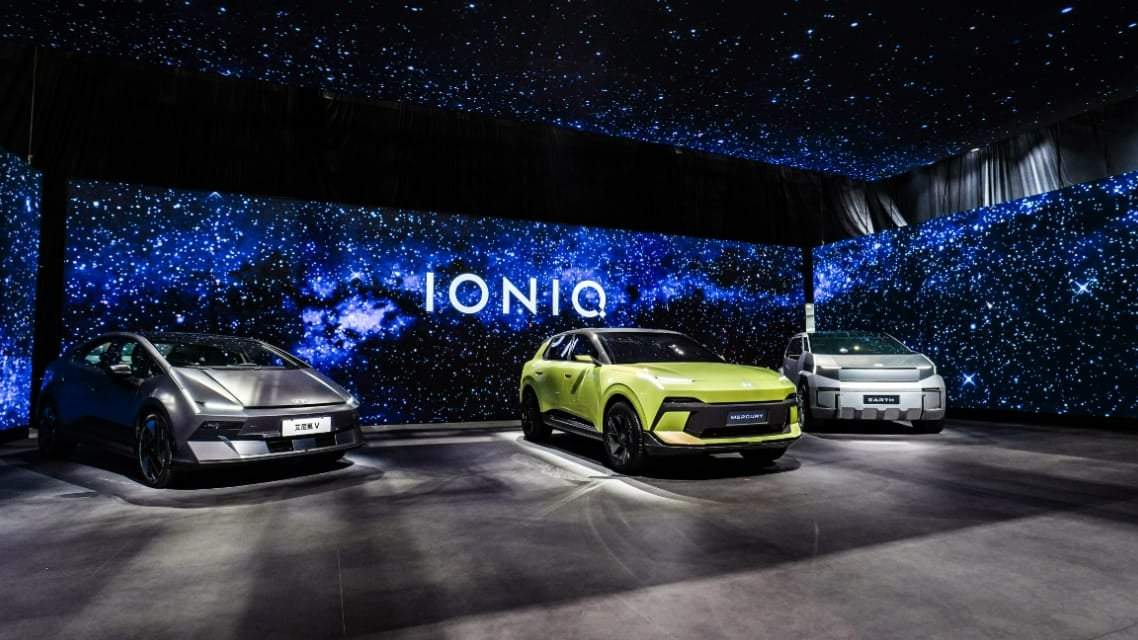

Hyundai Motor Group vice chairman Chang Jae-hoon says the group's cars cost about 30% more to make than those of its Chinese rivals, and he wants as much of that gap as possible gone within three years. Speaking to reporters at the Guangzhou auto show on November 27, Chang said Hyundai had set concrete cost-cutting targets and was reworking everything from vehicle specifications to engineering standards.
He spoke on the day Hyundai gave the Mercury Concept its global design debut, a small premium electric SUV that previews the Ioniq M, due in China in 2027. Beijing Hyundai, Hyundai's joint venture with BAIC, also signed a localization strategic agreement with CATL covering battery-swap networks, joint technology development and expansion abroad. The Ioniq M will plug into CATL's Choco-swap system, and Hyundai says a battery-swap version is planned. According to one report, that will make it the first joint-venture battery-swap model.
"In reality, there seems to be a difference of about 30%," Chang said of costs compared with Chinese carmakers (our translation). "Within the next three years we have to go as far as we can" (our translation). Asked whether that meant buying more parts from Chinese suppliers, he did not answer directly, saying only that the cost-cutting goals had been set in detail.
"We are looking at everything, starting with the specifications," he said (our translation). "We have approached this all along with the resolve that we cannot win unless we change everything, from specifications to standards" (our translation). Chang said Hyundai would aim to keep a premium in brand value and its sales and service networks while it pushes costs down.
Chang said cost and driver assistance have now been brought up to a level that can compete with China to some degree. Bringing those features over from Hyundai's global models took time, he said, so the company changed the way it works in several areas. Development of the Earth, a family electric SUV concept also on the Guangzhou stand, has already started. "What I felt today is that we can do this," he said (our translation), adding that he was sorry to keep customers waiting but that Hyundai's development plan should let it catch up.
GCEV Weekly · Every Tuesday
China's EV industry in five minutes.
Launches, sales, batteries and policy — the week's stories that matter, with the context the headlines leave out.
Sent by GigaCharts Inc. Questions? Write to globalchinaev@gmail.com. Unsubscribe anytime. See our privacy policy.
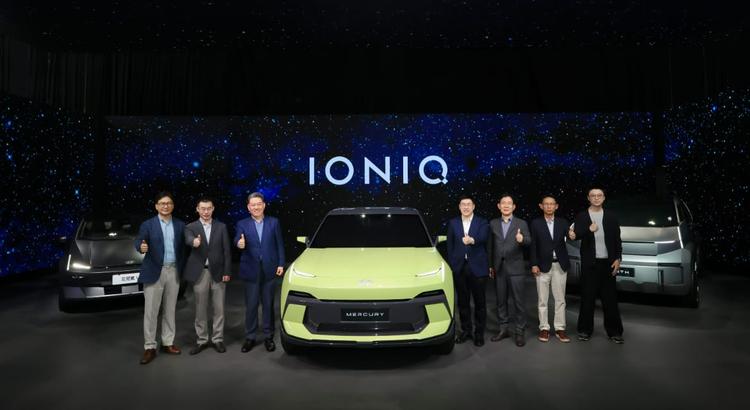
Hyundai executives with the Mercury Concept at Auto Guangzhou 2026 on November 27, 2026 (Hyundai)
Chang described the effort as more than three years old. "Knowing China well and using China to compete and win in the Chinese market is not something that started yesterday or today," he said (our translation). The Ioniq V, first shown at the Beijing auto show in April, was about design and resetting the brand's value, he said, while the Mercury Concept is about taking that to the mass market.
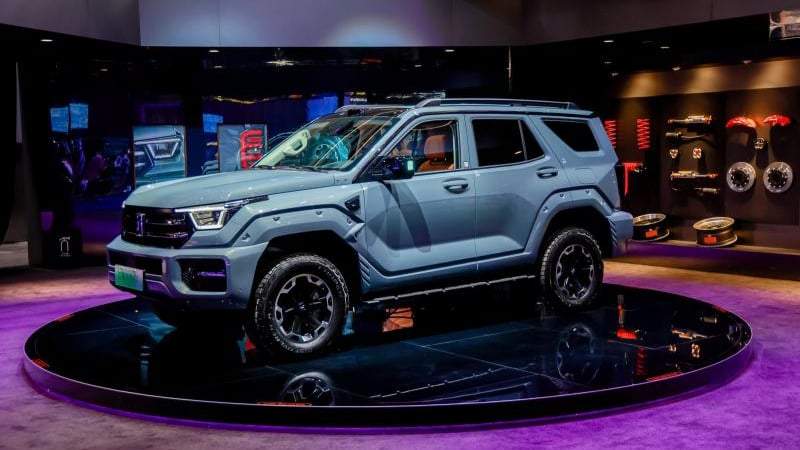
Hyundai calls the Mercury Concept a B-segment premium smart SUV and the most accessible entry-level model in its Ioniq range, built around daily commuting in cities. It was developed by Hyundai's design and engineering team in China and carries a Zhuoyu L2++ driver assistance system and a cockpit running ByteDance's Doubao AI model. The design uses a low shark-nose front end, edge lighting that forms an "H" pattern, a steeply raked windshield and a yellow-green paint Hyundai calls Citrine Neon. The production Ioniq M is due in the first half of 2027, according to one report.
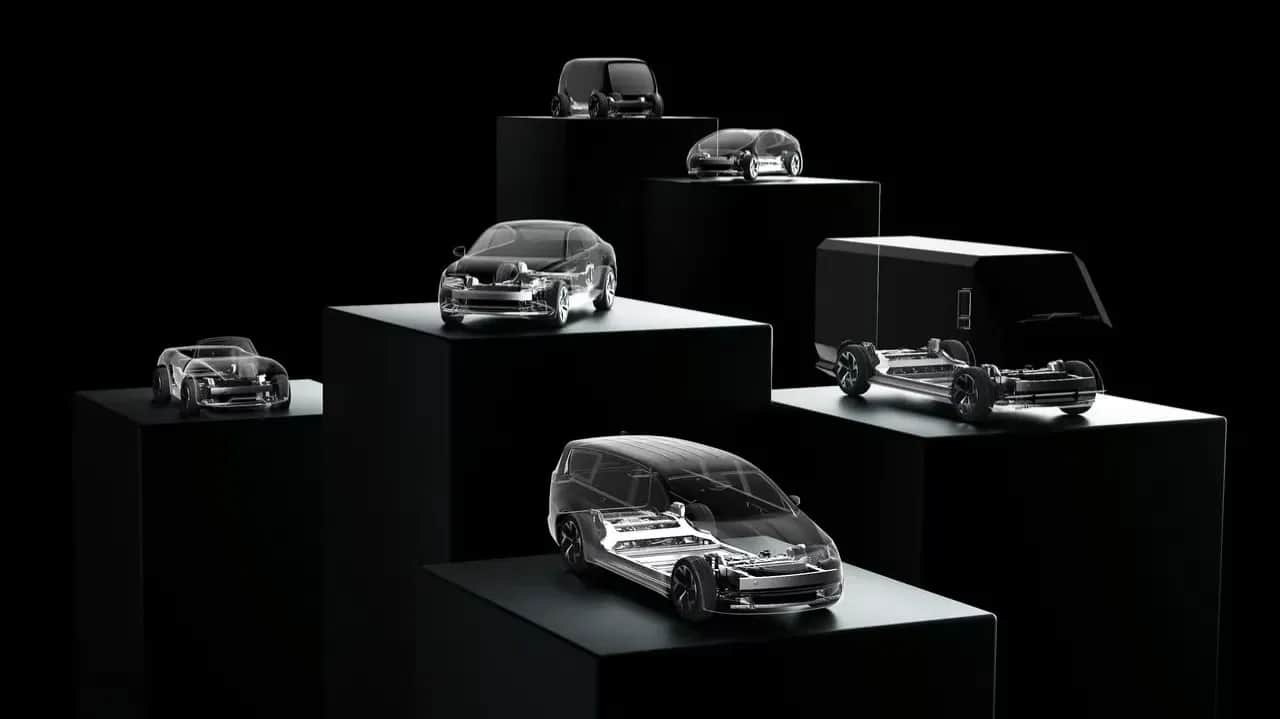
The roadmap behind it is busy. Hyundai plans to launch the Ioniq M and an extended-range Ioniq V in 2027, a production version of the Earth in 2028 and two more new energy models in 2029. Beijing Hyundai says the Ioniq brand will add six new energy products on two platforms over the next three years.
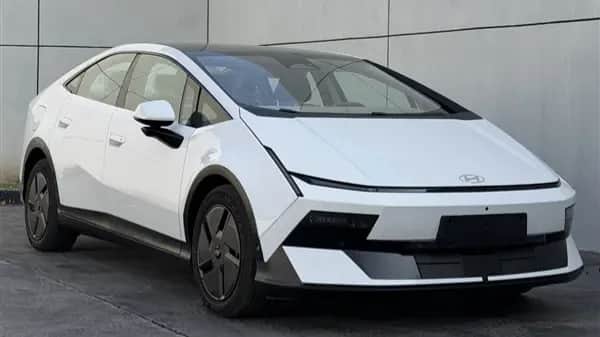
The Ioniq V shows where Hyundai has set its prices. The mid-size electric sedan went on sale on September 29 in five versions, with suggested retail prices of 109,900 to 139,900 CNY (c. $16,385 to $20,857) and limited-time launch prices of 99,900 to 131,900 CNY (c. $14,894 to $19,665). Built on Hyundai's E-GMP electric platform with 800V fast charging, it is 4,900 mm long on a 2,900 mm wheelbase and pairs Momenta driver assistance with a Qualcomm Snapdragon 8295 cockpit chip.
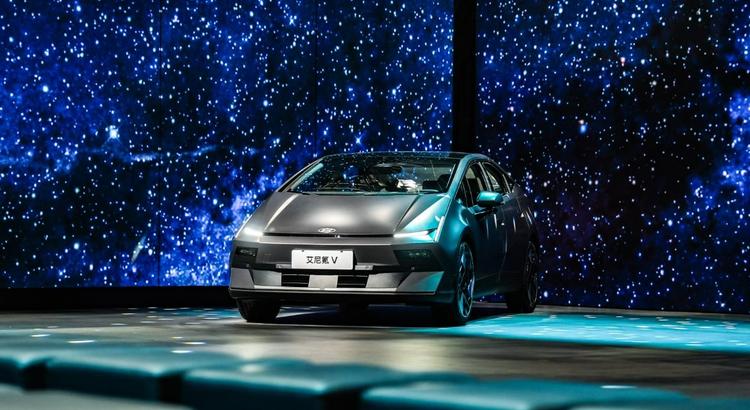
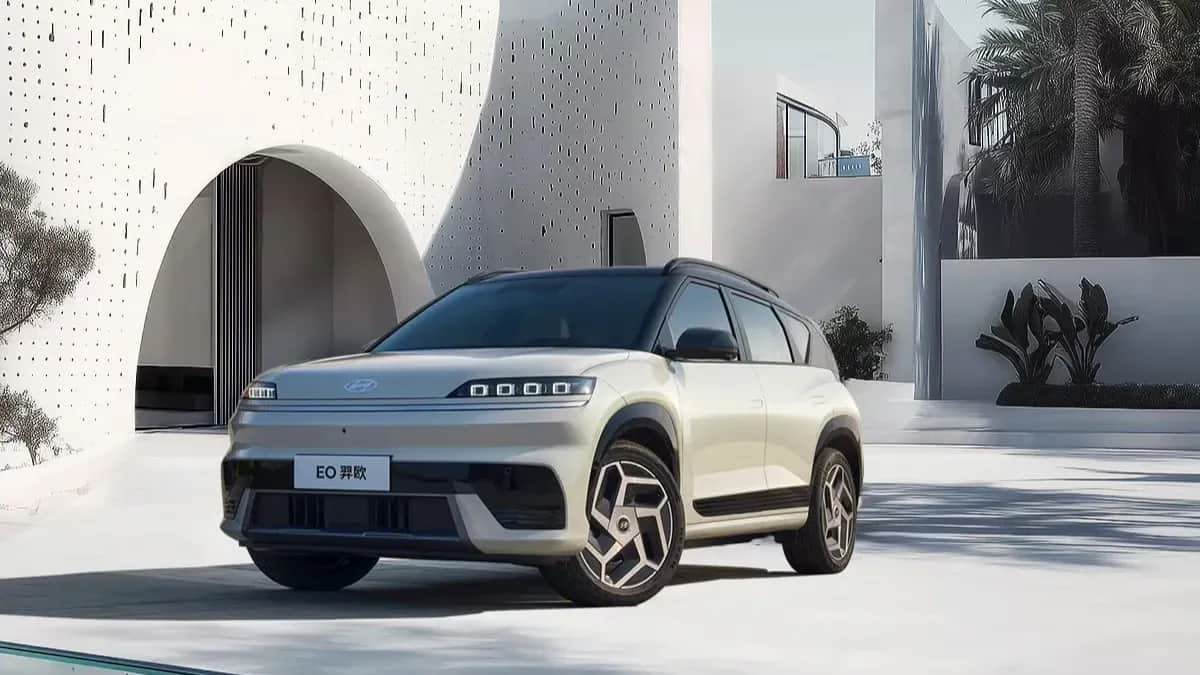
The Ioniq V, Hyundai's first locally developed Ioniq model for China, on display in Guangzhou (Hyundai)
Battery swapping gives the Ioniq M a feature most foreign brands in China do not offer. CATL's Choco-swap ecosystem now spans 25 models, and BAIC, Beijing Hyundai's Chinese partner, launched an Arcfox battery-swap program with CATL this month and staged a 99-second swap demonstration on its Guangzhou stand alongside new Arcfox Beta swap versions. NIO, the longest-running swap operator, has said cars from other brands will join its own network in 2027.
Beijing Hyundai chairman Wu Zhoutao said the Ioniq models are central to Hyundai's plan to build cars "in China, for China and for the world" (our translation). They should renew the brand at home and carry a larger export volume, he said, adding that the locally developed models follow Hyundai's global development and validation standards and will be launched in global markets at the same time.
Hyundai set out the bigger plan at the Beijing auto show in April. It aims to bring 20 new battery electric and extended-range models to China over five years and reach 500,000 units of production and sales a year by 2030, working with CATL, Momenta and ByteDance on technology built for China. It also plans to add 181 dealers by 2030.
Hyundai's vice president for China sales and brand said in Guangzhou that China is not just a huge market for Hyundai but a key market for building its future core competitiveness, and that the company would keep widening its opportunities there.
Chang spent much of his time in Guangzhou on rivals' stands. He visited Mercedes-Benz, BAIC, Huawei, Lincoln, MG, Roewe, Toyota, Volkswagen, BYD, Zeekr and Xiaomi, checking design, pricing, automated driving and performance. Asked if he was confident about China, he said: "We have to go at it with confidence" (our translation). He said Hyundai would find ways to overcome China through China. With the Ioniq M due in 2027 and its rivals cutting costs too, can Hyundai close a 30% gap by 2029?
Conversion rate: 1 USD = 6.7075 CNY as of November 27, 2026.
GCEV Weekly · Every Tuesday
China's EV industry in five minutes.
Launches, sales, batteries and policy — the week's stories that matter, with the context the headlines leave out.
Sent by GigaCharts Inc. Questions? Write to globalchinaev@gmail.com. Unsubscribe anytime. See our privacy policy.