
Huawei launches Xingchi driver assist for 10-plus 2027 models, steers ADS toward L3 and L4


Huawei's smart car unit Yinwang has launched a second driver assistance brand. Jin Yuzhi, Huawei senior vice president and Yinwang CEO, unveiled Xingchi at the Huawei Qiankun ecosystem conference in Guangzhou on November 26, 2026, and said more than 10 new models using it are expected to go on sale next year. Qiankun ADS, the system Huawei has developed over five generations, will now be aimed mainly at automated driving, while Xingchi covers Level 2 assisted driving.
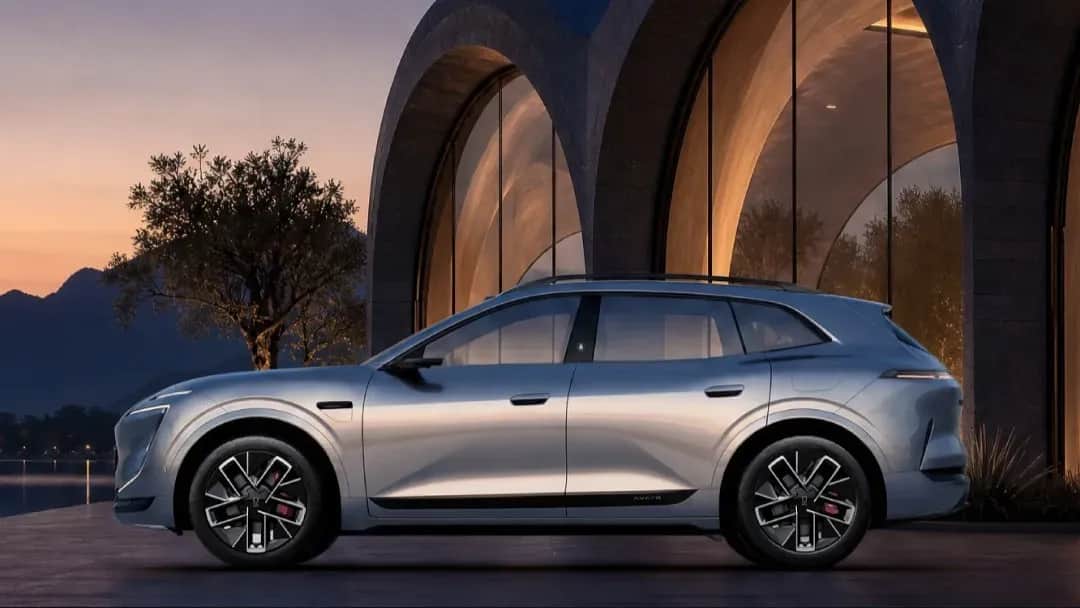
Two reports from the event named Deepal, SAIC-GM-Wuling, GAC Trumpchi, Arcfox and Dongfeng eπ as the first carmakers for Xingchi. Another report listed Deepal, SAIC-GM-Wuling, Arcfox and Dongfeng eπ but left out Trumpchi, and Huawei's own statement named no carmakers or models.
Same base, different features
Huawei says Xingchi and Qiankun ADS come from the same technology and share resources. Xingchi uses the same WEWA architecture, which pairs what Huawei calls a world engine with a world behavior model. It draws on Qiankun's cloud computing power and training data, and goes through the same development process and automotive-grade quality system.
The two will differ in specific functions and experience, Huawei said, while the safety algorithms, stability and reliability stay the same. It did not say which functions Xingchi will drop. It also gave no prices or sensor specifications, such as whether Xingchi cars will carry lidar.
According to one report, the split means cars in the 100,000 to 150,000 CNY range (about $14,904 to $22,356) can get assisted driving from the same technical base as models costing more than 300,000 CNY (about $44,712). Huawei has not said what Xingchi cars will cost, and Qiankun ADS already reaches that price band: another report noted that its ADS SE version ships on the Deepal L07, priced from 135,900 CNY (about $20,255).
Why split now
The timing follows China's rulebook. On July 1, 2027, the country's first mandatory national standard for Level 3 and Level 4 systems, the safety requirements for automated driving systems in intelligent connected vehicles (our translation), takes effect. Huawei said demand for Level 2 assisted driving will last for a long time. A separate brand lets it keep selling that to mass-market partners while Qiankun ADS is pointed at the automated driving systems the new standard covers.
GCEV Weekly · Every Tuesday
China's EV industry in five minutes.
Launches, sales, batteries and policy — the week's stories that matter, with the context the headlines leave out.
Sent by GigaCharts Inc. Questions? Write to globalchinaev@gmail.com. Unsubscribe anytime. See our privacy policy.
Huawei is building on a large installed base. It says more than 2 million vehicles now carry Qiankun ADS, with more than 18.3 billion km (about 11.4 billion miles) of assisted driving logged. Twenty-six brands and more than 60 models work with Huawei Qiankun, and Huawei has shipped over 100 million smart car parts. Citing China Association of Automobile Manufacturers data, Huawei said more than 500,000 new cars sold with Qiankun ADS in the first three quarters of 2026, the largest share of China's market for urban navigation assistance.
The launch came the day after XPeng said it would sell its driver assistance as a subscription to new buyers from the second quarter of 2027. China's driver assistance suppliers are still working out how to price and package these systems.
Swapping joins the system
The conference also brought battery swapping closer to Huawei's software. Jin announced a smart energy solution that links Qiankun ADS with CATL's Choco-Swap network. Yang Jun, CATL's co-president for markets, said that once cars can drive themselves, they will be able to go and swap their own batteries.
CATL used the stage to launch the 30# Choco battery, a new size for its swap system. The first version holds 100 kWh and is rated at 700 km (about 435 miles) on China's CLTC cycle, with peak discharge power of 600 kW, enough for 0 to 100 km/h in around three seconds. CATL says it can be swapped in 99 seconds at a new generation of stations, or fast charged to add 400 km of range in 10 minutes.
The locking mechanism is built for one swap a day and a theoretical life of 27 years, according to CATL. Batteries in the network carry a lifetime warranty, and the pack passed vibration durability tests at 1.5 times the national standard. The format is standardized, so cars from different brands can use the same battery.
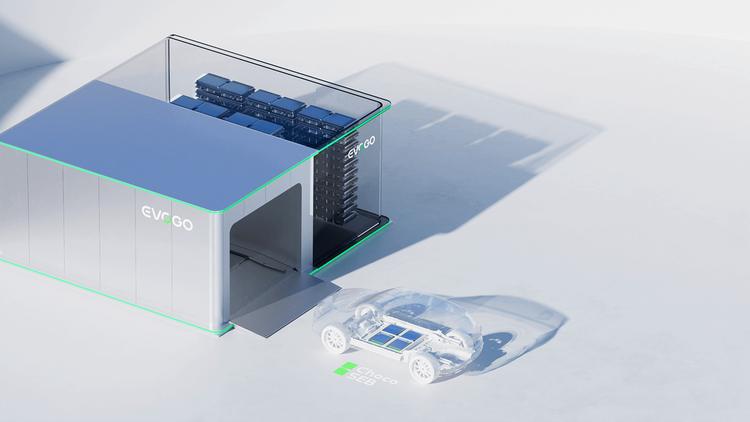
A CATL EVOGO swap station and a car fitted with Choco-SEB battery packs. CATL's Choco-Swap network had more than 2,520 stations as of late September (Brand rendering, CAES)
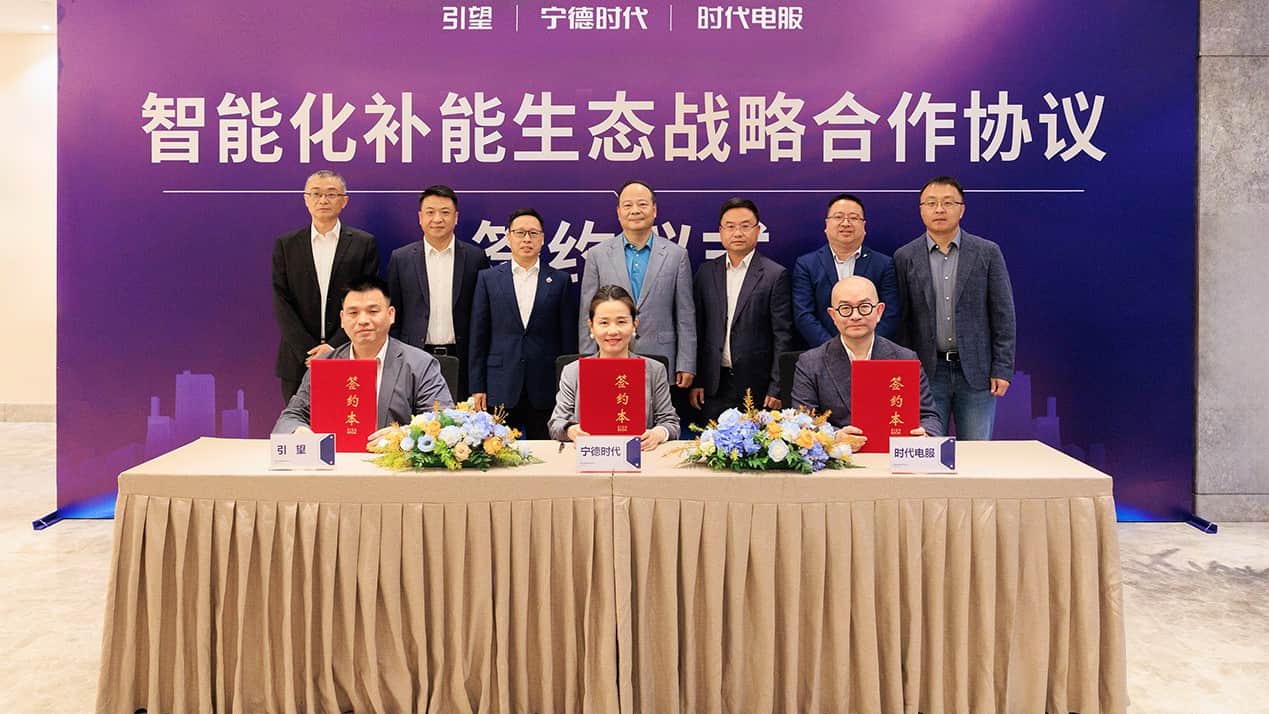
The tie-up builds on the agreement Yinwang signed with CATL and its swap operator CAES in Ningde on October 19. Huawei said then that compatible cars would find a station and complete a 99-second automatic swap. CATL's network had more than 2,520 swap stations in 200 cities as of September 29. At the conference, Wang Junjun, chairman of Huawei partner brand Yijing, said the first smart swap model from Huawei Qiankun, Yijing and CATL will be a Yijing car. He did not name it or say whether it will use the 30# battery.
What Huawei still has to show
Huawei also widened what it calls the Qiankun life circle. By the end of 2026 it expects 400,000 car parks to support in-car parking payment, 10,000 car washes to take bookings online and 2.3 million charging points to show up in in-car navigation. In October it gave figures of 300,000 car parks and 2 million charging sites.
For buyers, the key question is how Xingchi will differ from Qiankun ADS. The answer should come with the first Xingchi cars in 2027. That is also the year Qiankun ADS is due to face China's new rules for automated driving systems. Until Huawei publishes feature lists and hardware for Xingchi, the 10-model promise is a sign of where Huawei wants to sell, not proof of what those cars can do.
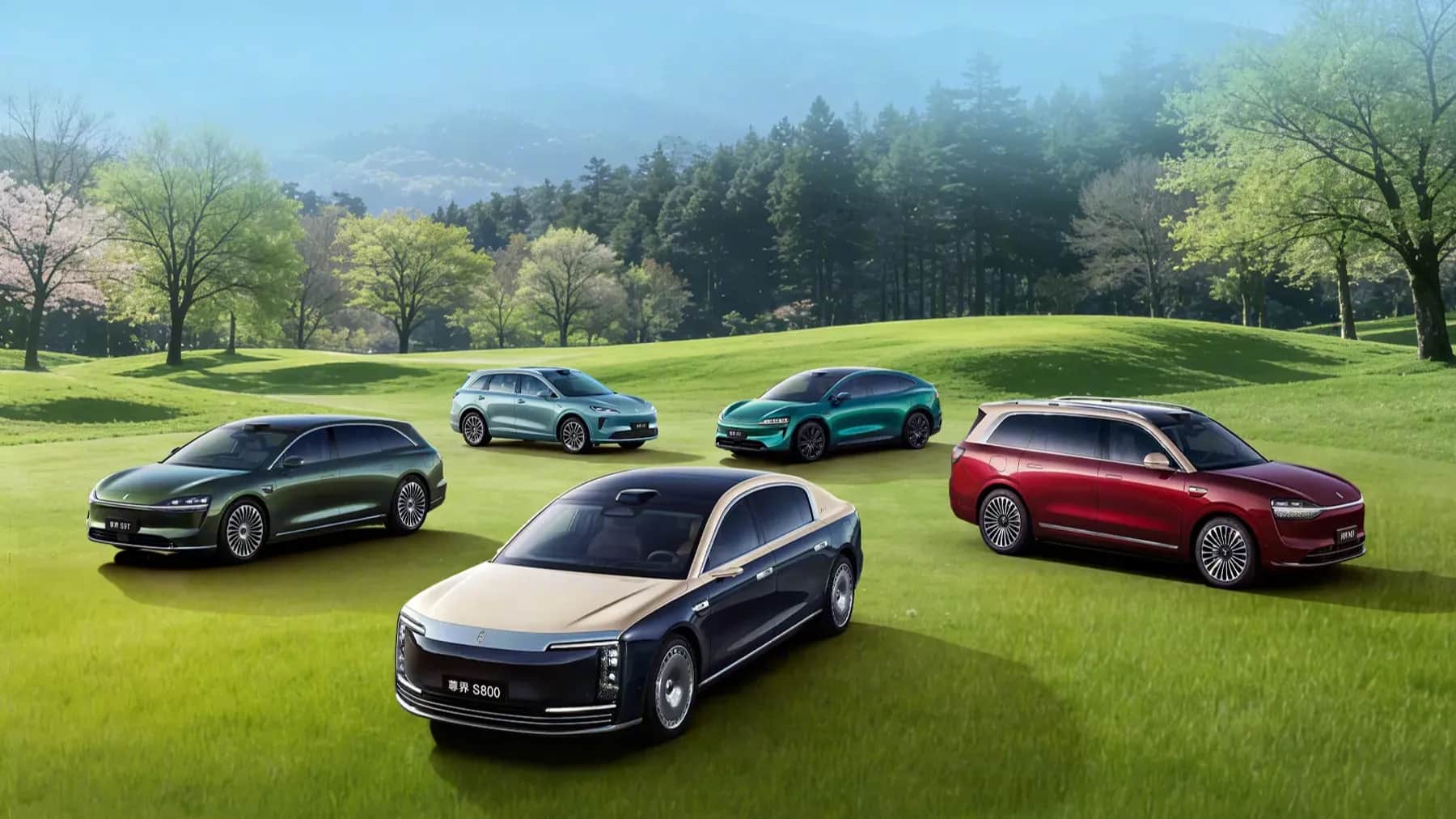
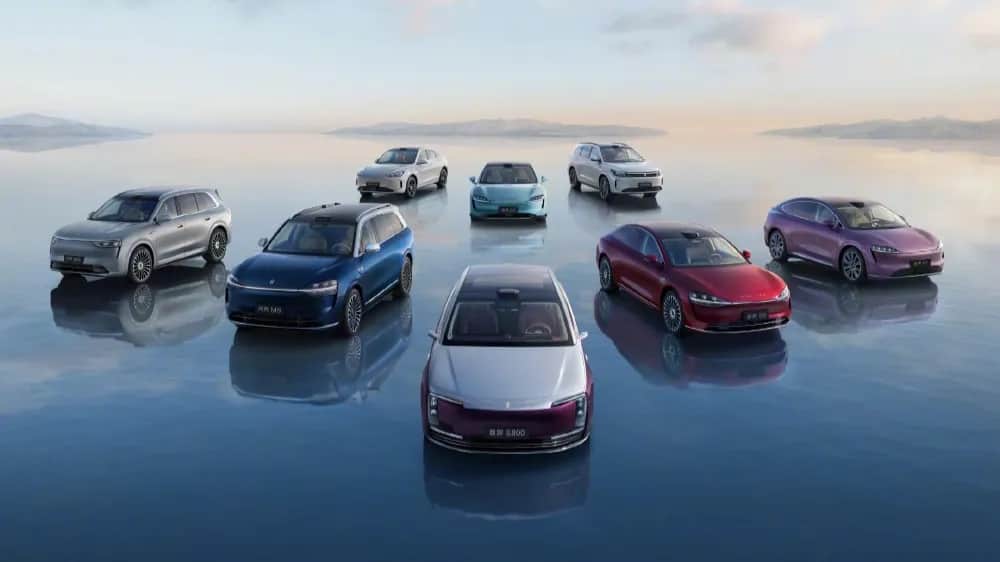
Cover image: Huawei's Qiankun ADS 5 key visual, a brand rendering, not a photo from the November 26 event.
Conversion rate: 1 USD = 6.7096 CNY, PBOC central parity as of November 26, 2026.
GCEV Weekly · Every Tuesday
China's EV industry in five minutes.
Launches, sales, batteries and policy — the week's stories that matter, with the context the headlines leave out.
Sent by GigaCharts Inc. Questions? Write to globalchinaev@gmail.com. Unsubscribe anytime. See our privacy policy.