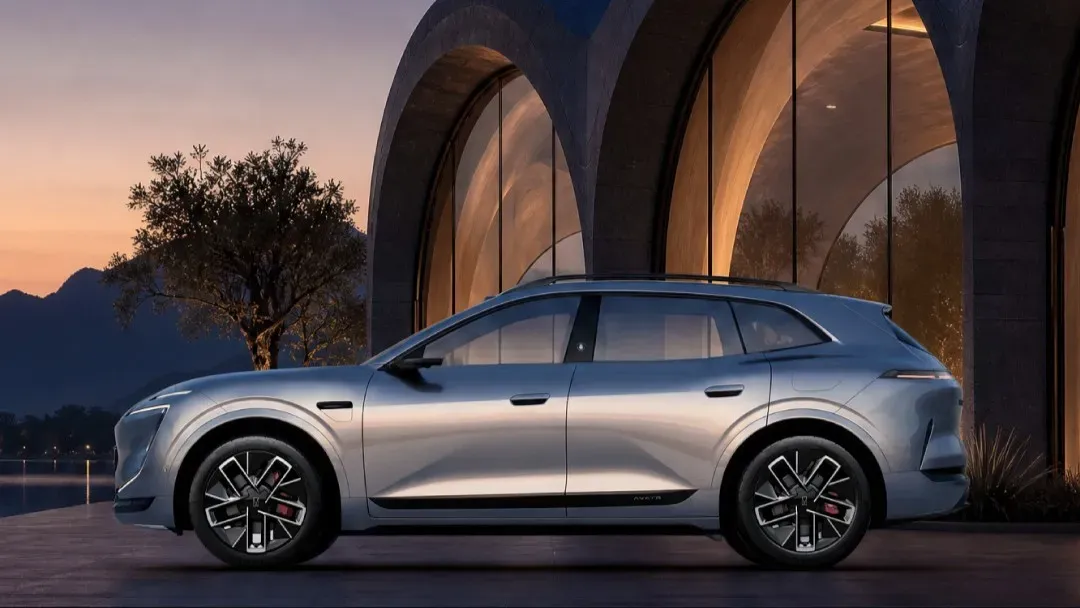
Huawei's Qiankun intelligent-driving unit said on August 17, 2026, that its park-to-park parking feature has been used more than 100 million times cumulatively, while its broader assisted-parking function has passed 1 billion cumulative uses. The company also disclosed that cumulative assisted-driving mileage across all Qiankun-equipped vehicles has surpassed 14.1 billion km (8.76 billion miles).
Park-to-park is Qiankun's flagship convenience feature: it lets a car navigate itself between two designated parking spots, such as a home garage and an office lot, without the driver steering, braking, or accelerating. It has anchored Huawei's pitch that assisted driving should extend beyond highway and urban-road scenarios into the routine act of parking.
Huawei disclosed additional scale figures alongside the milestone. Vehicles running Qiankun's driving stack have racked up 40.6 billion km (25.2 billion miles) of total driving distance, of which assisted driving accounts for the 14.1-billion-km figure. A separate July 2026 safe-travel report showed monthly assisted-driving mileage of 1.06 billion km (658.7 million miles), 16.7 million hours of monthly assisted-driving use, and a 94.7% share of monthly active users engaging the feature.
Advertisement – Continue scrolling for more
The pace of adoption has accelerated sharply. Park-to-park usage stood at roughly 30 million cumulative trips as of December 25, 2025, when Huawei said the feature's "2.0" update supported more than 1 million parking facilities nationwide. Reaching 100 million uses by mid-August 2026 means volume has more than tripled in under eight months, tracking the rollout of the feature to a wider range of partner vehicles.
Assisted parking has followed a similar curve. Huawei said cumulative assisted-parking uses passed 500 million based on data through January 31, 2026, meaning the function has doubled to 1 billion uses in roughly six and a half months. The company attributed part of that acceleration to a February software update that added nearby-parking search and the ability to save frequently visited parking areas.
Behind the usage figures sits a fast-growing installed base. At a media day in Shenzhen in mid-July 2026, Huawei senior vice president and Yinwang CEO Jing Yuzhi said Qiankun's driving system had been installed in more than 1.9 million vehicles across over 25 automotive brands and 50-plus models, spanning sedans, SUVs, MPVs, and off-roaders with electric, hybrid, and combustion powertrains. Partner brands include AITO, Avatr, Deepal, Voyah, and Luxeed. Jing noted the installed base took 44 months to reach its first 1 million vehicles but is expected to reach the second million in about 12 months, a sign of steepening adoption as more automakers integrate the system.
Advertisement – Continue scrolling for more
The installed base has grown roughly twofold in a year. When Qiankun's driving system first reached 1 million installed vehicles in August 2025, Huawei counted more than 700,000 active users across roughly 22 models, including the FAW-Audi Q6L e-tron, AITO M9, Deepal S09, Deepal S07, Voyah Free+, and BYD Fangchengbao Bao 5, with drivers logging an average of 699 km of assisted driving per month. A year on, the partner list has more than doubled to over 25 brands and 50-plus models, and per-user engagement has also risen: Huawei said the average driver used assisted parking 45.7 times in June 2026 alone.
That growth is underwritten by heavy R&D spending. Huawei's Yinwang unit plans to invest more than 18 billion CNY (c. $2.67 billion) in automotive intelligence R&D in 2026, covering cloud training, vehicle-side systems, perception, control, interaction, and safety. Cloud training compute capacity has grown from 2.8 EFLOPS in 2023 to 60 EFLOPS in 2026, an increase of more than 21 times in three years. As of July 16, 2026, cumulative assisted-driving mileage stood at 12.8 billion km, and Huawei projected the figure would exceed 20 billion km (12.4 billion miles) by the end of 2026, a trajectory consistent with the 14.1-billion-km total disclosed a month later.
Huawei also cited safety data from the same July reporting cycle: with Qiankun's assisted-driving system engaged, the company said a serious collision occurred on average once per 8.87 million km (5.51 million miles), compared with once per 5.6 million km (3.48 million miles) when drivers operated the vehicle manually with only basic active-safety features active.
Advertisement – Continue scrolling for more
The expanding fleet is already showing up in new-model launches. Avatr's 07L SUV, which went on sale August 8, 2026, priced from 229,900 CNY (c. $34,100), is among the first production vehicles to carry Qiankun ADS 5 and pairs the system with a CLTC-rated range of 725 km (450 miles), positioning it against rivals like the Xiaomi YU7 in China's crowded family SUV segment.
ADS 5 itself is being rolled out in stages built around a new WEWA 2.0 architecture, which Huawei says uses multi-agent simulation and online reinforcement learning to model interactions with other road users. The first ADS V5.0 release began pushing to vehicles in July 2026 with a focus on rear-collision avoidance and roaming cruise assistance; a second version focused on obstacle recovery is planned for September or October, with a third version targeting emergency-avoidance capability set for January or February 2027, ahead of the Lunar New Year.
Advertisement – Continue scrolling for more
Huawei's HarmonySpace cockpit software, which typically ships alongside Qiankun's driving stack on partner vehicles, has scaled at a similar clip: its voice assistant logged 6.53 billion cumulative wake-ups and 300 million seamless device handoffs through the end of June 2026, according to the same report on Huawei's media day. Huawei said HarmonySpace's own installed base took 42 months to reach its first 1 million vehicles and was on track to reach its second million by August 2026, mirroring the accelerating adoption curve seen in the driving system.
With installations compounding faster than in Qiankun's earlier years and a second wave of partner launches like the 07L still ramping, the next test for Huawei's driving-assistance business will be whether usage keeps climbing at this pace as rivals such as XPeng, NIO, and Li Auto push their own in-house systems toward similar scale.
Conversion rate: 1 USD = 6.741 CNY as of August 17, 2026.
Advertisement – Continue scrolling for more