BMW expands i7 EV production to India, pricing the flagship from $206,000
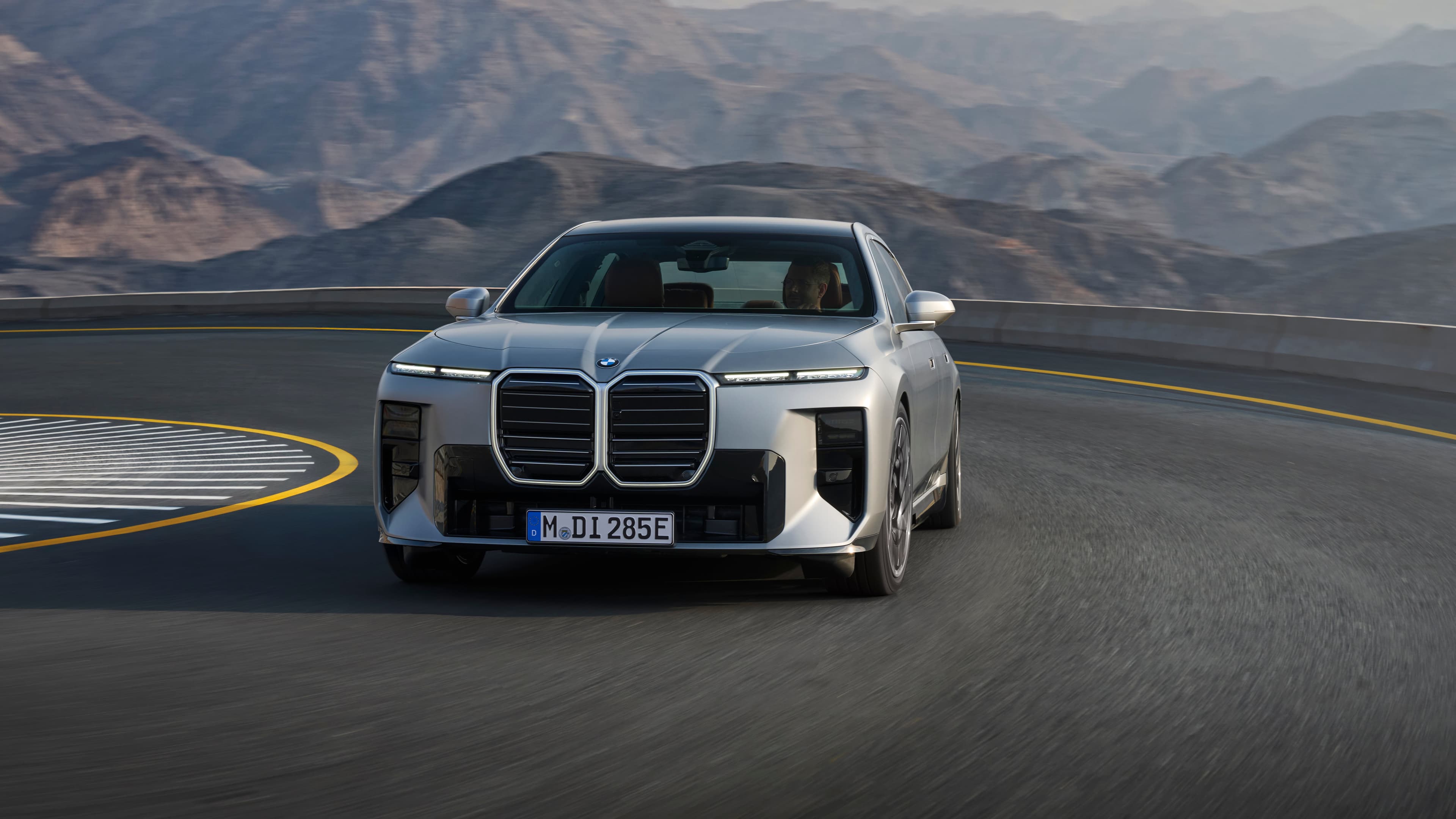
BMW (ETR: BMW) has started producing the i7 electric flagship sedan at its plant in Chennai, ending the car's exclusive production run at the automaker's Dingolfing factory in Germany and making India the second country to build it. The locally assembled i7 eDrive50 xDrive M Sport carries a starting price of ₹1.95 crore (c. $206,000), with customer deliveries scheduled to begin in October 2026.
BMW Group Plant Chennai has assembled cars locally since 2007 and now builds eight nameplates alongside the new i7, including the 2 Series, 3 Series, 5 Series, X1, iX1, X3, X5 and X7. The factory turned out 16,380 vehicles in 2025, a 12.4 percent increase from the prior year, underscoring how central the plant has become to BMW's regional strategy even before the i7 arrived on its lines.
India is not the only place BMW has spread electric-vehicle assembly beyond Germany. The automaker's plant in Debrecen, Hungary, builds the electric iX3 alongside the combustion X3, and the X3/iX3 pairing rose 16.4 percent to 169,563 units in the first half of 2026, with Debrecen passing 50,000 locally produced units nine months after production began. Chennai's addition of i7 assembly extends that same regional-manufacturing pattern to BMW's costliest model.
Advertisement – Continue scrolling for more
India's i7 range now spans two versions. The Chennai-built eDrive50 xDrive is priced to match the petrol-powered 740 M Sport at ₹1.95 crore, while the range-topping M70 xDrive continues to arrive fully assembled from Dingolfing at ₹2.65 crore (c. $280,000).
The eDrive50 xDrive pairs a single rear motor making 455 hp and 660 Nm of torque with a 112.5 kWh battery rated for 728 km (452 miles) on the WLTP cycle, reaching 100 km/h in 5.5 seconds. The dual-motor M70 xDrive raises output to 680 hp and 1,100 Nm, cutting the sprint to 100 km/h to 3.8 seconds while carrying a WLTP range of 686 km (426 miles).
Both variants support DC fast charging at up to 250 kW, recovering a 10 to 80 percent charge in 28 minutes, and ship with a complimentary BMW Wallbox rated for roughly six hours to a full charge on a 22 kW AC circuit.
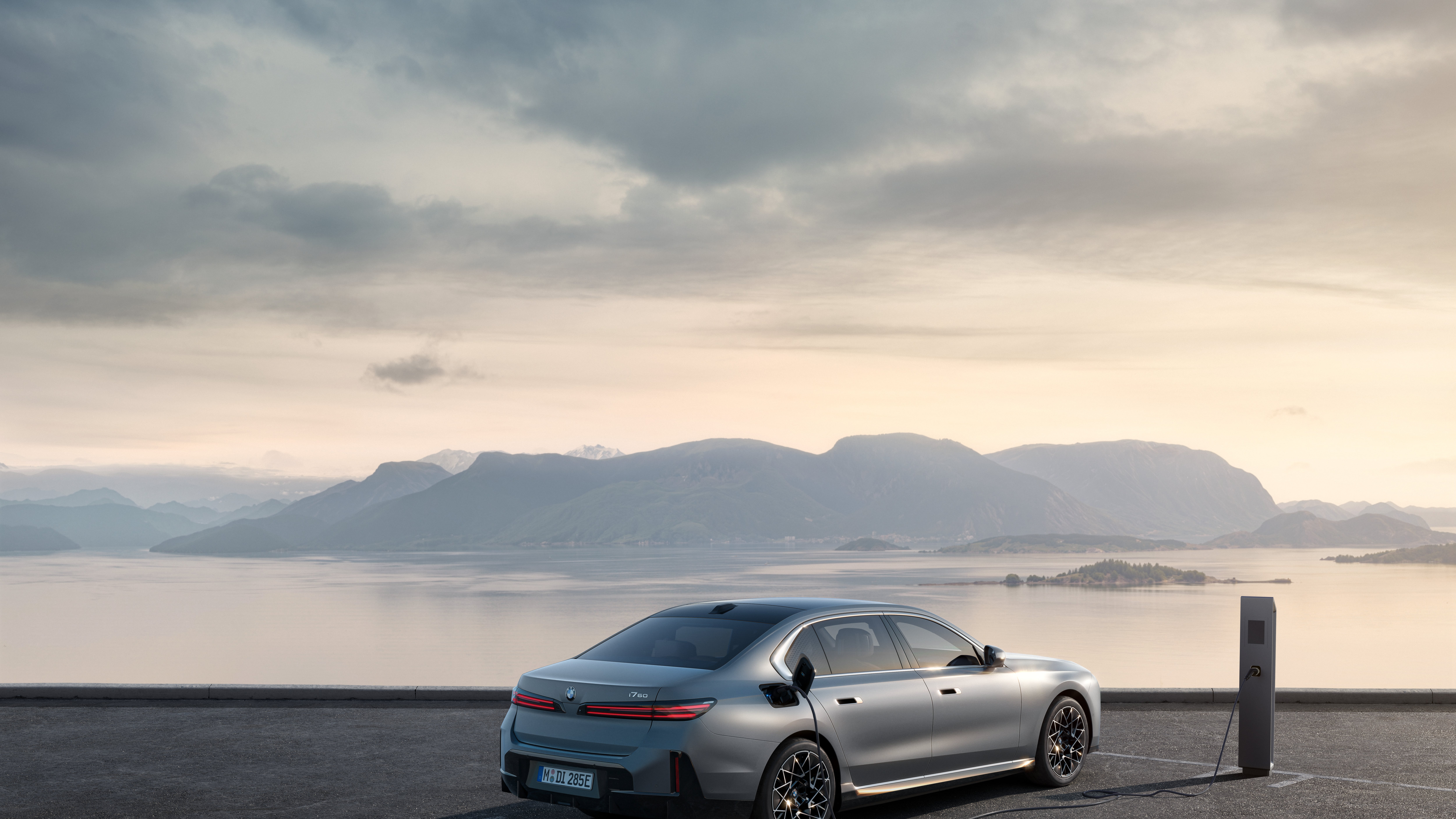
The global-market BMW i7 60 xDrive on DC fast charge; India's locally built version is sold as the eDrive50 xDrive (BMW)
The India launch is tied to a broader Life Cycle Impulse update for the 7 Series generation that borrows technology from BMW's Neue Klasse platform, including a sixth-generation eDrive system built around cylindrical battery cells that BMW says improve energy density by 20 percent over the outgoing pack. The same update brings an illuminated "Kidney Iconic Glow" grille and slimmer crystal headlights outside, while software moves to BMW Operating System X with an AI-driven personal assistant built on Amazon's Alexa+ technology.
India's own lineup drops the 740d diesel and the 750e and M760e plug-in hybrids that BMW previously sold there, leaving local buyers a choice between the petrol-six 740 M Sport and the fully electric i7, even though BMW's global press materials show the M760e plug-in hybrid continuing to sell in other markets.
Advertisement – Continue scrolling for more
The same generation update reaches the United States under different model names, and the price gap between markets is stark. BMW prices the entry-level i750 xDrive at $107,750 there, while India's broadly comparable eDrive50 xDrive costs roughly double once import duties, luxury taxes and logistics are factored in, even with local assembly trimming some of that premium relative to the fully imported M70 xDrive.
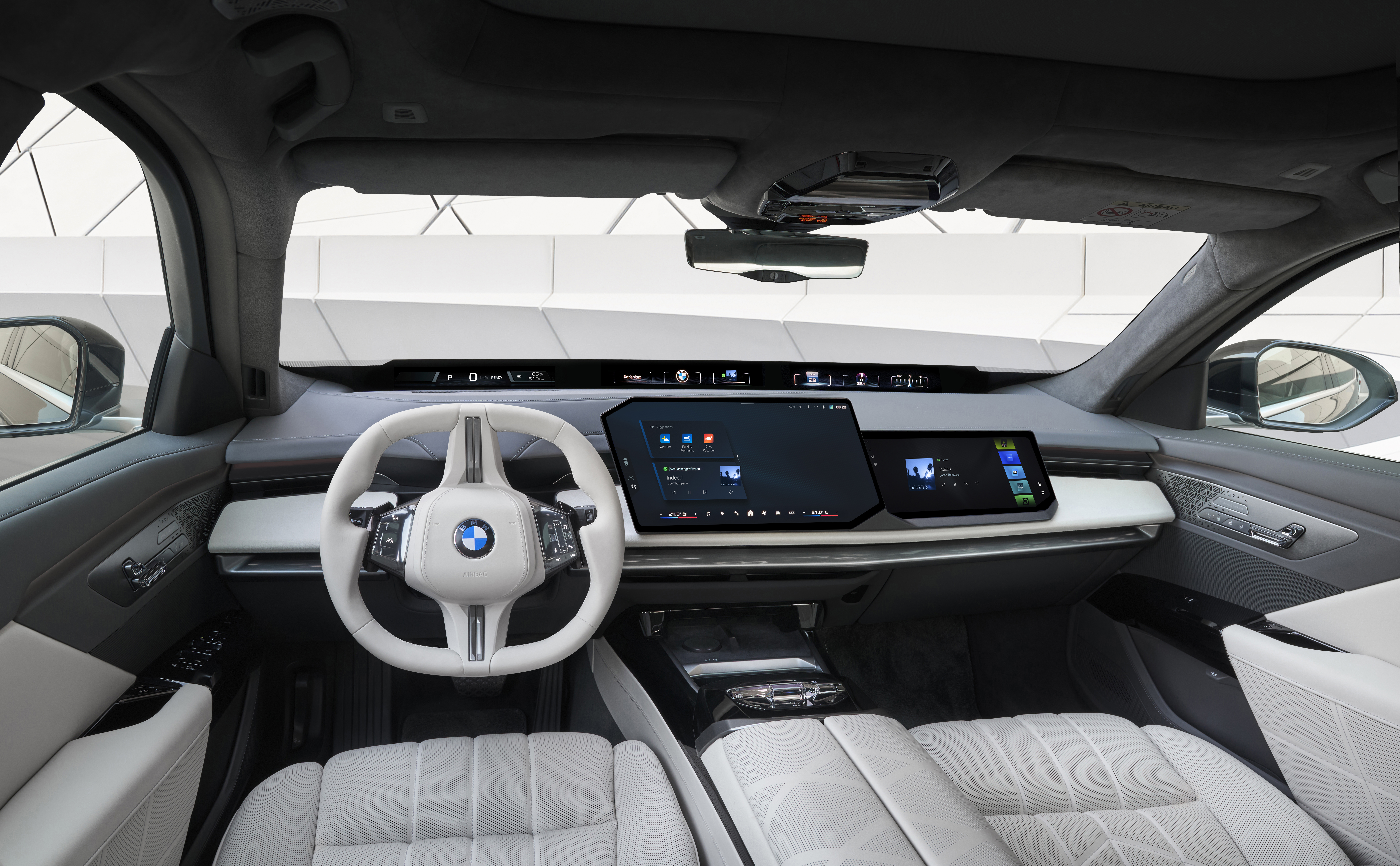
The BMW Operating System X cockpit shared across the new 7 Series lineup, including the India-built i7 (BMW)
BMW has faced pricing pressure on the same nameplate in its home EV market, China, for different reasons than in India. In January 2026, BMW cut prices by up to 24 percent across more than 30 China-market models under an "In China, For China" strategy, including a 301,000 yuan (c. $44,900) reduction on the locally built i7 M70L sedan, from 1.899 million yuan to 1.598 million yuan (c. $238,000), as it responded to fierce competition from domestic Chinese EV brands undercutting European luxury sedans on price and features.
Advertisement – Continue scrolling for more
Mercedes-Benz Group AG (ETR: MBG) and Audi AG offer the closest India rivals to the i7. Mercedes prices the EQS 580 4Matic sedan from ₹1.30 crore (c. $137,000) and the range-topping EQS AMG 53 4Matic+ at ₹2.45 crore (c. $259,000), while Audi's e-tron GT spans ₹1.72 crore (c. $182,000) to ₹1.95 crore (c. $206,000) for the RS variant, matching the entry price of BMW's own India-built flagship almost exactly.
The localization follows a broader push by New Delhi to draw premium EV manufacturing into the country. Under the Scheme to Promote Manufacturing of Electric Passenger Cars in India, qualifying automakers can import up to 8,000 EVs priced above $35,000 annually at a reduced 15 percent duty, down from 110 percent, in exchange for an investment of at least ₹4,150 crore (c. $438 million) over three years and rising local-content targets.
Mercedes-Benz, Hyundai, Kia, Skoda and Volkswagen have signed on to the scheme, while Tesla Inc. (NASDAQ: TSLA) has said it will open Indian showrooms without committing to local manufacturing under it. BMW's Chennai line predates the scheme entirely, built instead on the automaker's existing completely-knocked-down assembly operation, which already carries lower duties than a fully built-up import.
Advertisement – Continue scrolling for more
That welcome has not extended to China's automakers. Bloomberg has reported that India shelved a 2023 proposal from BYD (HKG: 1211) to invest $1 billion in a local electric-car joint venture, and that Great Wall Motor exited the Indian market entirely after failing to secure regulatory clearance. A March 2026 easing of India's China-investment screening rules applies to electronics, capital goods and solar cells, not automotive manufacturing, leaving Chinese EV makers without the kind of on-ramp BMW, Mercedes-Benz and Hyundai's partners have used to localize production in India.
Whether BMW extends Chennai assembly to the M70 xDrive, or to future Neue Klasse-era models, may hinge on how quickly India's market for six-figure EVs grows beyond the small pool of buyers currently split between Mercedes-Benz, Audi and BMW showrooms.
Conversion rate: 1 USD = 94.67 INR as of September 13, 2026.
Advertisement – Continue scrolling for more