BMW scales traceable green-electricity charging in China, targets 100% by 2027
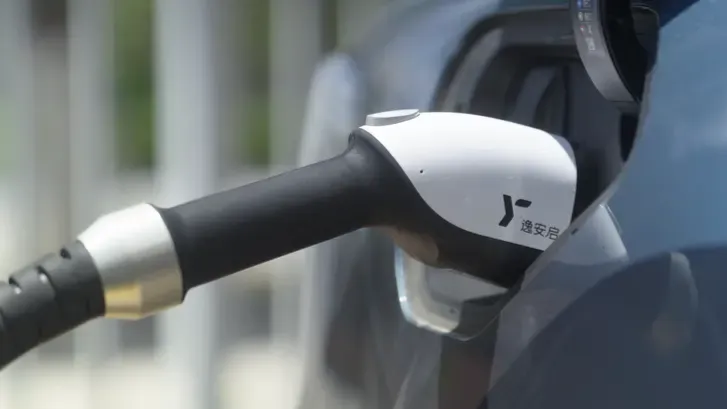
When a BMW electric vehicle draws current in China, the power may originate from solar farms in Zhejiang or wind turbines in Inner Mongolia — and that renewable origin is now logged for the driver through the country's green electricity certificate system. BMW (ETR: BMW) has spent years building a charging model it describes as traceable, certifiable, and visible to the owner.
The groundwork dates to 2021, when BMW began working with State Grid's smart EV-networking arm to route renewable supply to its drivers. In 2024 the automaker became an early adopter of China's Green Electricity Certificate (GEC), the country's unified instrument for certifying renewable generation.
The certificate is what makes the chain auditable: it ties a specific volume of wind or solar output to a specific charging session, matching clean generation to consumption across both time and location. The company has set a firm deadline. By 2027, every BMW and MINI battery-electric owner charging on State Grid's public network should draw 100% green electricity, tracked through the My BMW and MINI apps.
Advertisement – Continue scrolling for more
The year 2025 marked the shift from pilot to scale. The program now spans 224 cities and 7,039 charging stations. BMW drivers completed more than 1.25 million kWh of certified green charging through State Grid's public network last year, nearly twelve times the prior-year figure.
BMW's charging joint venture with Mercedes-Benz (ETR: MBG), branded IONCHI, was the first network in China to commit to powering all of its charging with renewable electricity. By the end of 2025, IONCHI had supplied more than 54 million kWh of green power, roughly the annual consumption of 22,000 households.
The traceability sits inside the app. For each session that is successfully sourced, owners can see the origin and volume of the green electricity behind the charge, receive a dedicated traceability certificate, and follow their cumulative carbon savings. The feature converts an abstract sustainability claim into a per-charge record, drawn from everyday top-ups rather than corporate reporting.
Advertisement – Continue scrolling for more
BMW Brilliance president and chief executive Birgit Böhm-Wannenwetsch, who took the role in August 2025, framed green charging as a customer commitment and "a long-term investment in the future. The charging push extends a manufacturing strategy already in place. BMW Brilliance's Shenyang production base has run on 100% green electricity since 2019, alongside dozens of non-production sites.
Adding the use phase gives BMW what it calls a factory-to-wheel decarbonization loop, linking how a car is built to how it is later charged. The automaker has also moved upstream, forming a wind-power joint venture with China Datang built around a 1-gigawatt onshore wind project that will feed its Shenyang operations and, eventually, its Liaoning suppliers, dealers, and charging operators.
The timing matters for a brand under pressure. BMW Brilliance, which passed seven million vehicles produced in China in May 2026, is defending its premium position against domestic electric rivals as it prepares its Neue Klasse models for the market.
Whether traceable green charging becomes a real purchase consideration for China's premium buyers, rather than a backstage corporate metric, may be the next test as the 2027 deadline approaches.
Advertisement – Continue scrolling for more