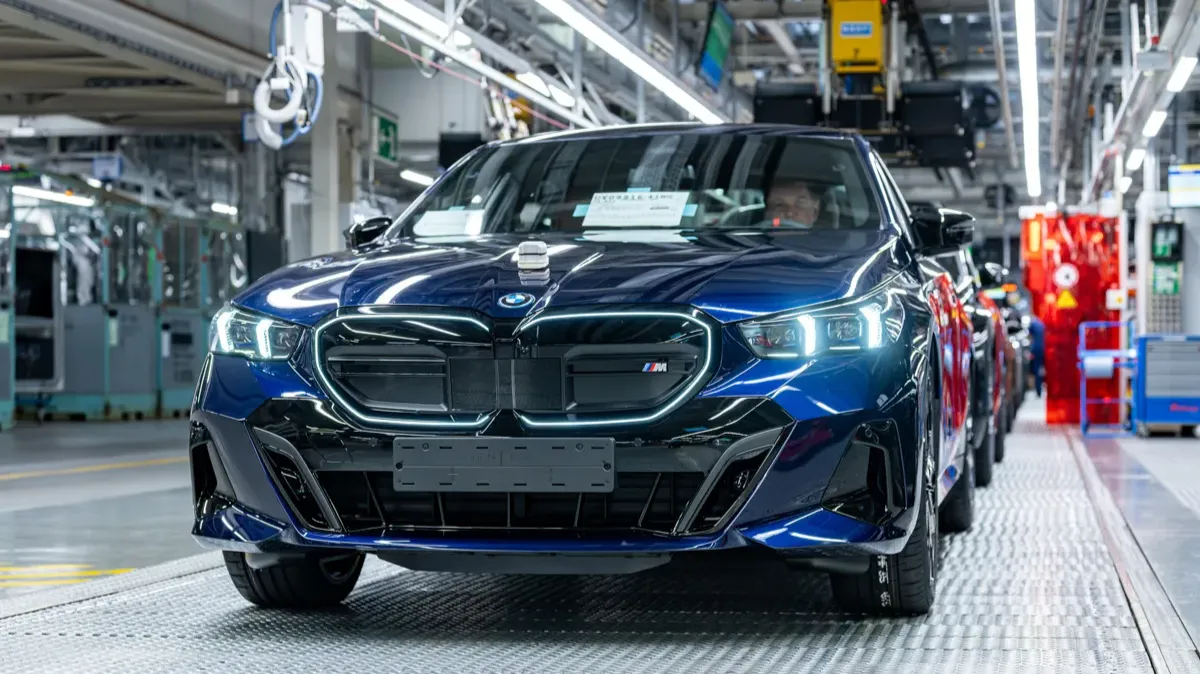
The BMW Group (ETR: BMW) produced its two-millionth all-electric vehicle on May 5, 2026, at its Dingolfing plant in Lower Bavaria, Germany.
Advertisement – Continue scrolling for more
The landmark car — a Tansanit Blue i5 M60 xDrive sedan — is destined for a customer in Spain.
The milestone reflects a sharp acceleration in BMW's electrification pace.
The company's first mass-produced all-electric model, the i3, entered series production at Plant Leipzig in September 2013. Reaching one million cumulative units took approximately eleven years. The second million followed in roughly two.
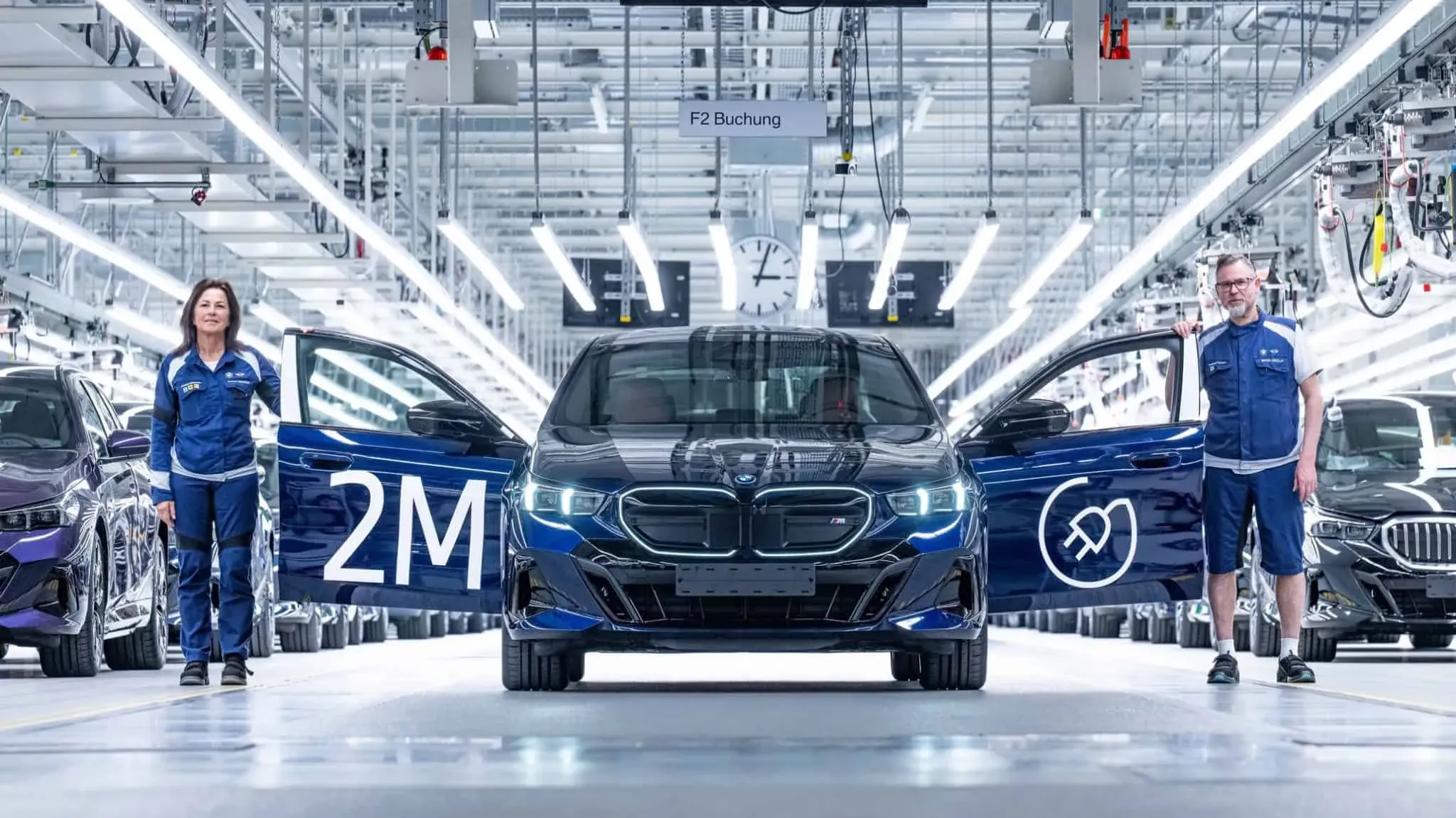
BMW i5 M60 xDrive assembled at Dingolfing (BMW)
Plant Dingolfing has become the group's primary electric manufacturing hub. Since 2021, the facility has produced more than 320,000 all-electric vehicles, including the iX SUV, i7 luxury sedan, and i5 in both sedan and Touring body styles.
The two-millionth car is among the most capable in the current lineup. The i5 M60 xDrive produces 442 kW (601 hp) and 795 Nm of torque, accelerating from 0 to 100 km/h (0 to 62 mph) in 3.8 seconds. Its WLTP-rated electric range falls between 455 km (283 miles) and 516 km (321 miles).
Advertisement – Continue scrolling for more
Across BMW Group's German network, plants in Munich, Regensburg, Dingolfing, and Leipzig each build at least one fully electric model. Munich is scheduled to launch production of the next-generation Neue Klasse platform in summer 2026 and is set to become BMW's first German plant producing only electric vehicles from 2027.
BMW Group delivered 442,072 fully electric vehicles worldwide in 2025, a 3.6% increase year-on-year, with fully electric models accounting for around 18% of total group sales. The group targets more than 10 million cumulative all-electric vehicle deliveries globally by 2030, alongside a goal of EVs comprising at least 50% of annual sales by that date.
With the Neue Klasse arriving at Munich within months and Dingolfing already exceeding 320,000 units since 2021, the pace at which BMW closes the gap to 10 million will depend as much on how quickly its next platform scales as on how far demand recovers in key markets.
Advertisement – Continue scrolling for more