Avatr T09 surfaces in MIIT filing with over 1,000 hp and 400 km EV range

China's Ministry of Industry and Information Technology confirmed Avatr's flagship SUV as the T09 in its 411th batch of new-vehicle filings, published September 8, 2026. The listing covers plug-in hybrid variants only and gives the first official look at the specifications behind the automaker's largest, most expensive model yet.
Avatr is the joint venture between Changan Automobile, Huawei, and CATL, and the T09 arrives as the brand tries to reverse a rough patch. Avatr delivered 8,082 vehicles in August, down about 19.7 percent from a year earlier. The flagship is meant to anchor a lineup that has so far leaned on smaller sedans and SUVs.
Advertisement – Continue scrolling for more
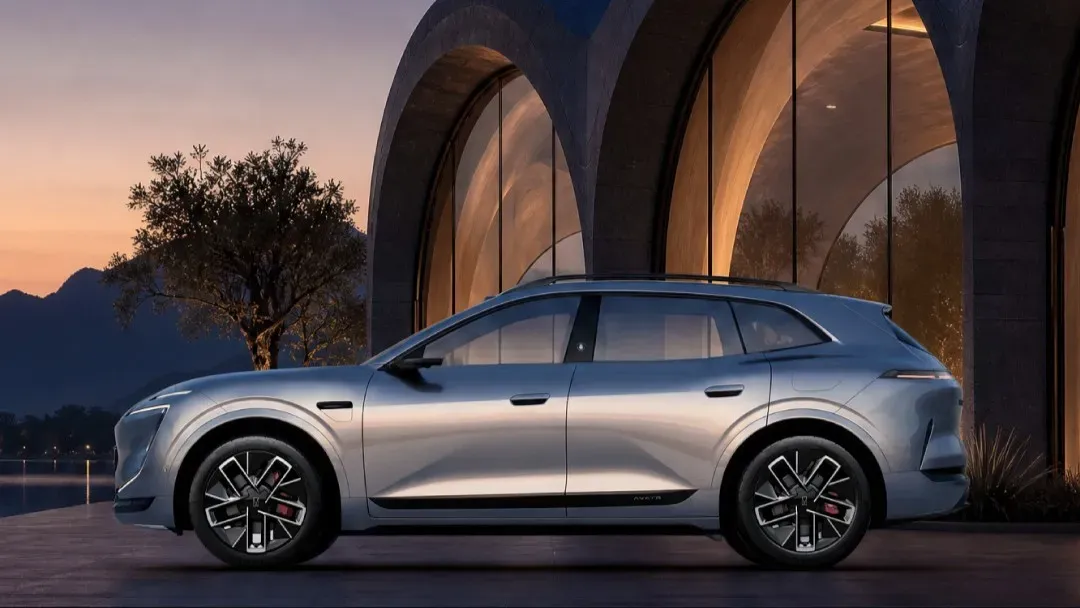
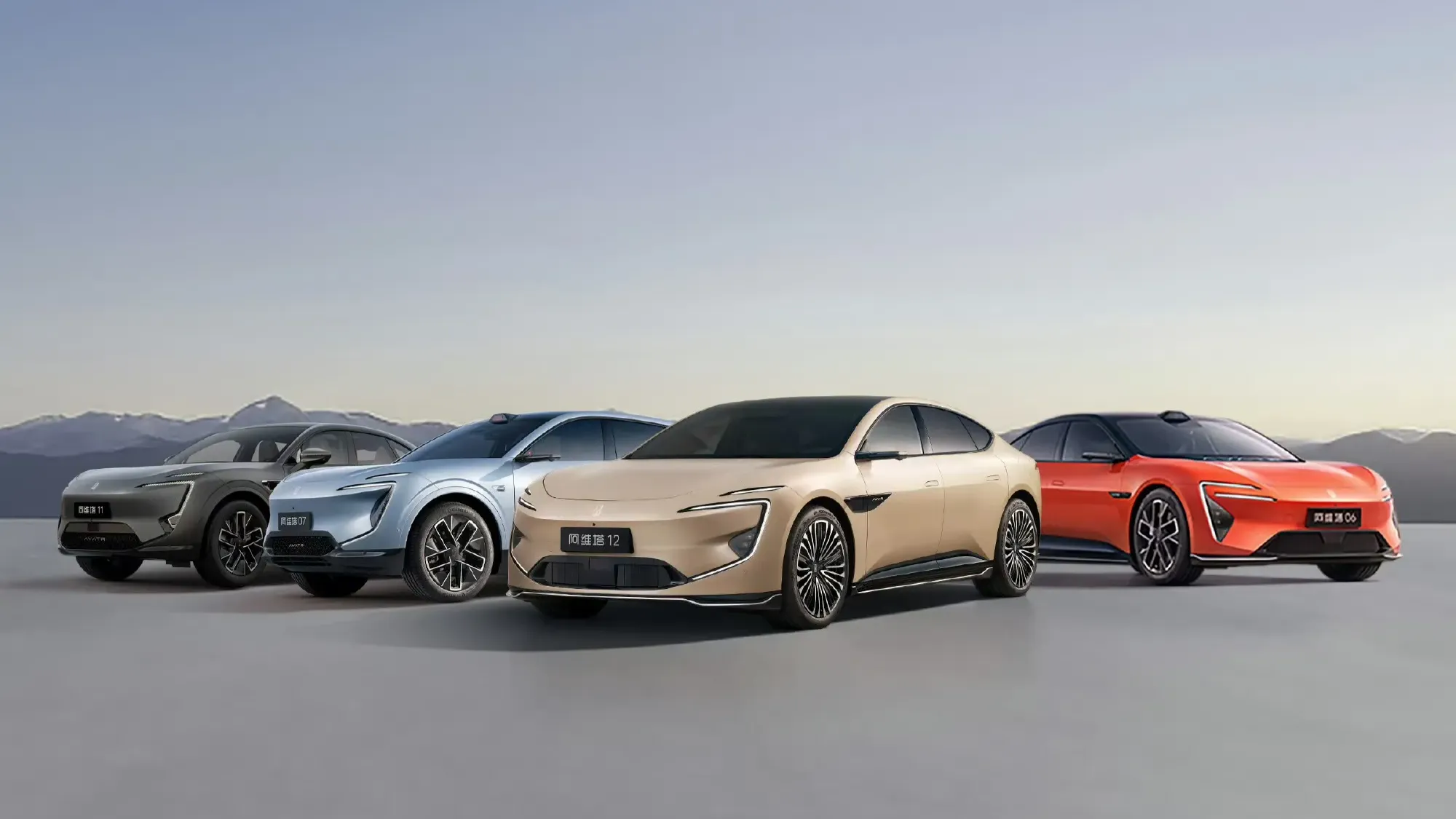
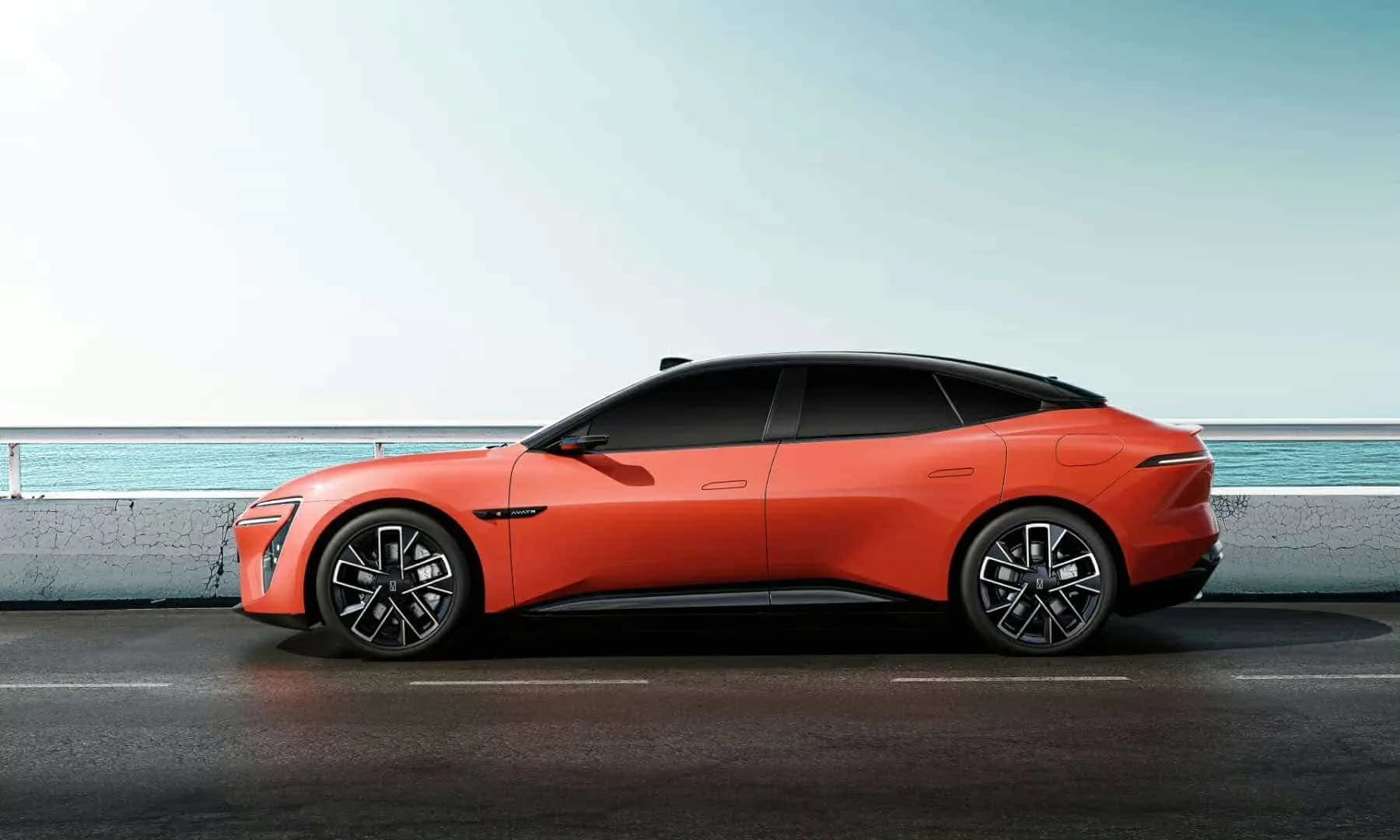
The filing points to a visible styling shift. Where earlier Avatr models like the 07 and 11 leaned on a sleeker, more understated look, the T09 wears a boxy stance, a rectangular grille built around the Avatr logo, and heavy chrome trim that reviewers have compared to BYD's Yangwang U8. Diamond-cut headlights and taillights, described internally as a "crystal-look" light bar, wrap around a front fascia the brand says draws on the silhouette of ancient bronze tripod vessels. Buyers get a choice of gray or platinum dual-tone paint and either 21 or 22-inch wheels.

Official studio image of the Avatr T09, released September 7, 2026, ahead of the MIIT filing. (Avatr)
Measuring 5,285 mm long on a 3,150 mm wheelbase, with a width of 2,025 mm and a height of 1,810 or 1,820 mm depending on configuration, the T09 seats six across two rows of captain's chairs and a bench. That puts its footprint close to the Xiaomi N90 Max, though its 1,810-1,820 mm roofline sits lower than the Nio ES9's and the Aito M9's, a difference that could affect third-row headroom in a segment where cabin space is a key selling point.
Two powertrains were listed. The base setup pairs a 1.5-liter turbo engine rated at 110 kW with a 180 kW front motor and a 310 kW rear motor, and weighs 2,880 to 2,968 kg depending on trim. The higher-spec version steps up to a 2.0-liter turbo engine at 155 kW driving a three-motor system, a 180 kW unit up front and two 225 kW motors at the rear, with curb weight rising to 3,035 kg. The tri-motor version's combined system output is described as topping 1,000 horsepower. Both configurations top out at 220 km/h (137 mph).

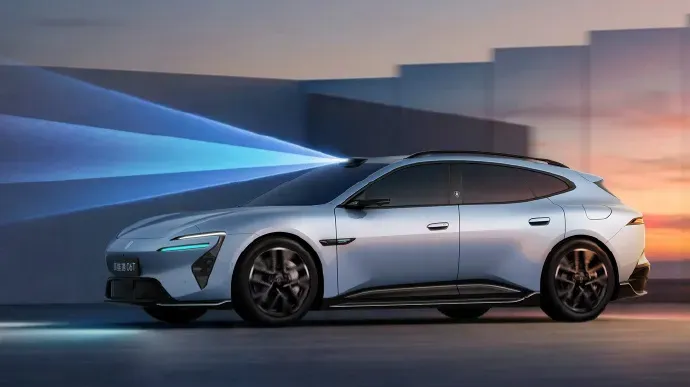
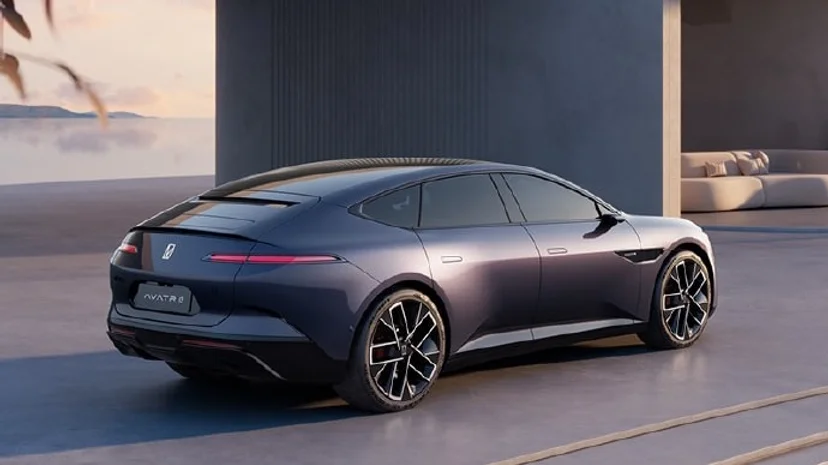
The through-type taillight and six-seat cabin layout are visible in this official rear three-quarter shot. (Avatr)
Both versions draw from the same 71.24 kWh ternary-lithium battery, supplied by a CATL subsidiary and branded internally as the "Xiaoyao" super-hybrid pack. Under the WLTC cycle the filing lists electric-only range at 300 km, 320 km, or 330 km depending on configuration, which converts to more than 400 km (249 miles) under China's more generous CLTC standard, the figure Avatr is expected to lead with domestically.
Advertisement – Continue scrolling for more
The chassis hardware leans heavily on the joint engineering work with Huawei's Qiankun division. A system Avatr calls "Tai Hang" smart control combines distributed electric drive with a closed dual-chamber air suspension and rear-wheel steering, enabling a crab-walk mode and a turning radius of roughly 4 meters (13 feet), tight for a vehicle of this size. Huawei's Qiankun XMC digital chassis software layers on multi-sensor road scanning and AI-adjusted suspension damping in real time, part of what Avatr is billing as a deeper handoff of engineering control to its Huawei partners than on any previous model.
For driver assistance, the T09 is set to run Huawei's Qiankun ADS 5 system on new hardware built around four lidar units, including a roof-mounted sensor reported to carry 896 scanning channels, a step up from the lidar setups on Avatr's existing models.
Advertisement – Continue scrolling for more
Avatr vice president Yong Jun described the T09 earlier this month as the brand's "first full-scale cooperation vehicle in the true sense" with Huawei, spanning vehicle control, lighting, voice systems, and autonomous driving software rather than a single bolted-on feature.
The T09 lands in a large six-seat SUV segment that has become one of the most contested in the Chinese market, with the Aito M9, Li Auto L9, Denza N9, and IM LS9 all competing for the same buyers, alongside the Nio ES9. Most of those rivals already have months or years of delivery volume behind them, which leaves Avatr racing to differentiate a car that, on paper, sits in the middle of the pack for size while trying to out-spec them on power and chassis technology.
Advertisement – Continue scrolling for more
Avatr has not released pricing, and the MIIT filing is a regulatory step rather than a sales launch. The company has pointed to a release before the end of 2026, with fuller specifications expected in stages ahead of that date.
Whether a heavier reliance on Huawei's software and hardware stack, rather than Avatr's own design instincts, is enough to lift a brand whose deliveries have been sliding will depend on how buyers respond once the T09 actually reaches showrooms.
Advertisement – Continue scrolling for more