
AITO M7 refresh opens pre-sales at 309,800 CNY, 30,000 above the outgoing model's start
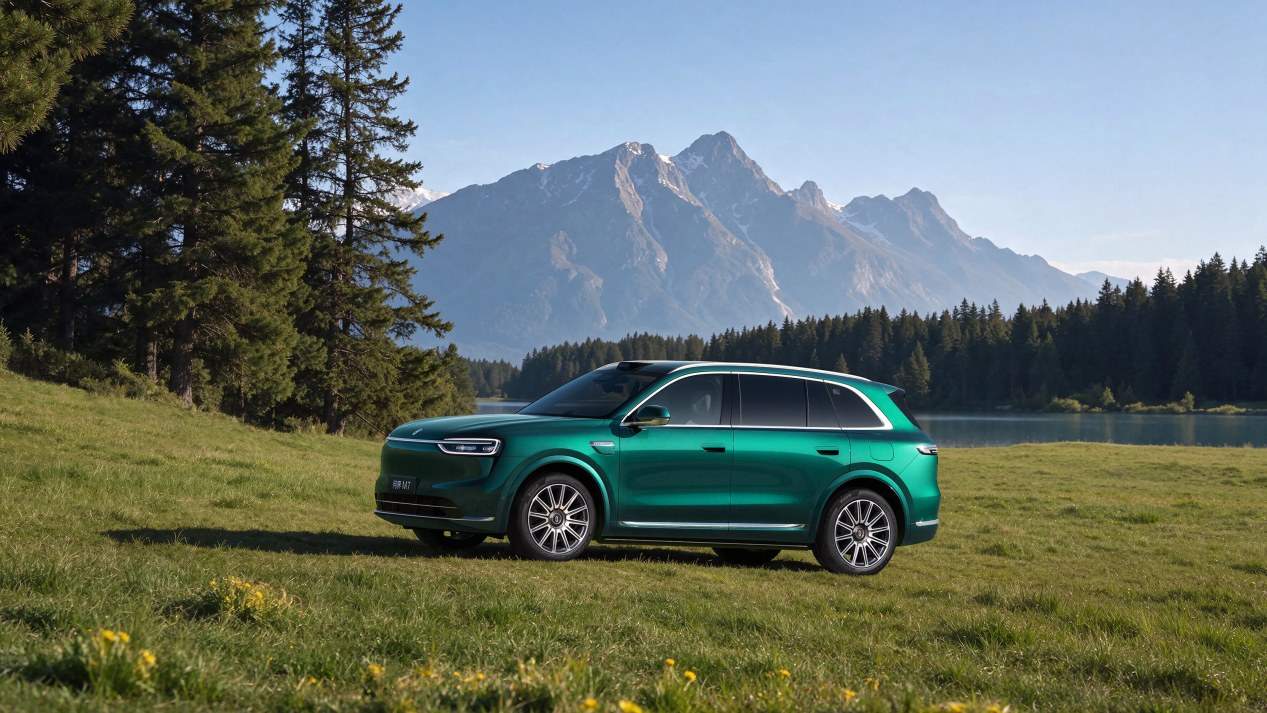

AITO, the Seres (HKEX: 9927) brand sold through Huawei's HIMA alliance, opened pre-sales for its refreshed M7 large SUV on November 26, 2026 at 309,800 CNY (c. $46,173). Buyers who place a 2,000 CNY (c. $298) deposit get 5,000 CNY (c. $745) off the final payment. The pre-sale lists two trims, Max from 309,800 CNY and Ultra from 349,800 CNY (c. $52,134), and display cars are arriving at 784 stores in 224 cities, according to a second report that lists the same two trim prices.
That entry price is 30,000 CNY (c. $4,471) above where the current generation started. When the all-new M7 launched on September 23, 2025, prices ran from 279,800 to 379,800 CNY, and the cheapest version was an extended-range Pro+ five-seater. The refresh drops that entry point from the pre-sale list.
Max cheaper, Ultra dearer
Trim by trim, the story is mixed. At the 2025 launch, the extended-range Max five-seater started at 319,800 CNY and the Ultra five-seater at 339,800 CNY. On that basis, the new Max entry price is 10,000 CNY lower and the new Ultra is 10,000 CNY higher, by our calculation.
Those are not exact like-for-like comparisons. Every extended-range M7 at the 2025 launch had all-wheel drive. The new Max and Ultra can each be ordered with extended-range or electric power, five or six seats, and rear- or all-wheel drive, and AITO has not said which version the starting prices buy. Pre-sale prices can also change before the formal launch.
The 40,000 CNY gap between Max and Ultra mostly buys sensors and comfort, according to one report based on the pre-sale spec sheet. The Max has two lidars, including the 896-line dual-path roof unit, and does not get the Level 3 architecture. The Ultra adds two side-facing solid-state lidars for a four-lidar setup, the Level 3 architecture, a premium sound system, a rear entertainment screen with a streaming rearview mirror, power doors and a zero-gravity front passenger seat. Max buyers can add the rear screen or the passenger seat for 8,000 CNY each, but cannot get the power doors.
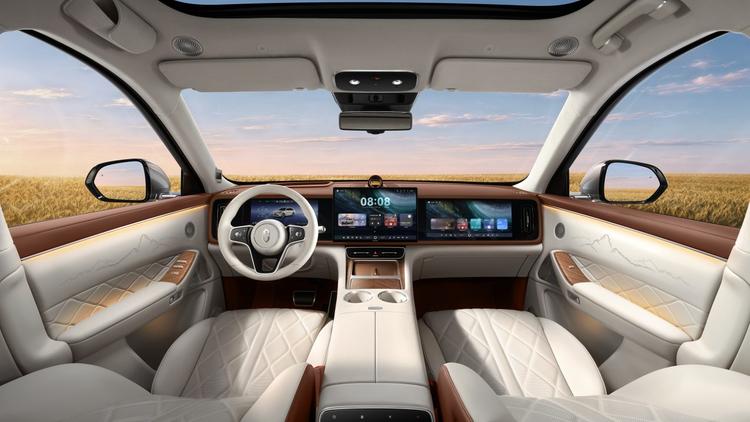
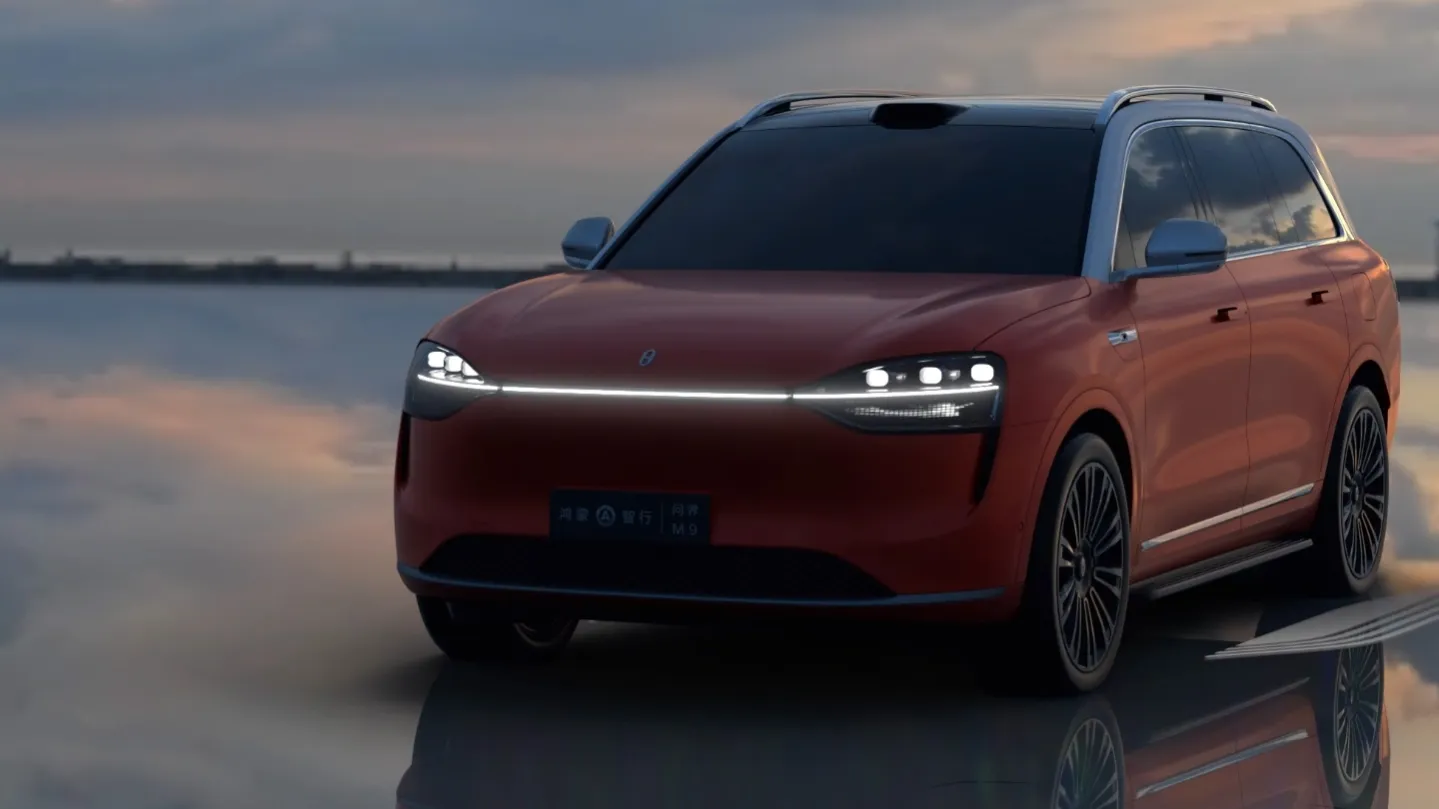
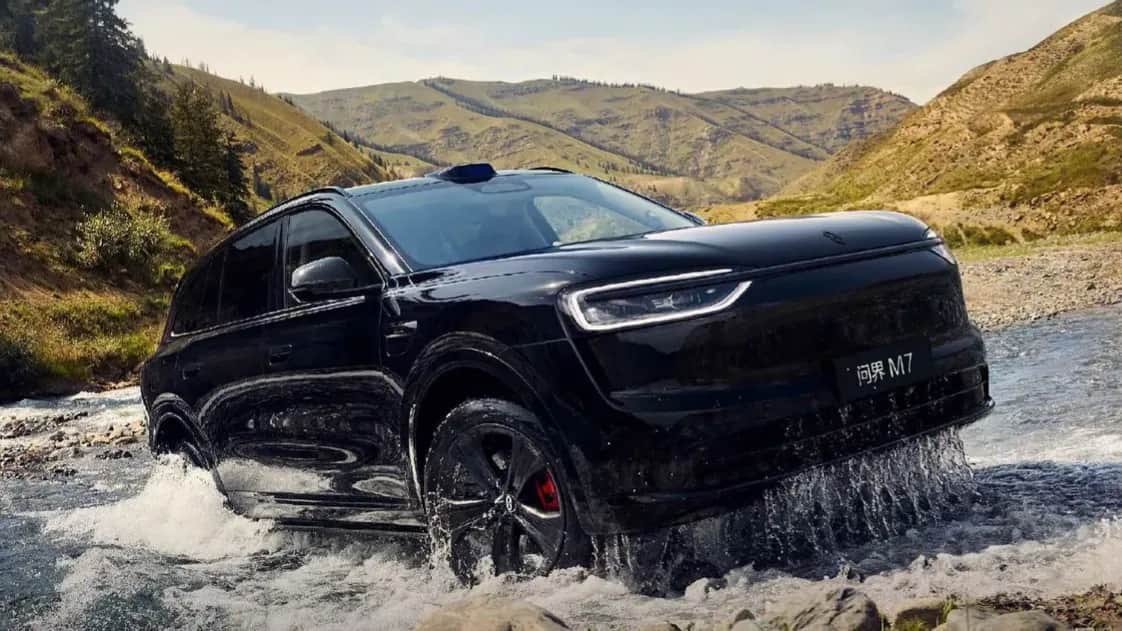
The refreshed M7 cabin gets a 16-inch passenger screen and a larger driver display (Brand image; AITO says the background is partly AI-generated)
What changes
The body is unchanged at 5,080 mm long on a 3,030 mm wheelbase, with five or six seats. Most of the work is underneath and inside. According to AITO's pre-sale announcement, every version now runs on an 800V system that charges from 30% to 80% in 15 minutes. Huawei's Tuling chassis platform and the dual-chamber closed air suspension, both standard on the 2025 car, carry over with continuously variable damping and what AITO calls whole-vehicle tuning.
GCEV Weekly · Every Tuesday
China's EV industry in five minutes.
Launches, sales, batteries and policy — the week's stories that matter, with the context the headlines leave out.
Sent by GigaCharts Inc. Questions? Write to globalchinaev@gmail.com. Unsubscribe anytime. See our privacy policy.
The extended-range battery grows to 56 kWh, good for up to 350 km (about 217 miles) on electricity and 1,475 km combined on China's CLTC cycle. The electric version keeps a 100 kWh battery and is rated at up to 715 km. At the 2025 launch, AITO quoted 315 km of electric range and 1,625 km combined for the extended-range car and 710 km for the electric one. So the new car gains 35 km of electric range but lists a combined figure 150 km lower, by our calculation. AITO did not explain the drop.
Driver assistance moves from ADS 4 to Huawei's Qiankun ADS 5, with up to 38 sensors against 34 before. AITO describes the car as having a whole-vehicle architecture built for Level 3 and eight redundant safety systems covering braking, sensors and door unlocking, though one report says only the Ultra gets the Level 3 architecture. That hardware is groundwork for now. China's first mandatory standard for Level 3 and Level 4 systems takes effect on July 1, 2027, and AITO has not said when, or whether, M7 owners will get Level 3 functions.
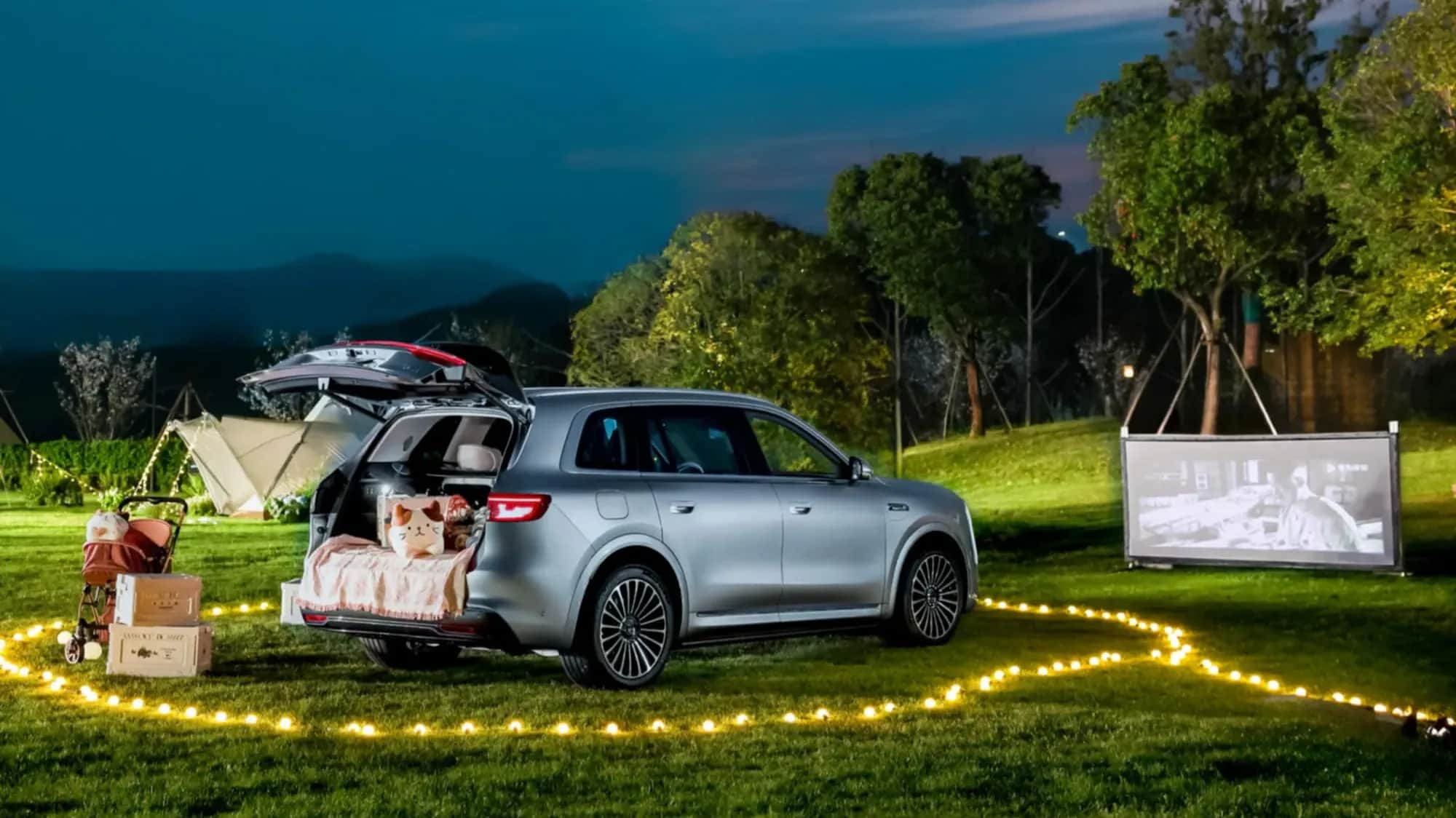
Inside, the front passenger seat becomes a zero-gravity seat, the 12.3-inch instrument display gains 20% more viewing area and the passenger screen grows to 16 inches. The front trunk on the rear-drive electric version holds 206 liters, up from 145 liters on the 2025 electric car. There are two new paint colors and three new wheel designs.
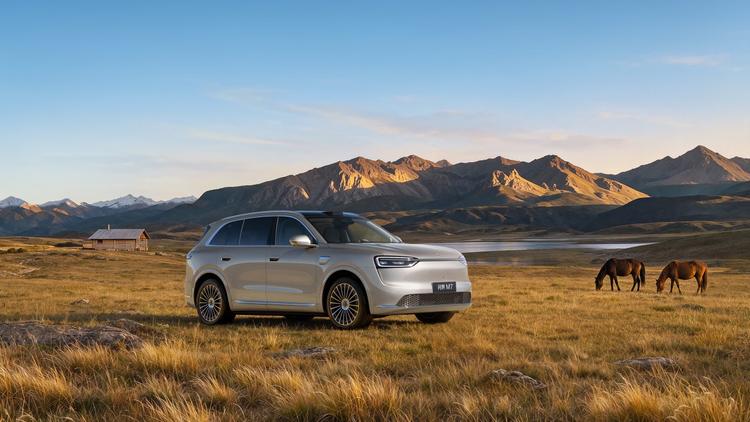
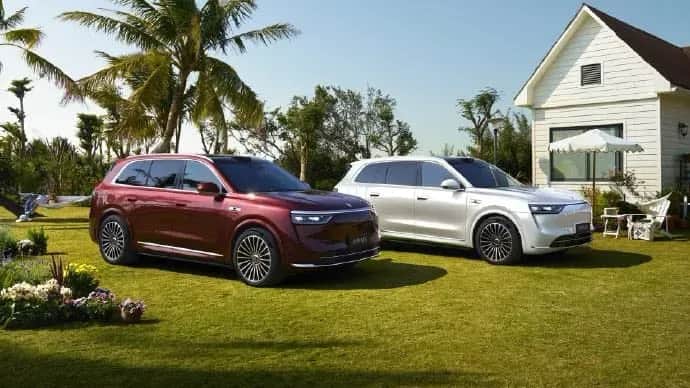
The refreshed M7 keeps the current car's 5,080 mm body and adds two paint colors (Brand image; AITO says the background is partly AI-generated)
Why AITO needs it
The M7 is one of AITO's core models. The company says it has delivered more than 470,000 M7s in just over four years, which it says makes the M7 the top seller by cumulative sales among Chinese-brand SUVs in the 300,000 CNY class. Sales have slid this year, though. Seres reported 22,105 sales of its Seres-brand vehicles in October, the category that includes AITO, down 54.69% from a year earlier. That was also 12.9% below 25,370 in September, by our calculation. These are company-reported sales; Seres does not break them out by model.
The refreshed M8, AITO's larger SUV, launched on November 13 at 379,800 to 469,800 CNY. The new M7 Max starts 70,000 CNY (c. $10,433) below the M8, by our calculation. On the pre-sale list, the cheapest way into the refreshed M7 is a Max trim with ADS 5 and 800V charging as standard, with no lower-priced Pro+.
AITO has not given a date for the formal launch or final prices. The open question is whether buyers will accept a higher entry price for better hardware, or whether AITO will narrow the gap once final pricing comes.
Conversion rate: 1 USD = 6.7096 CNY, PBOC central parity as of November 26, 2026.
GCEV Weekly · Every Tuesday
China's EV industry in five minutes.
Launches, sales, batteries and policy — the week's stories that matter, with the context the headlines leave out.
Sent by GigaCharts Inc. Questions? Write to globalchinaev@gmail.com. Unsubscribe anytime. See our privacy policy.