Tesla denies Shanghai data center closure allegations as China FSD hiring accelerates
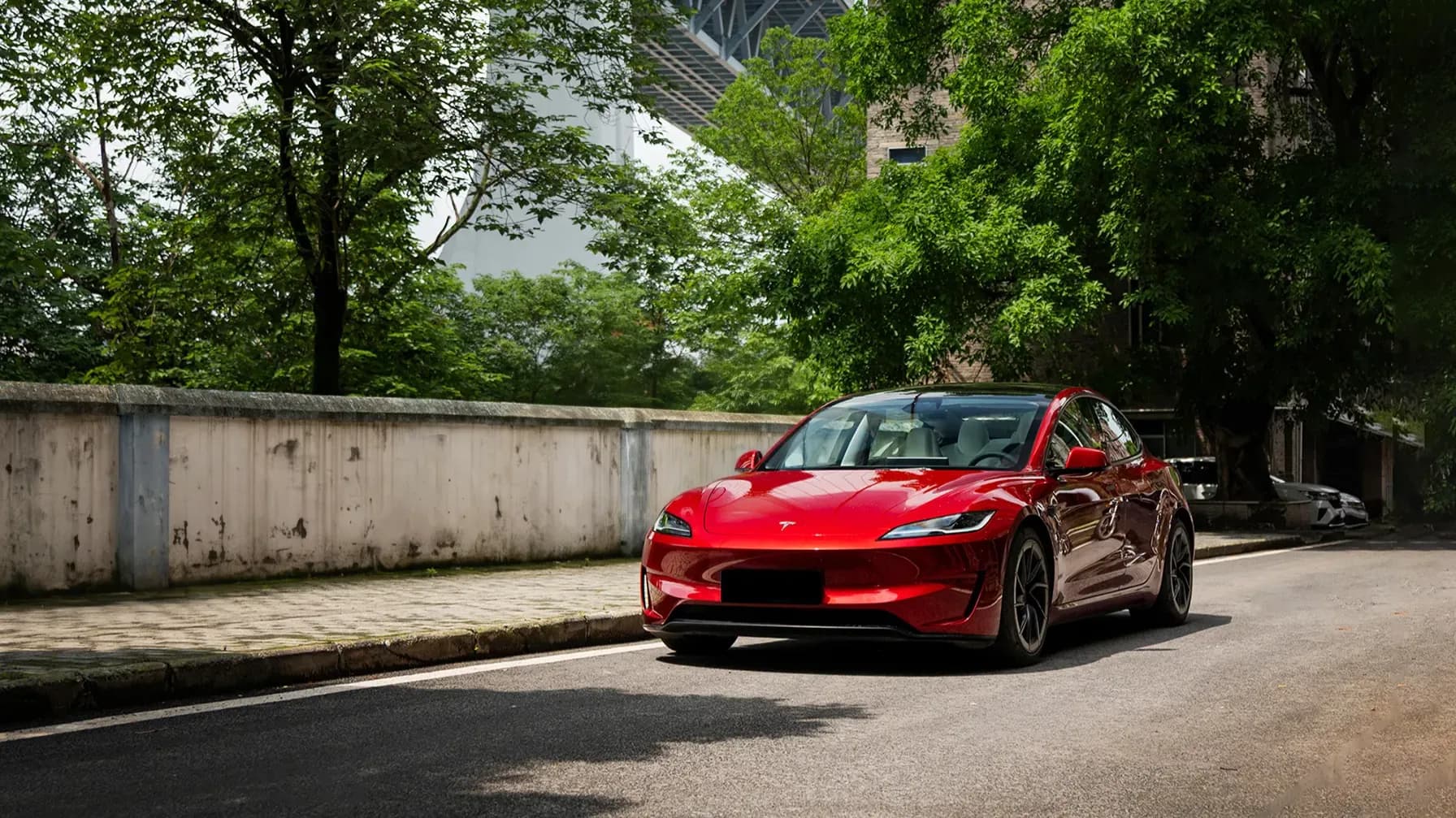
Tesla (NASDAQ: TSLA) China told Yicai on August 26, 2026 that online claims its Shanghai data center had been completely vacated are false, and that the company has reported the matter to public security authorities. Tesla said the facility is operating normally, that recruitment for its driver-assistance team is accelerating, and that related work is progressing steadily.
The rumor began circulating on Chinese social media around August 25, alleging that Tesla had withdrawn its liaison staff from the Shanghai facility and eliminated positions tied to the site, a narrative that implied the automaker was quietly stepping back from bringing Full Self-Driving (FSD) to China. Tesla China called the reports false, said driver-assistance hiring was picking up rather than slowing down, and confirmed it had filed a police report over the spreading misinformation.
Advertisement – Continue scrolling for more
Tesla built the Shanghai data center in 2021 specifically to store vehicle and mapping data generated on Chinese roads locally, a prerequisite for eventually rolling out its driver-assistance software under China's data-localization rules. A representative separately told Global Times that the site retains full onshore data storage, and pointed to a second facility, the Lingang AI training center, which opened in February 2026 to develop models tuned to Chinese road conditions and traffic patterns.
The rumor appears to have been fueled partly by a website discrepancy: China was missing from an updated list of 12 markets where Tesla offers FSD Supervised as a paid subscription, a list that includes the United States, Canada, Australia, South Korea, and several European countries. Tesla has clarified that the list only reflects markets where the subscription has formally launched, and China still appears elsewhere on Tesla's site among markets where the underlying system can eventually be used. The company renamed its China-market software "Tesla Assisted Driving" in May 2026 after announcing FSD Supervised availability there earlier that month, though it has not published a firm rollout date for full functionality.
That May 2026 announcement was followed almost immediately by an urgent hiring push across nine Chinese cities, including Beijing, Shanghai, Guangzhou, Shenzhen, Suzhou, and Wuhan, for intelligent-driving test technicians and field-testing specialists reporting to Tesla's Autopilot research group. Recruiting platforms listed monthly pay as high as 30,000 CNY (c. $4,460) for the roles, with job postings citing responsibilities that included tracking changes to Chinese certification and regulatory requirements. At the time, Tesla sales staff said they had not yet received internal notice of a formal FSD launch, even as select showroom demo vehicles ran FSD V13 without full functionality such as autonomous parking.
Advertisement – Continue scrolling for more
Vice President Grace Tao said in February 2026 that Tesla had built independent AI training capability inside China rather than relying on data or compute shipped from the United States, a structural change meant to satisfy regulators wary of cross-border data flows. Tesla has also said it obtained four automotive data-security certifications in China and is working with Baidu (NASDAQ: BIDU) on compliant high-definition mapping, part of a broader compliance push that has run for more than a year without a confirmed regulatory green light.
Elon Musk has repeatedly predicted a faster timeline than regulators have delivered. Speaking at the World Economic Forum in Davos in January 2026, Musk said FSD approval in China could arrive "maybe" as soon as the following month, echoing a similar prediction he had made in late 2025. China Daily, a state-run outlet, cited a source close to the government calling that timeline inaccurate within a day of Musk's remarks, and no approval followed in February.
Advertisement – Continue scrolling for more
On Tesla's first-quarter 2026 earnings call, the company said it had received partial regulatory approval in China but was still waiting on broader clearance, expressing hope that full approval could arrive by the third quarter of 2026. That quarter is now underway, and no announcement of expanded FSD access for Chinese customers has followed, a gap that has left the program a recurring target for speculation whenever Tesla's public-facing information about China changes.
This is not the only rumor Tesla has had to knock down about its China operations this year. In late July 2026, the Wall Street Journal reported that Tesla executives had been told to prepare contingency plans covering a spinoff, sale, or wind-down of the China business, a report Musk dismissed on X as "absurdly fake news" that had never come up internally. Tesla's stock rose roughly 8% after Musk's denial but remained down about 25% for the year, underscoring how sensitive investors have become to any signal about the health of the company's second-largest market.
Advertisement – Continue scrolling for more
China generated close to $21 billion in Tesla revenue over the past year, roughly a fifth of the company's global total, and local rivals including Xiaomi (HKG: 1810), Huawei-backed brands, and XPeng (NYSE: XPEV) have moved faster to deploy urban driver-assistance features to consumers in the meantime. That competitive backdrop gives Tesla an incentive to publicly reject any suggestion that it is retreating from FSD development in China, whatever the actual pace of its regulatory approval turns out to be.
Tesla's denial addresses the narrower claim about the Shanghai facility itself, but it does not resolve the larger question hanging over the program: when, if ever, Chinese customers who paid for the software will get the full version other markets already have.
Conversion rate: 1 USD = 6.72 CNY as of August 27, 2026.
Advertisement – Continue scrolling for more