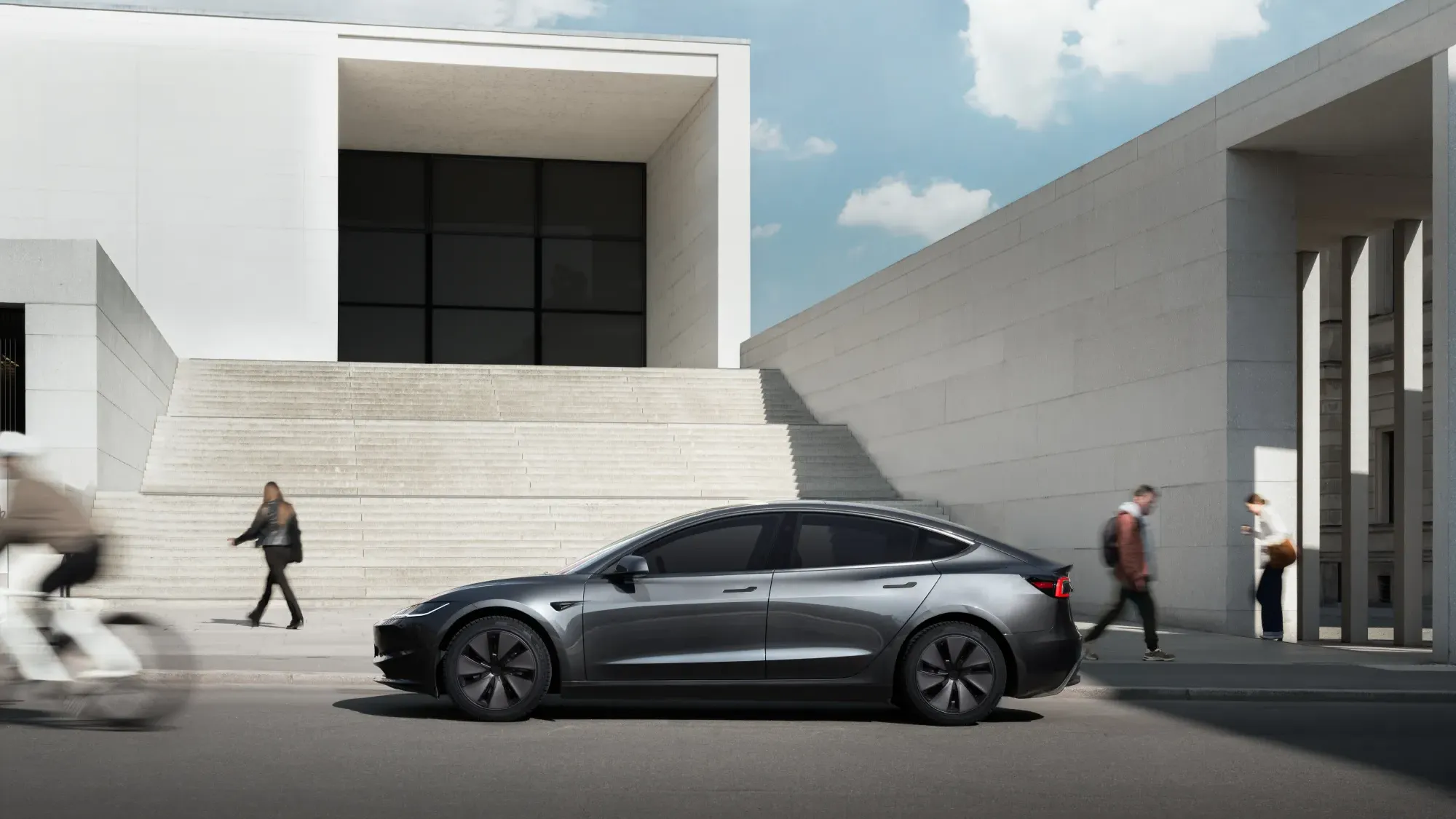
China launched its 2026 new energy vehicle (NEV) rural promotion campaign on June 18, 2026, naming 155 eligible models that include Tesla's (NASDAQ: TSLA) Model 3 and the Xiaomi (HKG: 1810) SU7.
The notice was jointly issued by five departments: the Ministry of Industry and Information Technology, the Ministry of Commerce, the National Development and Reform Commission, the Ministry of Agriculture and Rural Affairs, and the National Energy Administration.
This year's directory of 155 vehicles spans economy commuter cars, family SUVs, mid-to-high-end electric sedans, and some commercial logistics models. It is up from 124 models in the 2025 list.
Advertisement – Continue scrolling for more
Domestic brands still dominate. The directory features mainstays from FAW Hongqi, BYD (HKG: 1211), GAC Aion, and Geely, alongside the XPeng (NYSE: XPEV) G7, the Nio (NYSE: NIO) ET5, and the Arcfox T1.
The Xiaomi SU7 marks a higher-profile entry. The electric sedan is one of the strongest-selling new nameplates in China, and its presence signals that the program now reaches well beyond the budget commuter cars that defined its early years.
Tesla's place on the list is not new. The US automaker first entered the program in 2025, when the Shanghai-built Model 3 and Model Y debuted on a 124-model directory.
The campaign began in 2020. Cumulative sales of NEVs promoted through it have since surpassed 20 million units, according to the organizers.
Advertisement – Continue scrolling for more
The 2026 edition carries the theme "Green, Low-Carbon, Smart, Safe," and widens both coverage and support. For the first time, it promotes vehicle trade-ins without limits on the number of subsidy qualifications, lowering the barrier for rural families to upgrade.
The notice sets up dedicated trade-in zones offering "one-stop" services such as used-car appraisal, recycling, and subsidy paperwork. It also implements purchase-tax and vehicle-and-vessel-tax reductions and funds county-level charging and battery-swap infrastructure.
Authorities plan to target typical county-level cities with low NEV penetration but strong market potential, running test-drive events and coordinating charging, finance, and insurance firms to expand into the countryside.
Advertisement – Continue scrolling for more
For Tesla, the listing reinforces a clear downmarket trajectory toward lower-tier cities and rural buyers. The company currently prices the Model 3 rear-wheel drive at 235,500 CNY (c. $34,800), the long-range rear-wheel drive at 259,500 CNY (c. $38,400), and the long-range all-wheel drive at 285,500 CNY (c. $42,200).
The Model 3 lineup offers a CLTC range spanning 634 km (394 miles) to 830 km (516 miles), depending on variant.
The inclusion lands during an aggressive promotional period. On January 24, 2026, Tesla rolled out a CNY 8,000 (c. $1,180) insurance subsidy for selected Model 3 variants, on top of five-year zero-interest and seven-year low-interest financing.
Advertisement – Continue scrolling for more
The pressure is structural. From 2026, China's NEV purchase tax shifted from full exemption to a 50% reduction, capped at 15,000 CNY (c. $2,220), pushing automakers to defend volumes through pricing and policy channels.
Tesla needs the volume. The company delivered roughly 1.636 million vehicles globally in 2025, down about 8.6% year-on-year, and was overtaken in annual sales by BYD.
Chinese rivals have answered in kind. Xiaomi and XPeng both launched seven-year low-interest financing plans in January 2026, part of a wave of more than 20 automakers running price, financing, and trade-in promotions across over 75 models since the start of the year.
Whether a premium-positioned brand like Tesla can convert subsidy eligibility into meaningful sales across China's counties and townships remains an open test of the rural market's appetite.
Conversion rate: 1 USD = 6.76 CNY as of June 18, 2026
Advertisement – Continue scrolling for more