Vancouver gas tops $2.12 a litre as Tesla Model Y waits stretch into 2027

Regular gasoline in Vancouver averaged 212.3 cents per litre on September 25, 2026, leaving British Columbia drivers with some of the highest pump prices in the country. The squeeze is landing as Tesla (NASDAQ: TSLA) struggles to keep up with Canadian demand, with new Model Y orders quoting delivery in December 2026 or January 2027.
B.C. was already Canada's EV leader, and the gap has held. Zero-emission vehicles made up 18.7% of new registrations in the province in the second quarter of 2026, according to Statistics Canada, against a national share of 10.7%. That compares with 18.3% for all of 2025, according to the provincial government.
Nationally, the average pump price reached 183.4 cents per litre on September 25, according to CAA, up from 132.5 cents a year earlier. Vancouver sits nearly 29 cents above that national figure. Energy analyst Dan McTeague forecast Vancouver regular at 213.9 cents per litre for the same day, up 3 cents.
Advertisement – Continue scrolling for more
Two pressures have stacked up. Middle East tensions affecting tanker traffic through the Strait of Hormuz have pushed crude higher, and a federal fuel excise tax pause ended on September 7, 2026. Suzanne Gray, a consultant at Kalibrate, said the returning federal tax would add "10 cpl plus GST/HST/QST" depending on the province. The earlier removal of the consumer carbon tax offered relief that the oil market has since erased.
Tesla does not publish country-level deliveries, but estimates put its Canadian sales at about 5,765 vehicles in the second quarter of 2026, up 28.1% year over year. The Model Y did most of the work at roughly 4,155 units, nearly double the same quarter in 2025. Canadian Model Y registrations reached about 3,800 units in both April and May, monthly records for the model.
The demand traces back to a price reset. Earlier in 2026, Tesla began supplying Canadian Model Y orders from Giga Berlin in Germany, sidestepping Canada's counter-tariffs on U.S.-built vehicles and cutting the price by roughly $20,000 CAD. The Model Y RWD now lists at $49,990 CAD, just under the $50,000 CAD cap for the federal rebate, for an effective price of $44,990 CAD.
The catch is supply. Tesla's Canadian configurator has quoted December 2026 to January 2027 for the RWD and Performance trims and December 2026 for the AWD. Shipping from Germany takes longer than trucking from U.S. plants, and Berlin has been reported to be running at the limit of its supply chain.
Advertisement – Continue scrolling for more
Buyers who cannot wait now have a second option that did not exist a year ago. Since May 2026, Tesla has sold a Shanghai-built Model 3 Premium RWD from $39,490 CAD, rated at 463 km of range. A Premium AWD version lists at $49,990 CAD. The car is possible because of Ottawa's January 2026 agreement with Beijing, which replaced the 100% tariff on Chinese-built EVs with a 6.1% rate inside an annual quota of 49,000 vehicles.
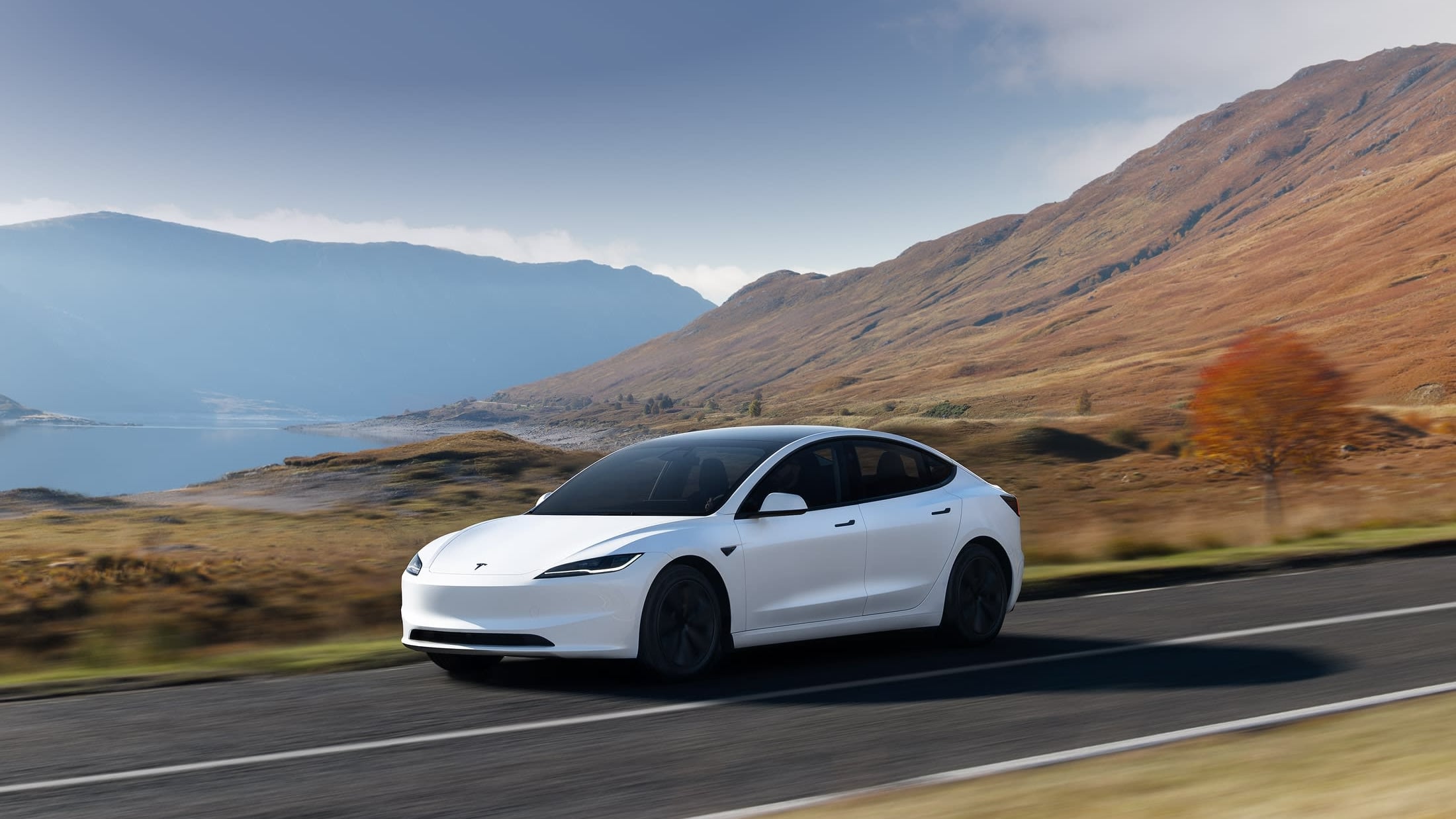
The Shanghai-built Model 3 is the first China-made Tesla sold in Canada since the 2024 tariff halted those imports (Tesla)
The Shanghai car carries a trade-off. It does not qualify for the federal rebate, which requires vehicles built in a country with a Canadian free trade agreement. Even without it, the Model 3 undercuts the rebated Model Y by $5,500 CAD.
B.C. buyers are leaning almost entirely on Ottawa for incentives. The provincial CleanBC Go Electric passenger rebate, which offered up to $4,000 on battery-electric vehicles, is not accepting applications. In November 2025, the province said it would leave consumer rebates to the federal government and later cut its 2035 zero-emission sales target from 100% to 75%.
Advertisement – Continue scrolling for more
The federal Electric Vehicle Affordability Program, which relaunched on February 16, 2026, offers up to $5,000 CAD on battery-electric vehicles and up to $2,500 CAD on plug-in hybrids, with the maximum stepping down by $1,000 each year. It is funded on a first-come, first-served basis.
The running-cost gap is what pump prices make visible. Home charging on BC Hydro rates of roughly 10 to 14 cents per kWh works out to about $2 to $4 per 100 km for a Model Y. A gasoline crossover using 8.5 L/100 km would spend about $18 per 100 km at 212.3 cents a litre. Supercharger rates of roughly 25 to 60 cents per kWh narrow that gap on road trips, but do not close it.
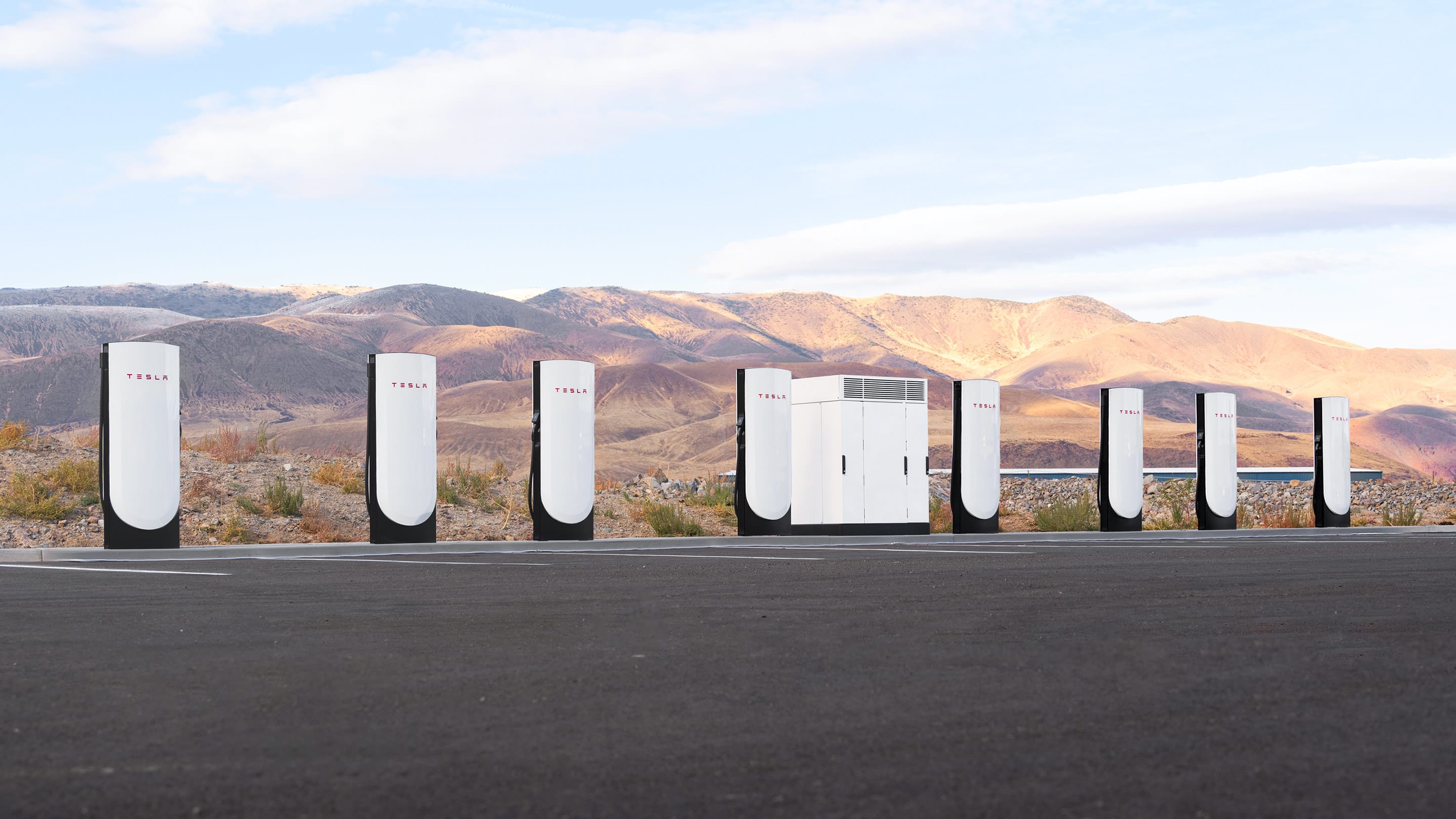
Tesla Supercharger rates in Canada vary by site and time of day, with most sessions still costing less per kilometre than gasoline at B.C. pump prices (Tesla)
Interest was building before the September spike. J.D. Power's 2026 Canada EV Consideration Study, conducted in March and April, found 38% of B.C. new-vehicle shoppers likely to consider an EV, up 5 points, compared with 34% nationally. Range, charging access and cold-weather performance were the top barriers.
Advertisement – Continue scrolling for more
J.D. Ney, managing director at J.D. Power Canada, said shoppers still weigh "how far they can drive on a charge" above other factors. Price, for the first time since 2022, fell out of the top three concerns.
With pump prices showing little sign of easing before winter and the Model Y queue already reaching into 2027, can Tesla ship cars from Berlin and Shanghai fast enough to meet the B.C. buyers that gasoline is sending its way?
Advertisement – Continue scrolling for more