XPeng's new Robotaxi Business Unit targets driverless L4 operations in 2027
Source: XPeng
XPeng (NYSE: XPEV; HKEX: 9868) formally established a Robotaxi Business Unit on March 23, 2026, tasking the division with overseeing product definition, project integration, R&D testing, and day-to-day operations for the company's autonomous ride-hailing programme.
The newly formed unit operates as a tier-one organisation within XPeng, with authority to draw on resources across the company's various departments. Its creation follows a period of organisational consolidation: in February 2026, XPeng merged its autonomous driving centre and smart cockpit centre into a single General Intelligence Centre before splitting out the robotaxi function as a dedicated commercial arm.
Advertisement – Continue scrolling for more
Speaking on XPeng's fourth-quarter and full-year 2025 earnings call the previous week, Chairman and CEO He Xiaopeng said the company plans to launch passenger-carrying demonstration operations for its robotaxi service in the second half of 2026, completing validation of the technology, user experience, and business model. He added that the goal for early 2027 is to operate without a safety driver on board.
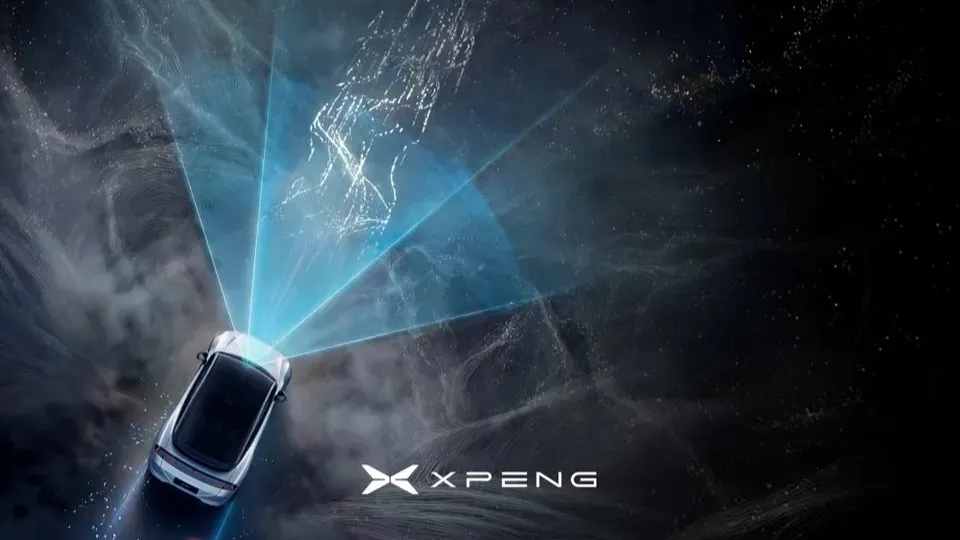
The internal announcement establishing the unit cited VLA 2.0 — XPeng's second-generation Vision-Language-Action autonomous driving model — as the core technology underpinning the programme. VLA 2.0 processes environmental data from seven cameras at 5,000 inputs per second and is engineered to reduce reliance on high-definition maps, a design choice the company says will support deployment across varied global road environments. Internal testing puts inference speed at twelve times that of the prior-generation system.
Source: XPeng
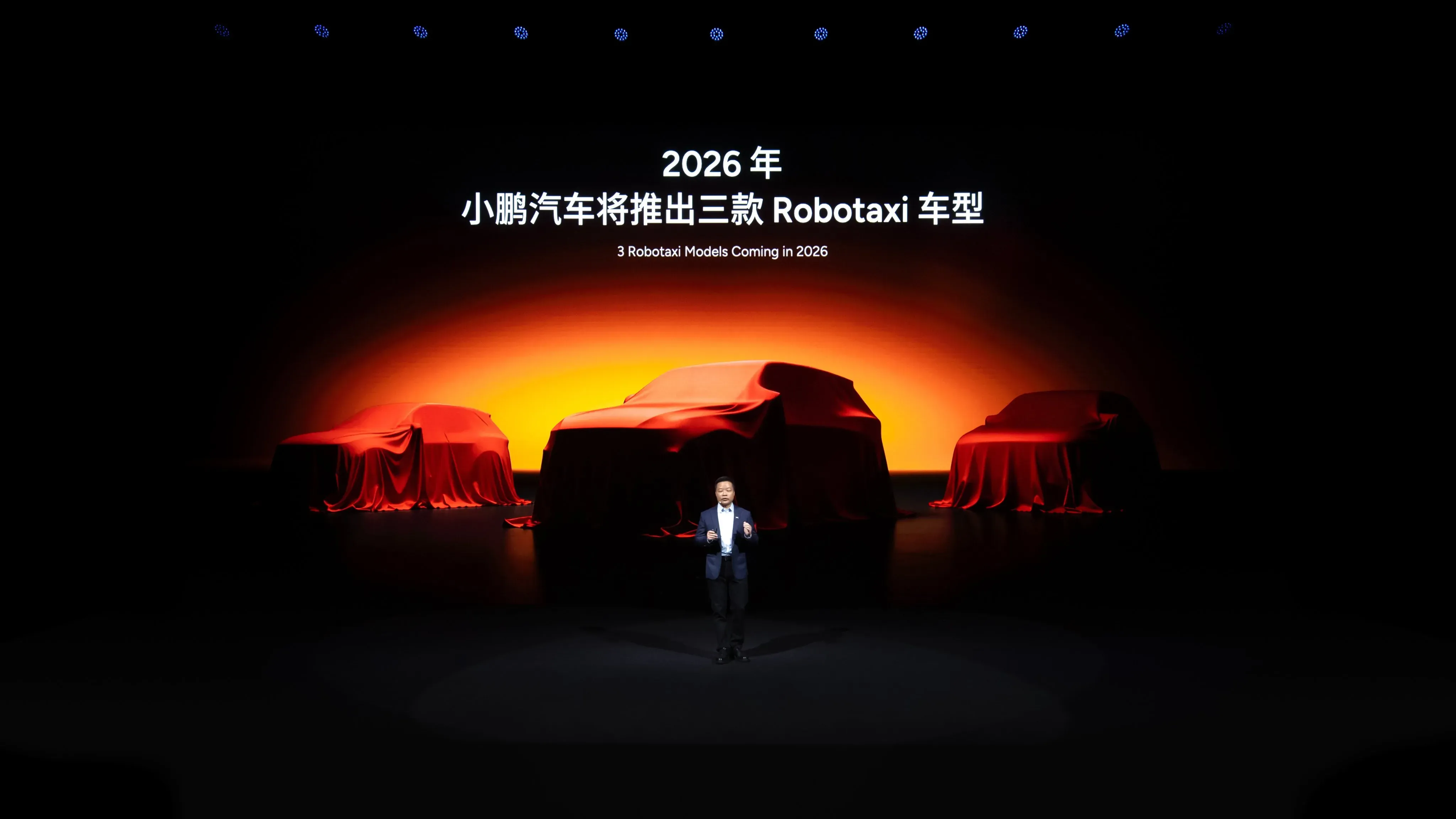
XPeng announced three robotaxi models at its AI Day event in November 2025 — a five-seater, a six-seater, and a seven-seater — all priced under 200,000 CNY (c. $29,100). Each vehicle is equipped with four of XPeng's in-house Turing AI chips delivering up to 3,000 TOPS of compute power.
The vehicles are designed for mass production using the same factory processes as XPeng's existing passenger car lineup, with no LiDAR and no dependence on HD maps. The platform uses a dual-redundancy hardware architecture across perception, steering, braking, communications, energy, and compute systems.
Advertisement – Continue scrolling for more
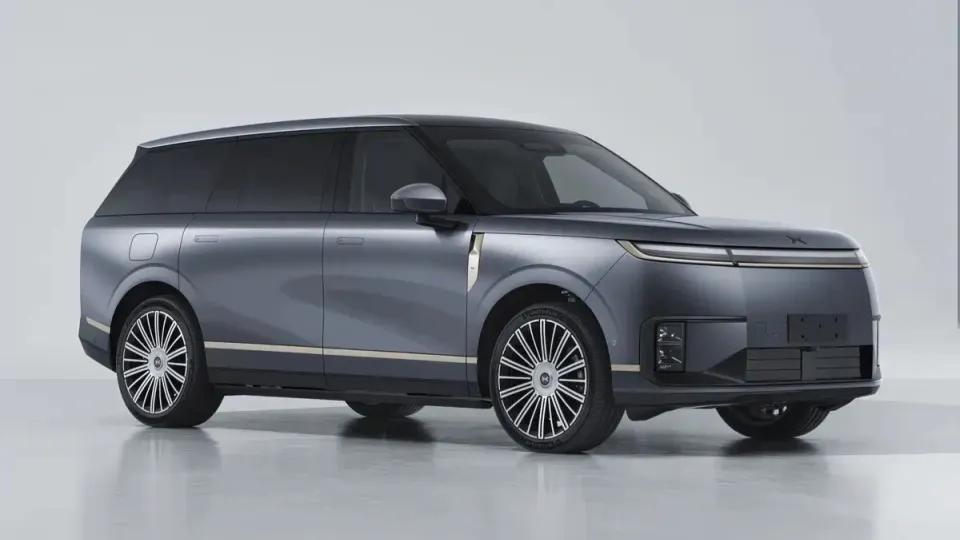
Road testing of the GX — XPeng's forthcoming six-seat flagship SUV, which shares the same VLA 2.0 hardware — began in Guangzhou in February 2026 after regulators granted L4 intelligent connected vehicle test approval for the city.
Source: MIIT
The GX is slated for commercial launch in the second quarter of 2026 and will be the first XPeng consumer model built to support L4-level hardware and software. Volkswagen has been named as the first external customer for both the Turing system-on-chip and VLA 2.0, with XPeng targeting roughly one million chip shipments in 2026.
XPeng's move to formalise the robotaxi function comes as China's autonomous vehicle sector approaches what several participants describe as a commercial inflection point. WeRide has deepened its partnership with Geely and plans to deliver 2,000 robotaxi units in 2026, targeting both domestic and international markets with a fleet that already exceeds 1,000 vehicles operating fully driverless in Guangzhou, Beijing, and Abu Dhabi.
Advertisement – Continue scrolling for more
Pony.ai has partnered with Toyota and GAC Toyota to advance mass-produced robotaxis, and reported positive unit economics in Guangzhou and Shenzhen as of March 2026. Tesla's (NASDAQ: TSLA) CyberCab rolled off the production line in February 2026 and is ramping toward several hundred units per week.
XPeng's approach to the segment differs from pure-play autonomous driving companies. Rather than building a separate hardware platform, the company is leveraging its existing vehicle production infrastructure and sharing the VLA 2.0 architecture across its consumer lineup and robotaxi fleet.
Amap, with 873 million monthly active users, is XPeng's first global ecosystem partner for booking and dispatch, and XPeng plans to open its robotaxi SDK to additional fleet operators and partners over time.
The division's establishment arrives just days after XPeng reported its first-ever quarterly net profit — 380 million CNY (c. $55,200,000) in Q4 2025 — alongside full-year 2025 revenue of 76.72 billion CNY, up 87.7% year-over-year.
Advertisement – Continue scrolling for more
The company is targeting 550,000 to 600,000 vehicle deliveries in 2026 but faces a softer near-term start, with Q1 2026 guidance of 61,000 to 66,000 units reflecting a 30% to 35% year-over-year decline attributed to reduced government subsidies and seasonal factors. XPeng has committed 7 billion CNY to Physical AI R&D in 2026, up from 4.5 billion CNY allocated to AI in 2025.
Bernstein cautioned late last year that while mass production is planned for 2026, accumulating the safety mileage required for fully driverless permits could push L4 commercial operations into 2027 or later — a timeline that broadly aligns with XPeng's own stated targets.
Whether the new business unit can translate VLA 2.0's technical gains into a commercially viable, scalable fleet operation remains the central question heading into the second half of the year.
Conversion rate: 1 USD = 6.88 CNY as of March 23, 2026
Advertisement – Continue scrolling for more