XPeng debuts megawatt charging in Hong Kong ahead of 1,000-site Europe push
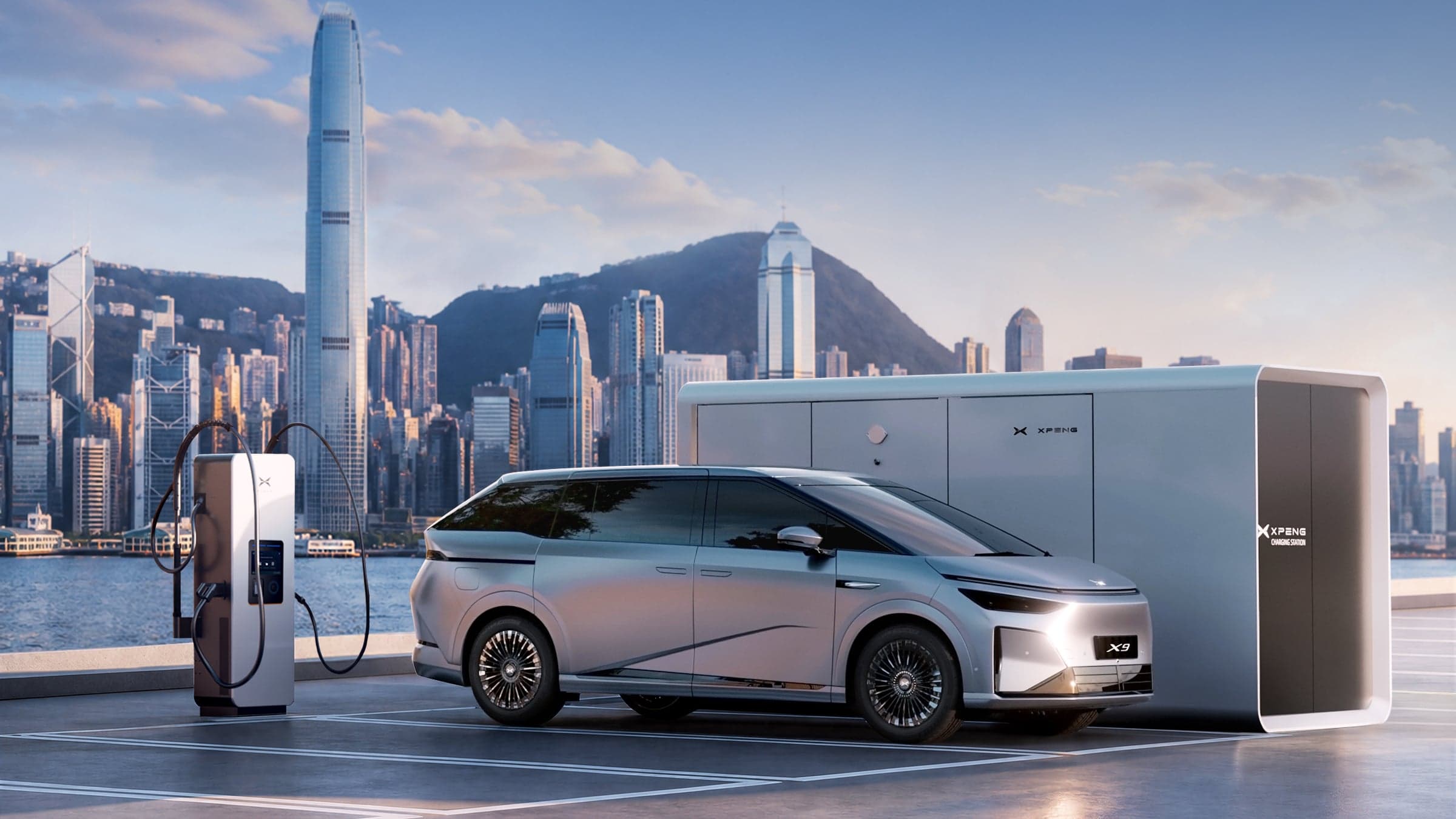
XPeng (NYSE: XPEV; HKG: 9868) and Hong Kong charging operator Halo switched on the automaker's first publicly accessible megawatt flash charging station on September 15, 2026, marking the global debut of XPeng's X-Energy megawatt charging platform outside mainland China. The site is open to electric vehicles from any brand, not just XPeng owners, and sits alongside the company's existing Hong Kong charging footprint.
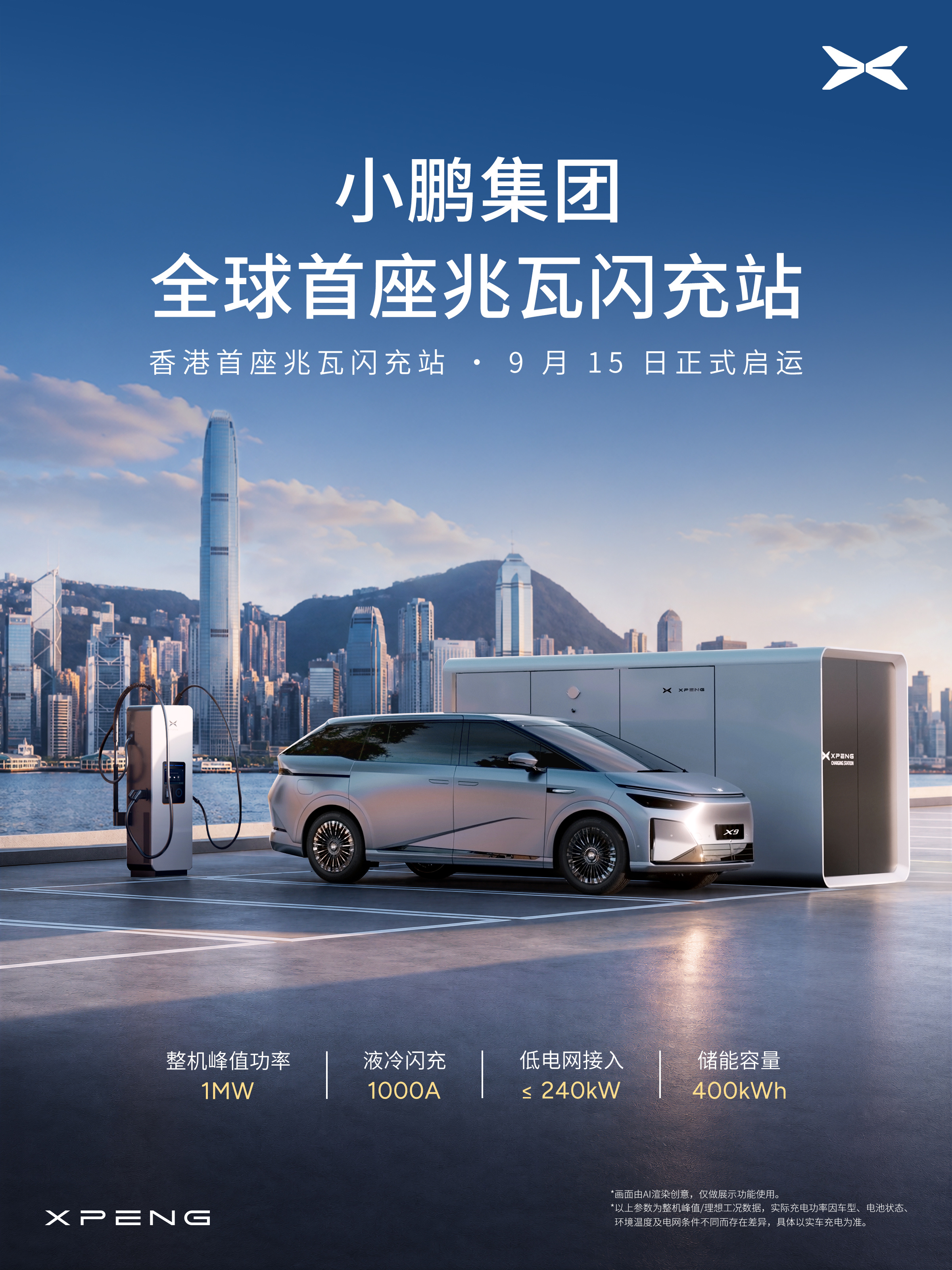
Official launch graphic for XPeng's Hong Kong megawatt charging station, released Sept. 15, 2026 (XPeng)
XPeng framed the launch as "an important milestone for our self-developed energy replenishment technology," according to a company statement issued around the opening. The remark ties the Hong Kong site to a broader push by the automaker to position its charging hardware, not just its cars, as an export product.
Advertisement – Continue scrolling for more
The station's peak output reaches 1MW (1,000 kilowatts), delivered through a liquid-cooled connector rated for up to 1,000 amps. A 400 kWh onsite battery buffers that output, meaning the station itself draws no more than 240 kW from the local grid even while pushing a full megawatt into a parked vehicle. That combination lets XPeng claim megawatt-class charging speeds without requiring a megawatt-scale utility connection.
The buffering approach directly answers a constraint specific to dense cities like Hong Kong, where expanding grid capacity at a given site is expensive and often impractical. By storing energy ahead of time and releasing it in short, high-current bursts, the station sidesteps the usual tradeoff between charging speed and grid infrastructure cost, a tradeoff that has slowed megawatt-charging rollouts elsewhere.
Hong Kong's government has its own numeric target for that buildout: a February 2026 update to the city's EV roadmap calls for at least 4,000 public fast chargers by 2030, enough to support roughly 200,000 EVs, and includes a joint pilot with China's National Energy Administration on a next-generation charging standard called ChaoJ meant to reconcile mainland and Hong Kong charging specifications. XPeng's station was not announced as part of that pilot, but it lands squarely inside the timeline the roadmap is pushing toward.
Advertisement – Continue scrolling for more
XPeng entered the Hong Kong market in 2024 with the G6 and X9, and last year announced plans to build its own network of 360 kW-plus fast chargers in the city's core commercial districts. The new megawatt site extends that buildout with a materially faster charging tier while keeping the multi-brand access policy XPeng has used elsewhere in its network.
XPeng's showroom presence in the city has not yet caught up to that infrastructure push. XPeng ranked fifth among battery-electric brands in Hong Kong in August 2026 with 100 new registrations, well behind market leader BYD (HKG: 1211) at 614 and also trailing Tesla, iCAR and BMW that month, out of roughly 1,922 total EV registrations citywide. A public charging site that any brand's owners can use gives XPeng a way to build local goodwill and brand visibility that isn't dependent on moving that sales ranking first.
Halo, the station's co-builder, is a Hong Kong-founded charging operator that has previously partnered with Shell and Sino Group on fast-charging sites in the city and also runs operations in Australia. Its role in the XPeng project brought local site access, grid-interconnection work and load-management software to pair with XPeng's charging hardware, a division of labor similar to joint deployments XPeng has run in mainland China, including a station built with BP Pulse in Guangzhou.
Advertisement – Continue scrolling for more
The Hong Kong launch lands as XPeng leans harder into markets outside mainland China. The company is targeting more than 90,000 vehicle deliveries outside the mainland this year, roughly 15 percent of its planned annual volume, and is expanding its dealer network across Europe, the Middle East and Southeast Asia. The overseas push comes as domestic competition from BYD (HKG: 1211) and Leapmotor (HKG: 9863) continues to compress margins at home.
That expansion plan includes charging infrastructure of its own. At the global unveiling of the MONA L03 in Munich, XPeng laid out plans for more than 1,000 self-operated ultra-fast charging stations across 13 European countries, built around the same X-Energy technology now running in Hong Kong. The Hong Kong station functions as the first live deployment of that platform outside mainland China, ahead of the European buildout.
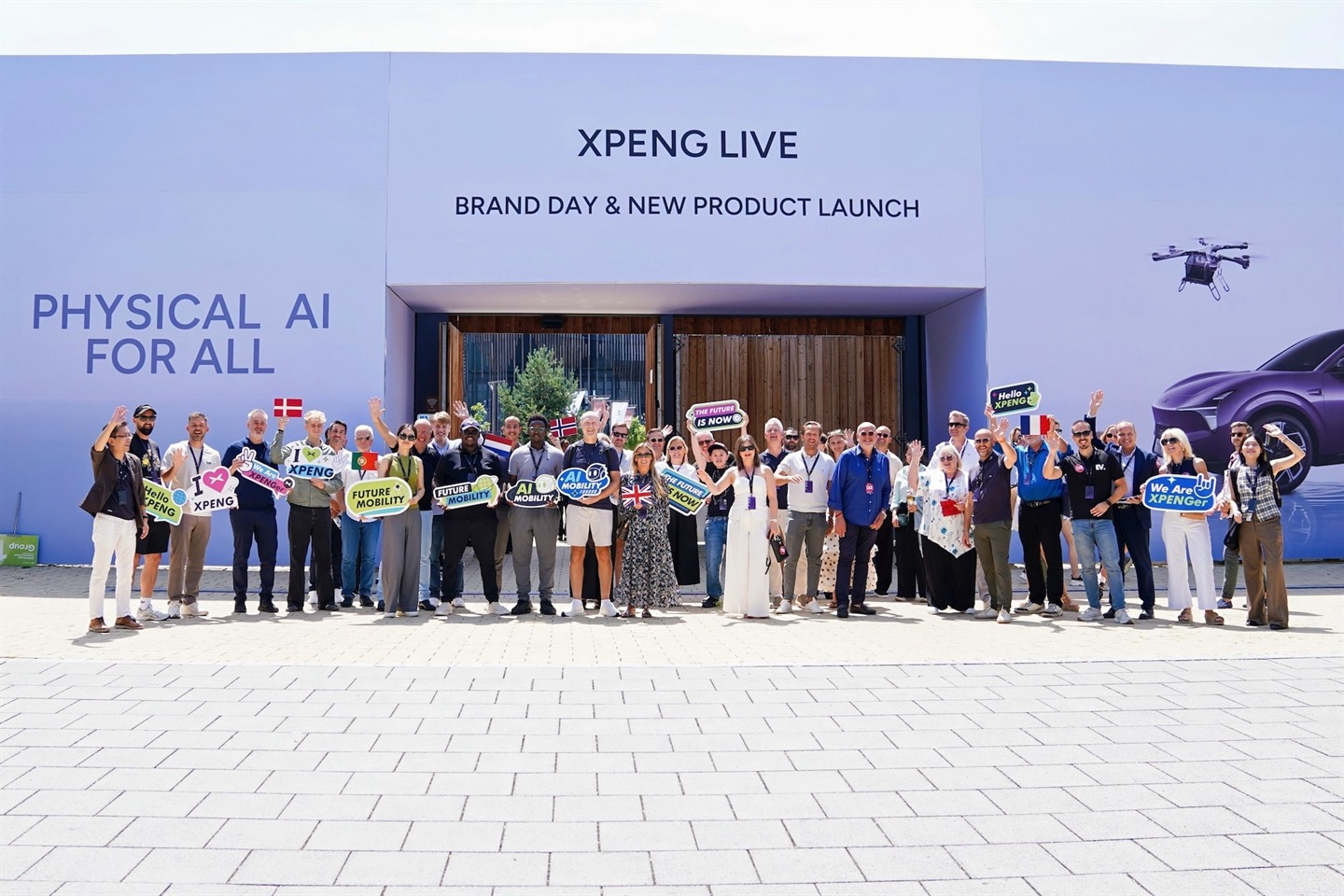
European XPeng owners at the MONA L03's global launch event in Munich, July 2026 (XPeng)
The MONA L03 itself, the model tied to that European rollout announcement, is offered with a pure battery-electric powertrain rated at 625 km on the CLTC cycle and a 0-100 km/h time of 6.6 seconds, or a range-extended hybrid variant rated at a combined 1,330 km CLTC. The car's 0.228 drag coefficient is among the lowest XPeng has published, and mainland Chinese pre-sale pricing opened at 143,800 CNY to 165,800 CNY (c. $21,400 to c. $24,700).
Advertisement – Continue scrolling for more
Charging infrastructure has become a competitive lever in its own right for Chinese EV makers expanding abroad, not just a support function for car sales. A fast, multi-brand, publicly accessible station gives XPeng visibility with drivers who don't yet own one of its vehicles, a marketing function a dealership alone can't replicate in a new market, and a way to bank goodwill with a city government that is actively courting charging investment.
Whether XPeng can replicate the Hong Kong site's grid-friendly storage design across 13 European countries at the pace it has promised, rather than the smaller pilot scale it has managed so far outside China, is the open question the Munich announcement left unanswered.
Conversion rate: 1 USD = 6.71 CNY as of September 15, 2026.
Advertisement – Continue scrolling for more