Tesla Cybercab drops wheel, pedals and mirrors as US regulator opens an audit

Tesla (NASDAQ: TSLA) opened its Cybercab robotaxi service in Austin, Texas, on September 3, 2026, built exactly as the company had promised when it revealed the car in October 2024: a "purpose-built robotaxi with no steering wheel, no pedals, and no mirrors."
Within hours of the first rides, the US National Highway Traffic Safety Administration opened an audit into how Tesla certified a car with none of the controls that federal safety rules were written around.
The launch happened in two steps. Tesla let a handful of Robotaxi app users ride in the two-seat, butterfly-doored Cybercab at an invite-only event on September 3, then opened limited public access through the app the next day in parts of Austin.
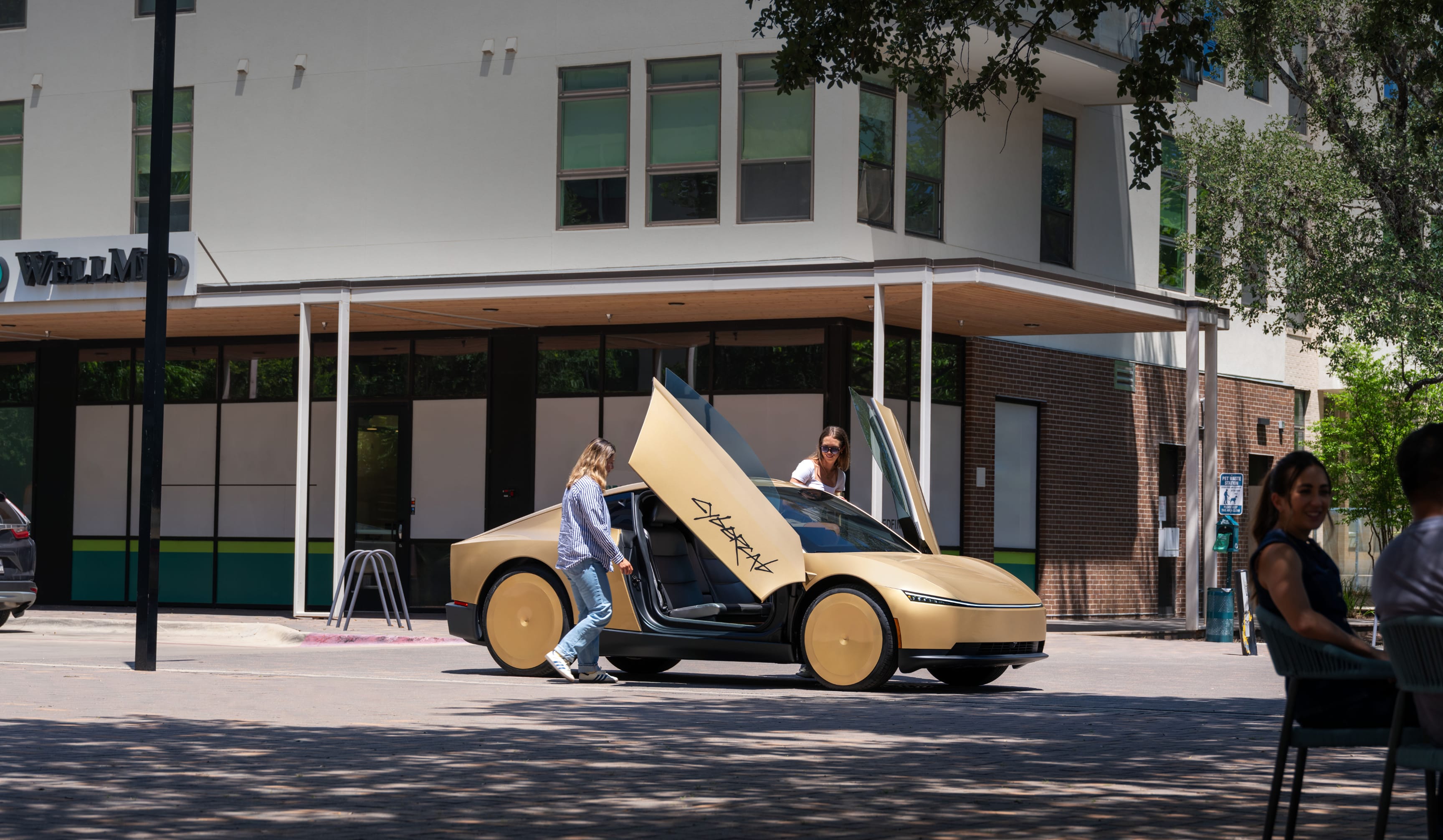
Riders boarding a Cybercab on an Austin street (Tesla)
The production car pairs a single 163-kilowatt (219-horsepower) front motor with a roughly 47.6-kilowatt-hour battery, and Tesla rates it for about 467 kilometres of range on the EPA-adjusted cycle (673 km unadjusted). It charges only through a wireless inductive pad, with no NACS port or Supercharger access, and rides are priced closer to a ride-share fare than a premium robotaxi, from roughly $2 US for short hops to $8 to $13 US for trips of eight to thirteen kilometres.
Advertisement – Continue scrolling for more
Tesla built a workaround into the cabin for a car with no wheel or pedals: a touchscreen that can switch into a hidden virtual joystick mode, letting someone drag a finger across the display to reposition the car inside a depot. At least one rider has reported the screen briefly shifting into that manual layout, though Tesla has not publicized the feature.
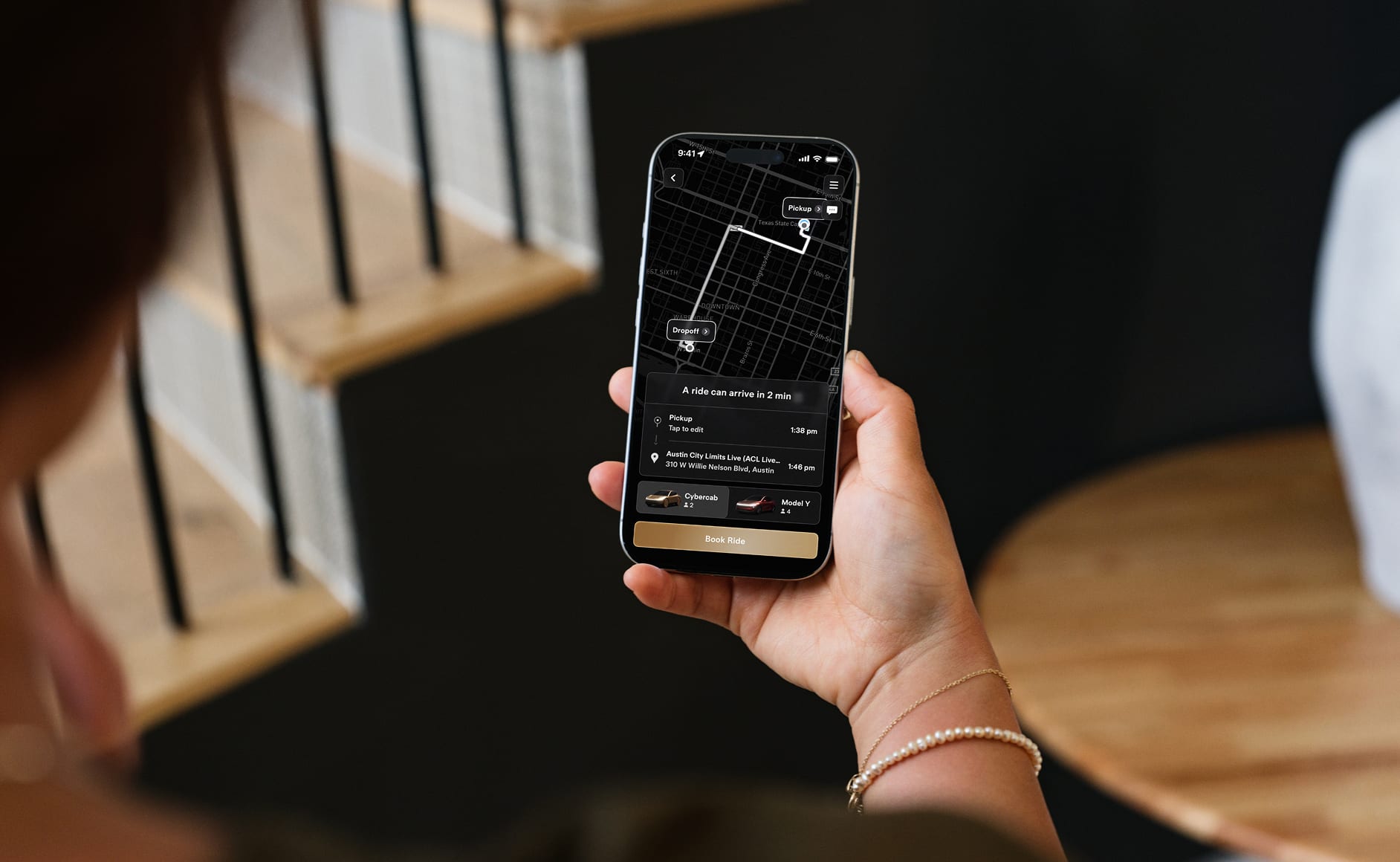
Booking a ride through the Tesla Robotaxi app (Tesla)
A pre-production test mule spotted in Berkeley, California, this month carried a Cybertruck steering wheel bolted onto an exposed column, a setup described as an improvised rig rather than a factory option, since testing on public roads generally still requires a human able to take over.
Commercial volume was never the promise Tesla actually kept. Its first-quarter 2026 update said Cybercab would reach volume production in 2026, but the July 22 update dropped that language entirely, and only 45 Cybercabs were authorized for driverless operation in Texas as of launch day, well short of the roughly 1,000 vehicles built and covered by the new federal audit.
Advertisement – Continue scrolling for more
US Federal Motor Vehicle Safety Standards were written for a human driver and still call for equipment like a steering wheel, pedals and mirrors, though the Department of Transportation has proposed dropping that requirement specifically for fully autonomous vehicles. Tesla self-certified the Cybercab as compliant regardless, arguing those particular standards simply do not apply to a car built with no manual controls at all.
NHTSA's Office of Defects Investigation opened its audit query on launch day to examine the technical basis for that call, and administrator Jonathan Morrison said the agency needs to make sure "all of our laws are followed." The audit itself is a fact-finding step rather than a recall, but it can escalate into a formal investigation, and potentially a recall order, if NHTSA decides Tesla's reasoning does not hold up.
Advertisement – Continue scrolling for more
A similar path preceded Amazon (NASDAQ: AMZN)-owned Zoox's robotaxi, a vehicle built the same way, with no steering wheel or pedals at all. Zoox spent roughly four years in a federal exemption process before US regulators cleared it in July 2026, weeks before Zoox launched commercial service in Las Vegas under a 2,500-vehicle annual cap. Tesla chose a different route, self-certifying rather than waiting for an exemption, and the audit is effectively a test of whether that shortcut holds up under scrutiny.
When Tesla first unveiled the Cybercab in October 2024, Elon Musk projected production starting around 2026 or 2027 and a price under $30,000 US, a target he has since reaffirmed without committing to a firm date or a confirmed retail sale option. Almost two years on, the vehicle exists only as a fleet asset inside Tesla's own ride-hailing network, with no path yet for an outside buyer, Canadian or otherwise, to simply order one.
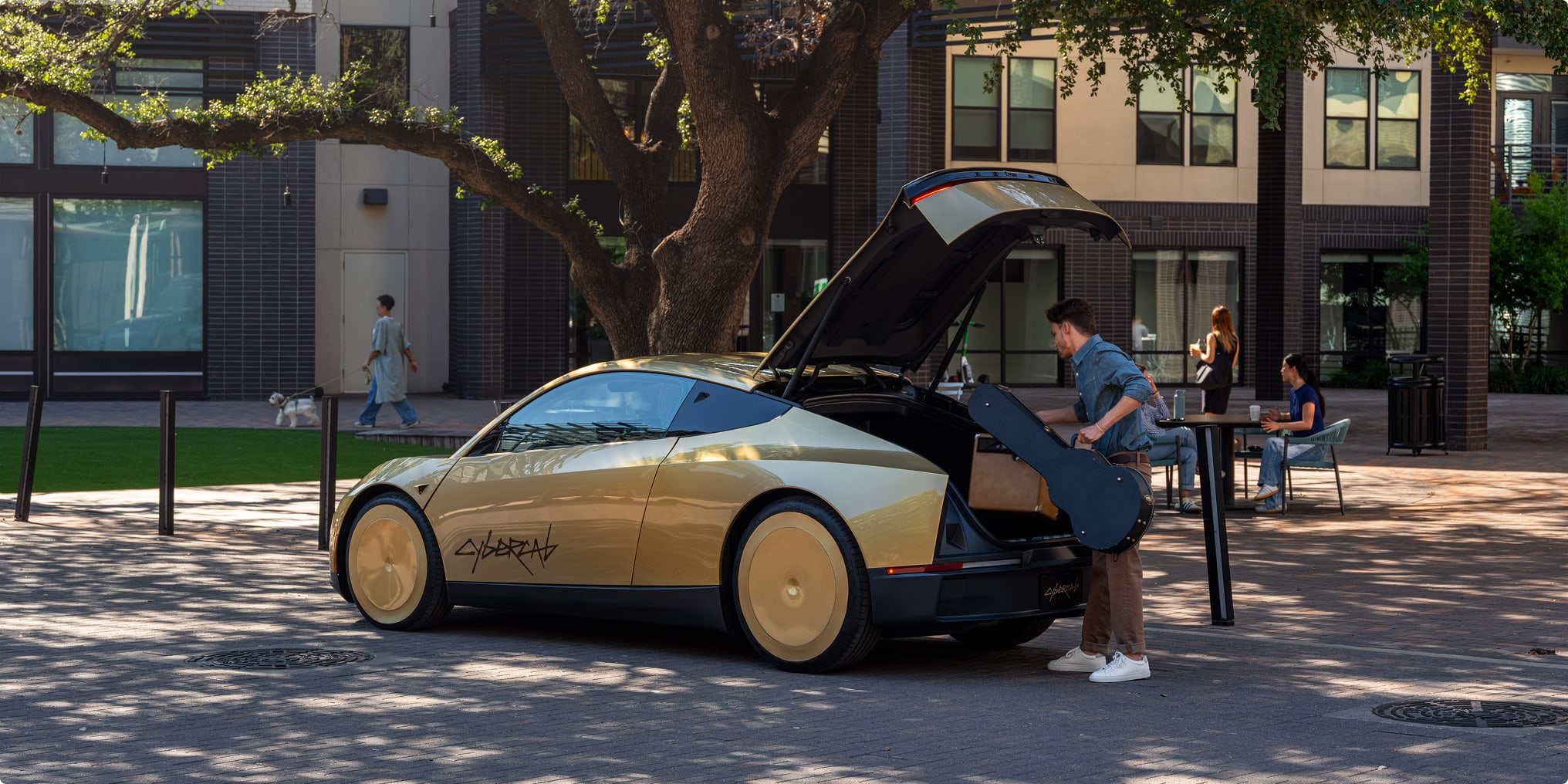
A Cybercab's trunk in everyday robotaxi use (Tesla)
Canada would face close to the same question if a controls-free Cybercab were ever proposed here. Transport Canada's Motor Vehicle Safety Regulations require a vehicle to meet the Canada Motor Vehicle Safety Standards set for its class, but the Motor Vehicle Safety Act also lets the department grant case-by-case exemptions under section 9, a structure that runs on the same self-certify-then-defend logic NHTSA is now testing against Tesla.
Advertisement – Continue scrolling for more
Authority over actually running an automated vehicle on the road sits mostly with the provinces, and it is uneven. Ontario allows SAE level 3 to 5 testing under strict conditions through an automated vehicle pilot program, Quebec permits level 3 operation only for vehicles already authorized for sale in Canada, and British Columbia's 2024 legislation blocks level 3-and-up automation on public roads unless specifically authorized.
Neither Tesla nor Transport Canada has said anything publicly about bringing the Cybercab north, and the fleet-purchase interest form Tesla opened to businesses around the Austin launch makes no mention of Canadian buyers. Some industry commentary has floated 2028 or 2029 as a plausible window for any Canadian robotaxi service, partly on the assumption that Canadian regulatory sign-off tends to trail US approval, though that timeline is an outside estimate rather than anything Tesla or Ottawa has confirmed.
Whether a car with no wheel, pedals or mirrors still counts as a car is a question Washington is now working through in public, and Ottawa will eventually have to answer it too.
Advertisement – Continue scrolling for more