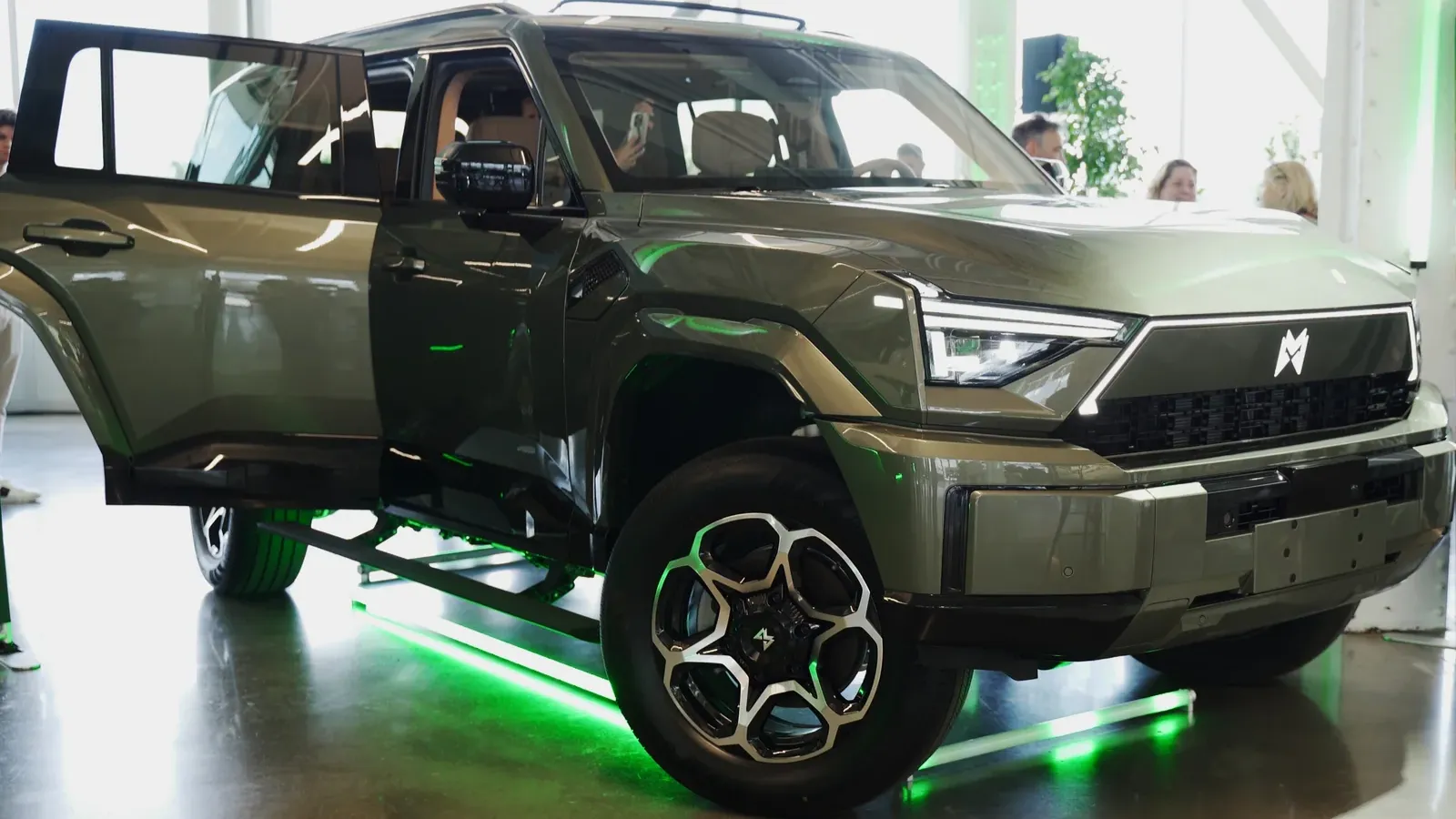
Canadians have grown markedly more open to buying a Chinese-built electric vehicle since Prime Minister Mark Carney's government struck a trade deal with Beijing in January 2026, replacing a 100% tariff on Chinese EVs with a 6.1% duty inside an annual import quota.
A Leger survey of 1,570 Canadians conducted January 30 to February 2, 2026 found 61% support importing more Chinese EVs, including 24% who backed the move strongly. A separate Abacus Data poll of 2,498 Canadians for Clean Energy Canada found 35% of all respondents open to buying a Chinese EV, rising to 70% among the roughly half of Canadians already considering any EV purchase. A Nanos Research study for Bloomberg found 53% of 1,009 respondents said a vehicle's Chinese origin would not affect their purchase decision, up from just 25% in 2024.
Price is the driver cited most often. The average transaction price for a new EV in Canada has climbed past $46,000, and 59% of Canadians who are interested in or unsure about an EV named purchase price as their top concern in the Clean Energy Canada survey. Among that same group, 56% said they would consider a Chinese-built model specifically if it were more affordable, ahead of openness to new brands (31%) and performance (18%).
Advertisement – Continue scrolling for more
Ottawa's October 2024 tariff had mirrored the 100% duty the United States imposed on Chinese EVs, effectively locking Chinese automakers out of the Canadian market. That changed after Carney's January 2026 trip to Beijing, when Canada agreed to cut the tariff to roughly 6.1% for EVs within a 49,000-vehicle annual quota, set to climb to 70,000 units by 2030. Starting in the quota's second year, 10% of units must be priced at $35,000 or less, a share that grows to 50% by 2030. In exchange, China rolled back retaliatory duties on Canadian canola, lobster, crab and peas.
BYD (HKG: 1211), the world's largest EV maker by volume, has confirmed it is building toward a Canadian retail launch, hiring an Ontario-based dealer consultancy to place roughly 20 stores starting in the Greater Toronto Area before expanding to Vancouver, Montreal and Calgary. The company has not officially confirmed its Canadian model lineup or pricing. Chery and Geely (HKG: 0175) are also building Canadian dealer networks, while Nio (NYSE: NIO) and XPeng (NYSE: XPEV) have shown interest, all competing for space inside the same shared quota.
Advertisement – Continue scrolling for more
One complication tempers the affordability story: Chinese EVs will not qualify for Ottawa's revived Electric Vehicle Affordability Program, which offers up to $5,000 toward a new EV but restricts eligibility to vehicles built in Canada or in countries holding a free trade agreement with Canada, a list that excludes China. Provincial support is thinner too. British Columbia's passenger-vehicle rebate remains paused, while Quebec's Roulez vert program still offers up to $2,000 for a new EV priced under $65,000, a threshold most incoming Chinese models would likely clear.
Regional appetite varies with that math: support for Chinese EV imports ranged from 72% in Quebec to 51% in Atlantic Canada in the Leger poll, and from 45% to 24% between Quebec and Alberta in the Abacus Data survey. Whether that goodwill survives first contact with sticker prices that undercut rebated domestic models by less than buyers expect remains the open question as BYD's showrooms start taking shape.
Advertisement – Continue scrolling for more