BYD's new 1,500 kW flash charging could solve Canada's EV winter problem
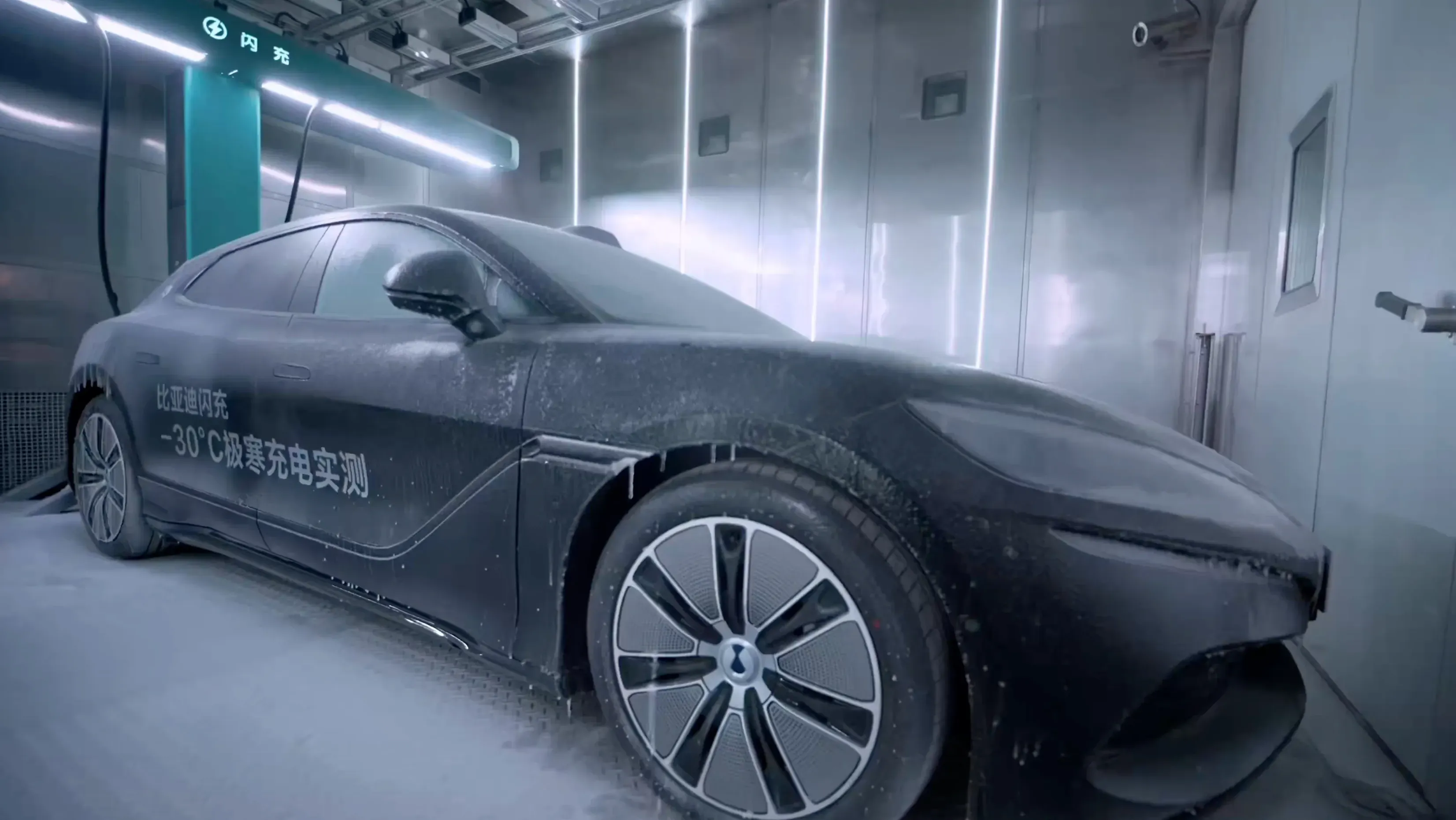
BYD (HKG: 1211) unveiled its second-generation Blade Battery and upgraded Flash Charging system on March 6, 2026, targeting what Chairman Wang Chuanfu described as the two remaining barriers to mass EV adoption: slow charging and poor low-temperature charging performance. The timing is notable for Canada, where BYD has just applied to export vehicles under a new 6.1% tariff-quota arrangement and where winter charging anxiety remains a measurable obstacle to EV uptake.
Advertisement – Continue scrolling for more
The scale of that anxiety is well-documented. A Canadian Automobile Association (CAA) survey of more than 16,000 EV owners found that over 65% reported lower battery range in extreme cold, and more than two-thirds of Canadians polled said winter range loss is a top barrier to buying an EV.
In CAA's real-world winter test — driving 13 models from Ottawa to Mont-Tremblant, Quebec, in temperatures between -7°C and -15°C — vehicles drove 14% to 39% less than their official Natural Resources Canada range estimates, and the average DC fast-charge session added only about 100 km (62 miles) of range in 15 minutes. Forty percent of EV drivers told CAA that significantly slower charging in extreme cold is an ongoing problem.
Source: BYD
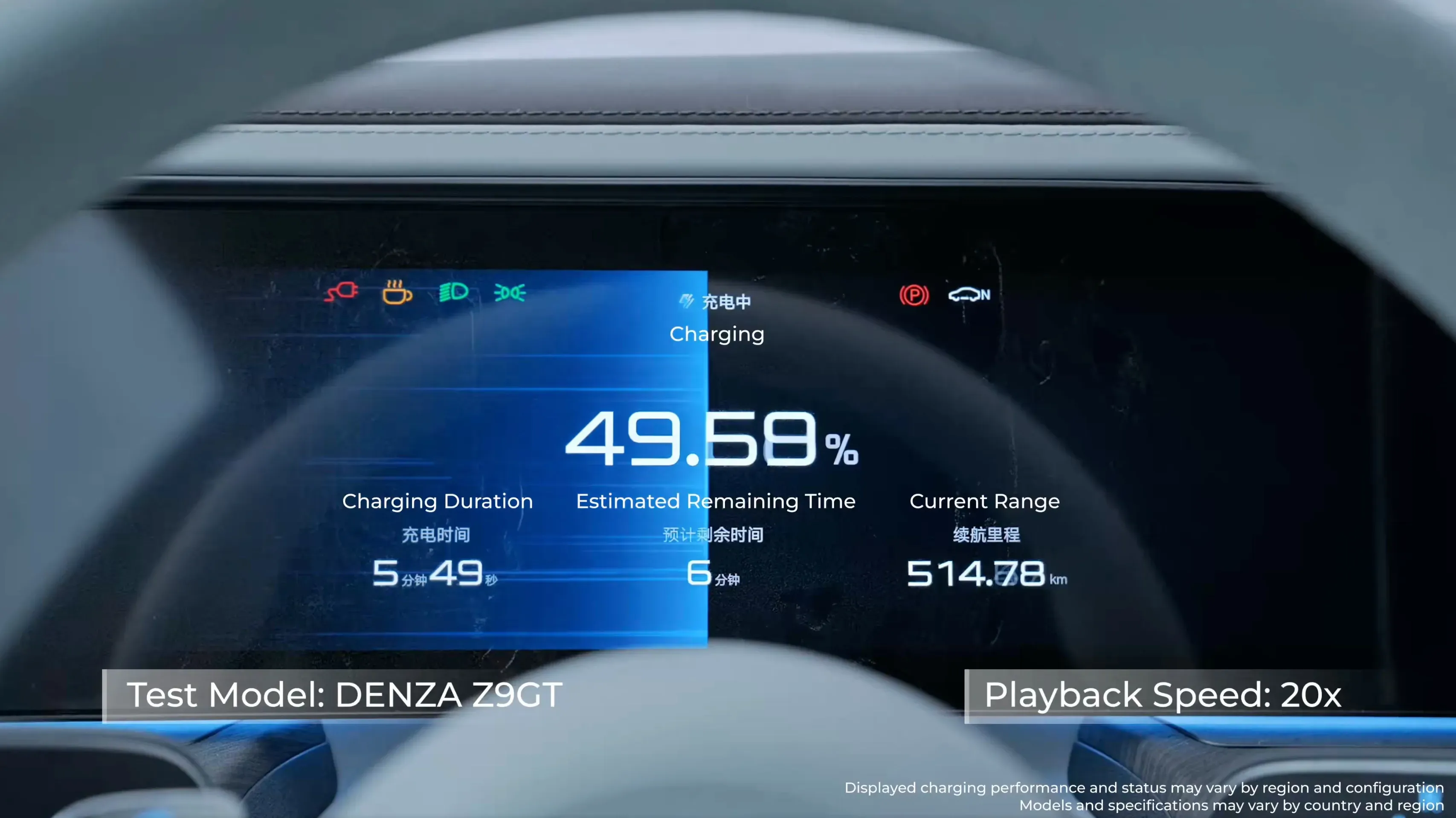
BYD's flash charging 2.0 directly targets that weak point. The second-generation Blade Battery — built on lithium iron phosphate (LFP) chemistry — can charge from 20% to 97% in 12 minutes even after being stored for 24 hours at -30°C (-22°F), only three minutes longer than the same charge at room temperature. Cold-weather performance has historically been a known weakness of LFP batteries, making the result significant. At standard temperatures, a 10%-to-97% charge takes nine minutes when paired with BYD's new Flash Charger.
Advertisement – Continue scrolling for more
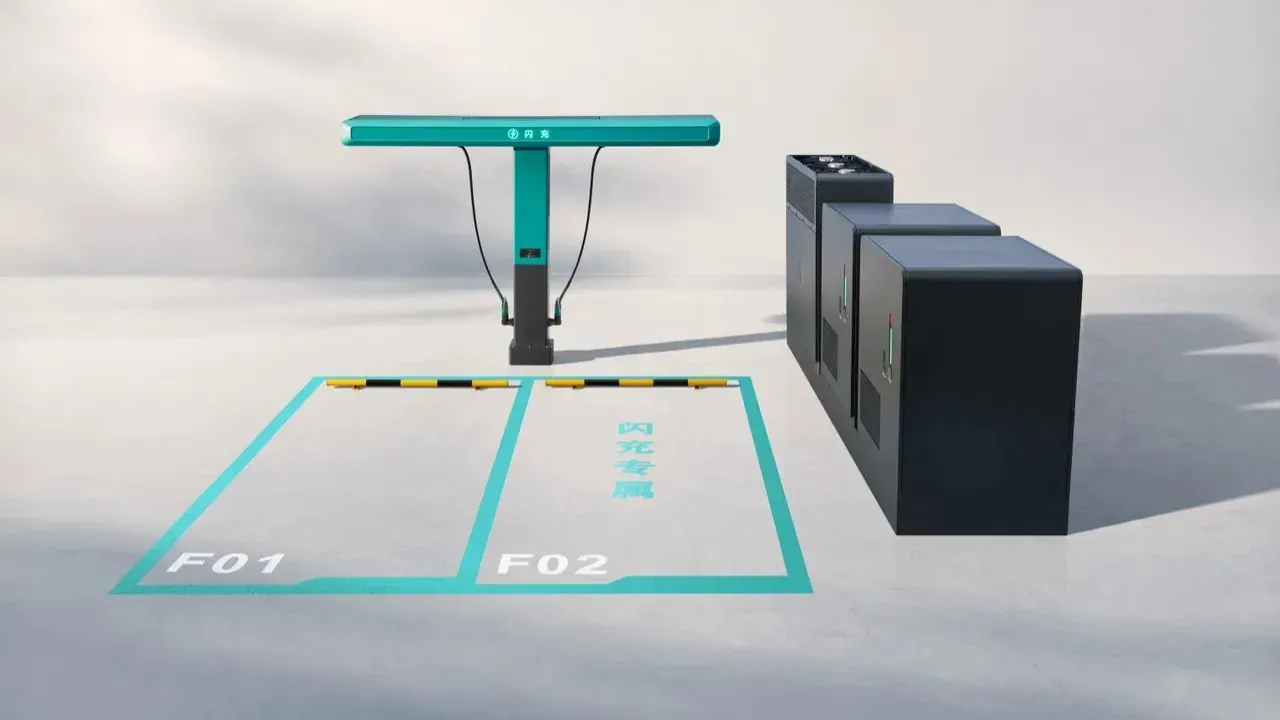
The new Flash Charger delivers up to 1,500 kW of peak power through a single connector, using 1,500 amps of current on a 1,000-volt architecture — three times the peak output of Tesla's (NASDAQ: TSLA) latest V4 Supercharger and roughly four to six times the capacity of most public DC fast chargers currently available in North America.
Source: BYD
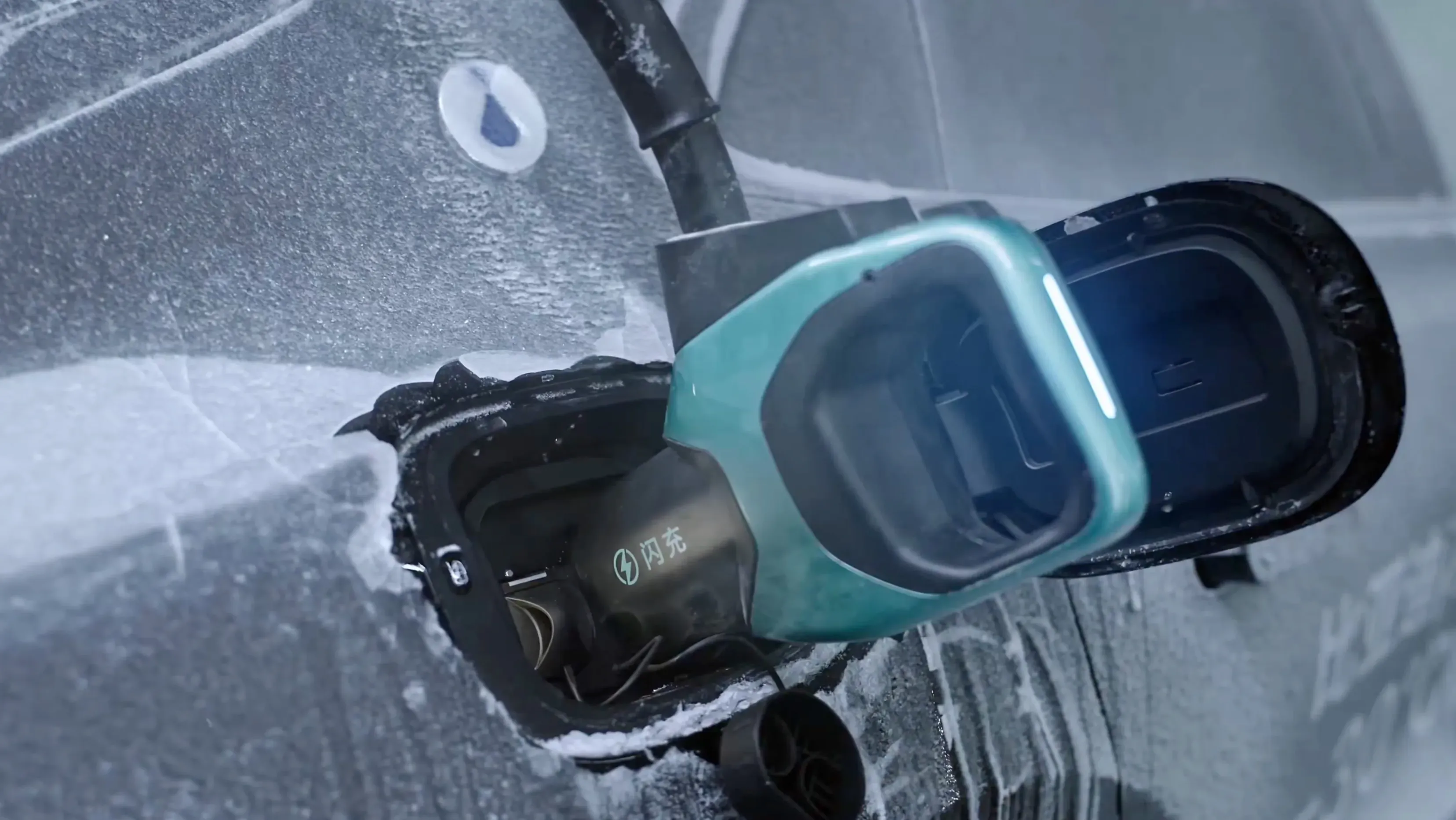
The hardware uses a T-shaped overhead design that keeps cables suspended, eliminating the problem of heavy, ground-level connectors — a practical consideration in snowy or wet conditions. Each station is paired with an on-site energy storage system of 200–300 kWh, which charges at lower power and then discharges rapidly during charging sessions, reducing grid strain and enabling deployment at locations without high-capacity grid infrastructure.
Advertisement – Continue scrolling for more
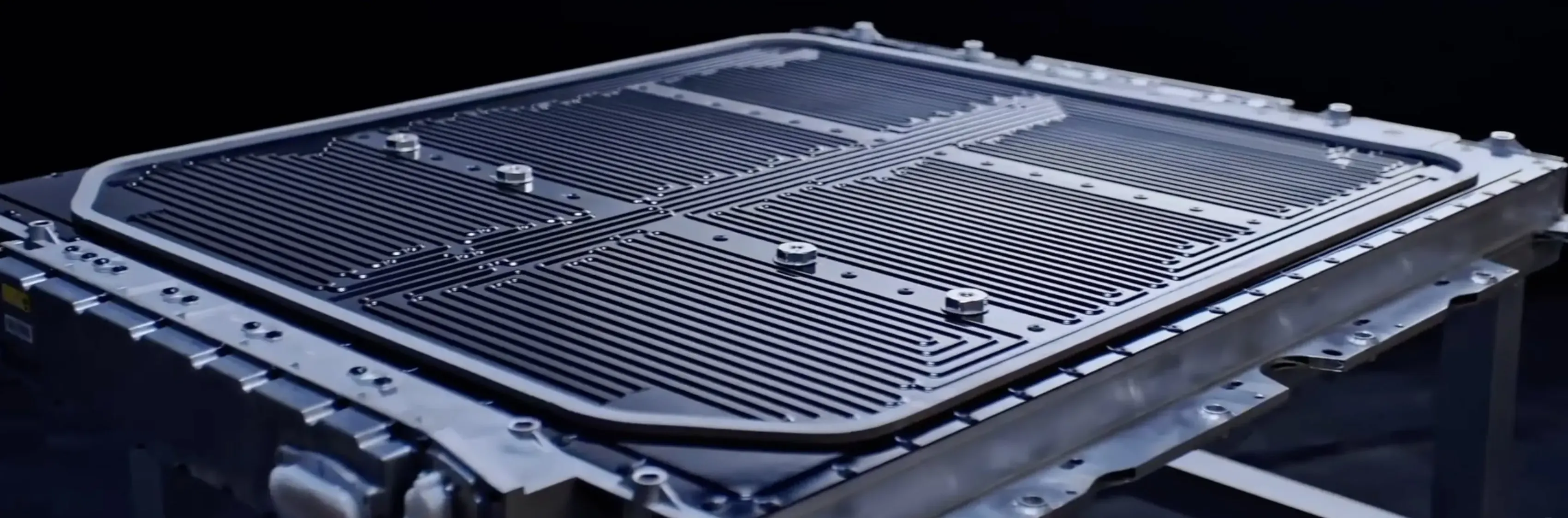
The underlying battery engineering is anchored in three innovations BYD groups under the name FlashPass Ion Transport System. A redesigned cathode architecture allows faster deintercalation of lithium ions; an AI-optimized electrolyte improves ionic conductivity; and an anode with multi-dimensional lithium-insertion sites enables 360° 3D high-speed ion intercalation.
Source: BYD
Together, these changes reduce internal resistance and cut heat generation, which is what allows the battery to charge rapidly even when cold — a cold battery's elevated internal resistance is normally what forces charging systems to throttle power. The new battery also increases energy density by 5% over the first-generation Blade Battery, with BYD now offering a lifetime warranty on the cells.
Advertisement – Continue scrolling for more
The cost economics of the chemistry also matter for Canada's market entry calculus. According to BloombergNEF, LFP packs cost $81 per kilowatt-hour compared with $128 per kilowatt-hour for nickel manganese cobalt (NMC) chemistry — a gap that contributes to the price competitiveness BYD is counting on. The first vehicle to feature the technology is the Denza Z9GT flagship shooting-brake grand tourer, with ten production models across the BYD lineup to follow.
Source: BYD
There is a critical constraint: the nine-to-twelve-minute charge times are only achievable when a vehicle equipped with Blade Battery 2.0 is paired with one of BYD's 1,500 kW Flash Chargers — hardware that does not yet exist outside China.
As of March 5, 2026, BYD had 4,239 Flash Charging stations operational across China, with a target of 20,000 by the end of 2026. The overseas rollout, confirmed for Europe, Latin America, the Middle East, Africa, and the Asia-Pacific region, is targeted for a "scaled deployment" by the end of 2026. Canada and the United States were not named in the overseas rollout list.
BYD has stated that vehicles equipped with the second-generation battery can also charge 30-50% faster than conventional EVs on standard public charging piles, which would represent an improvement even without access to dedicated Flash Chargers. That fallback matters for markets where the proprietary infrastructure has not arrived.
Advertisement – Continue scrolling for more
BYD will likely aim to export vehicles to Canada under the new 6.1% tariff framework in early March 2026, with demo units projected to arrive by mid-2026 and limited retail availability likely late in the year. The vehicles would still need to pass Canadian Motor Vehicle Safety Standards, battery safety certification, and charging interface compliance before receiving final sales approval.
The gap between the battery's cold-weather capability and the infrastructure needed to deploy it in full will define how quickly the technology translates from a laboratory result into a practical answer for a Canadian driver sitting at -25°C in Winnipeg, watching a progress bar crawl.
Advertisement – Continue scrolling for more