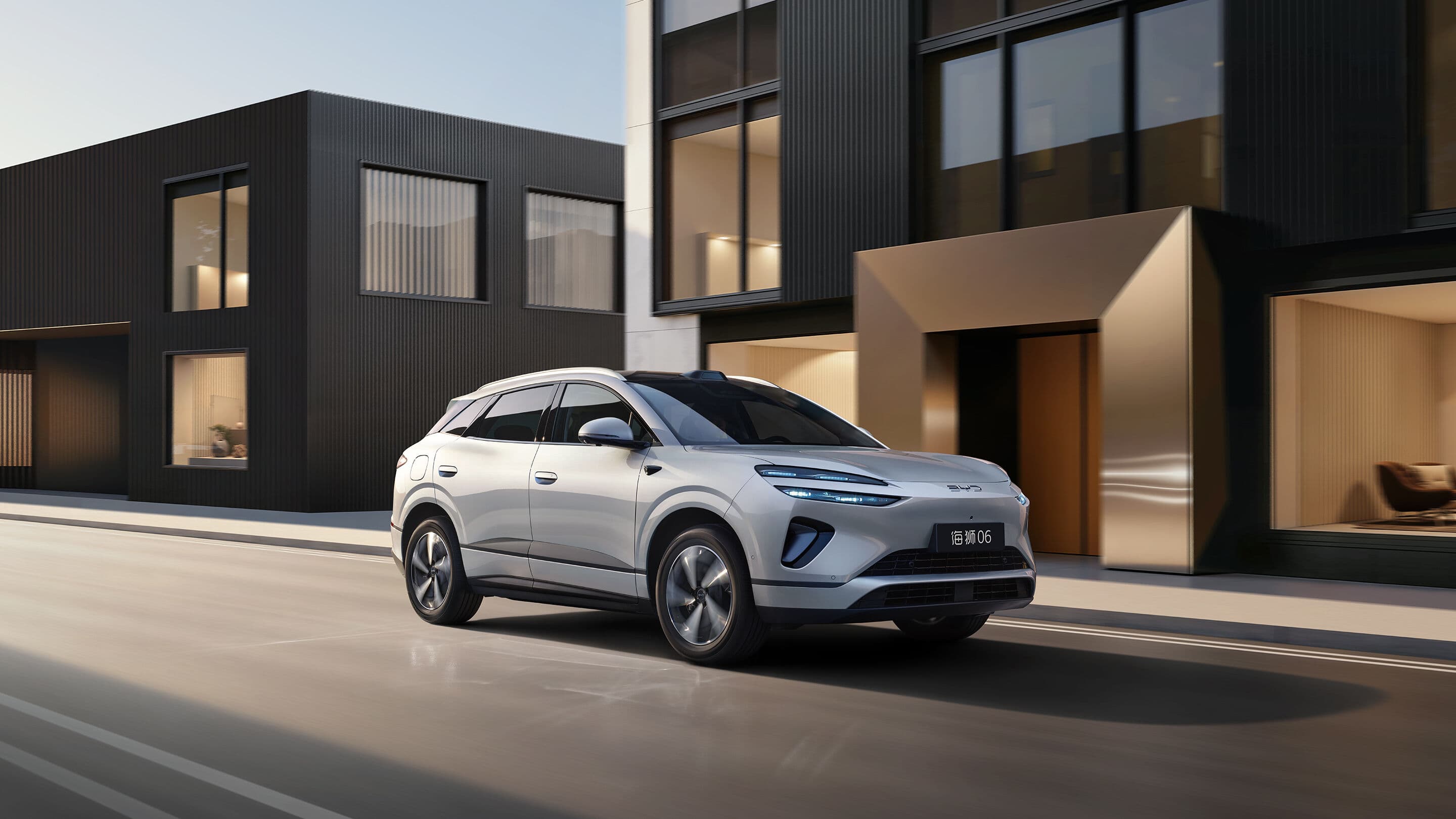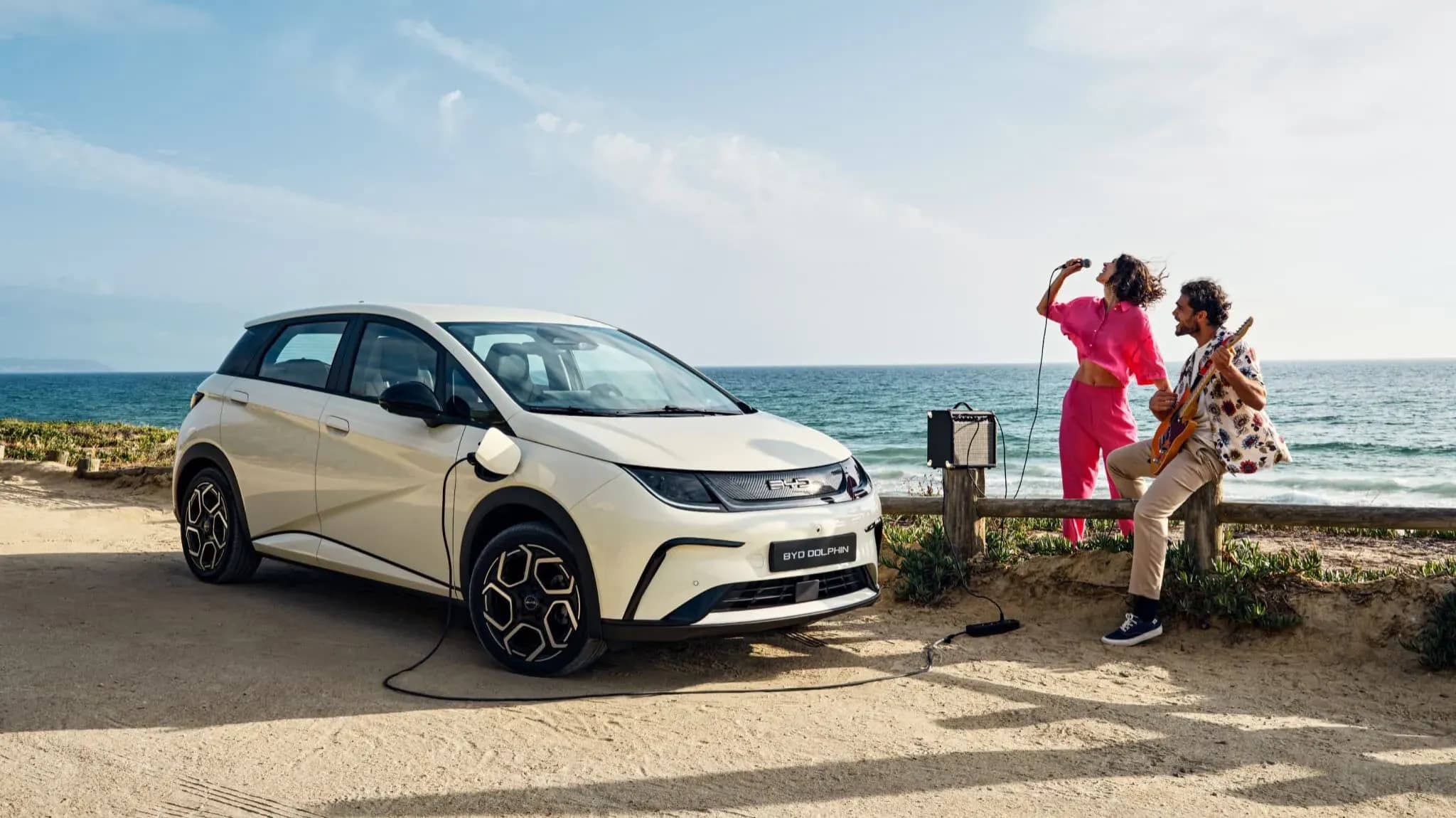
Prime Minister Mark Carney's January 2026 deal with Beijing — cutting Canada's tariff on Chinese-made EVs from 100 per cent to 6.1 per cent for a quota of up to 49,000 vehicles per year — opened the door for BYD (HKG: 1211) to enter one of the few major markets it has yet to crack. The deal, struck during Carney's first visit to China since taking office, reserves half the quota for EVs priced below CAD $35,000, a threshold that aligns squarely with BYD's more affordable models. Import permits began flowing from March 1, 2026 on a first-come, first-served basis.
BYD has not announced Canadian pricing or a launch timeline, but has signalled plans for roughly 20 branded dealerships starting in the Greater Toronto Area.
With Australia operating under a near-identical tariff structure — a roughly 5 per cent import duty on Chinese EVs with no additional surtax — the Australian market offers the closest available pricing proxy for what Canadians might eventually pay.
Advertisement – Continue scrolling for more
Applying the markup each BYD model carries between its Chinese MSRP and its Australian retail price — then converting at current exchange rates (1 AUD ≈ 1.040 CAD as of April 4, 2026) — yields a model-by-model projection.
Crucially, this approach uses each model's specific markup rather than a blanket average: the Seal carries a 27 per cent margin over its Chinese base in Australia, while the Seagull and Atto 3 both sit closer to 63–64 per cent, and the Dolphin at roughly 43 per cent — differences that reflect segment positioning, shipping costs, and local spec upgrades.
One factor buyers should not count on: Canada's new Electric Vehicle Affordability Program (EVAP), which replaced the former iZEV rebate on February 16, 2026 and offers up to $5,000 toward eligible purchases. EVAP requires vehicles to be manufactured in Canada or in a country with which Canada has a free-trade agreement. Canada has no such agreement with China, which means BYD models imported under the tariff-quota arrangement would not qualify — regardless of their price.
The Seagull: a new price floor for Canada
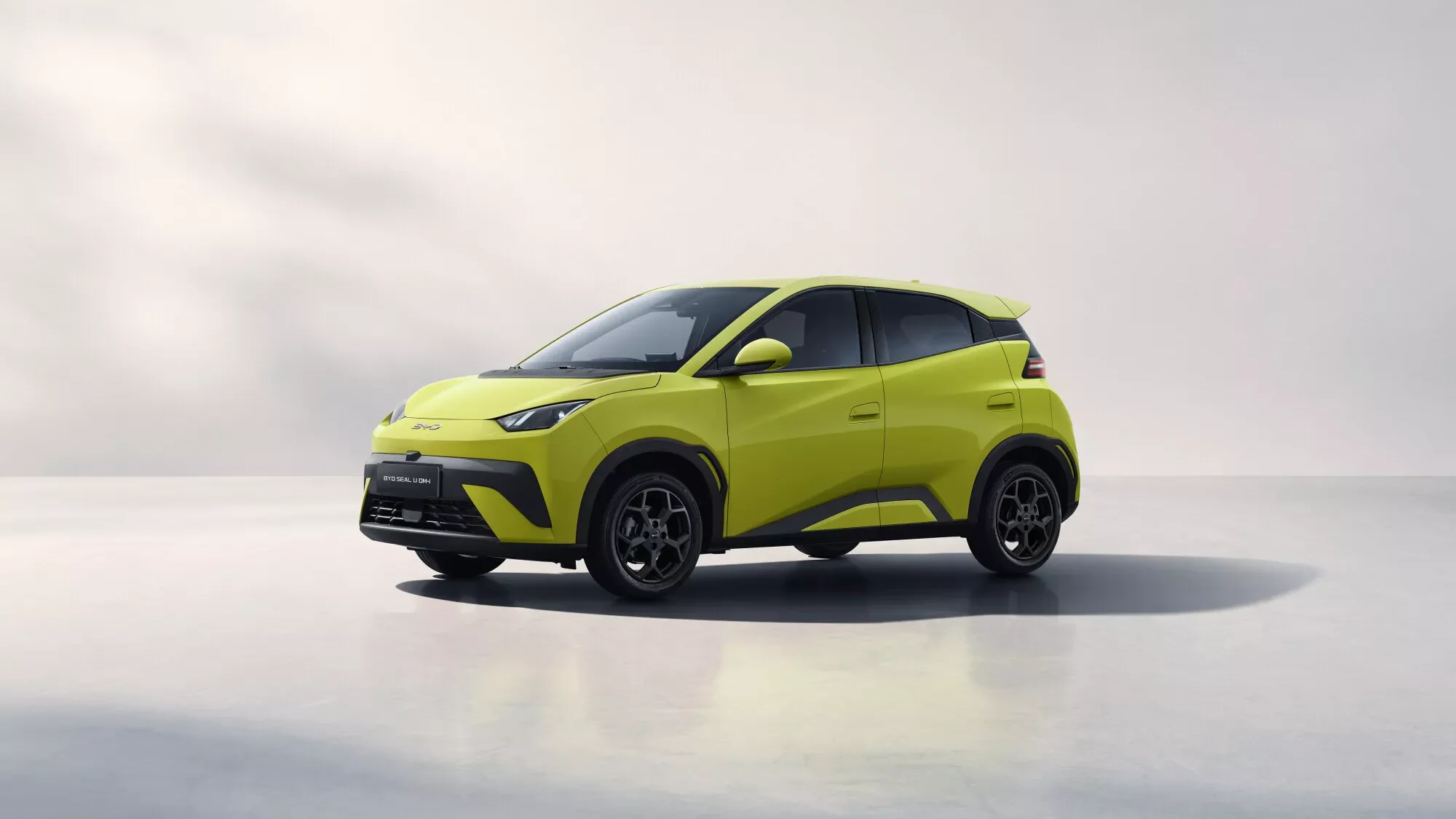
BYD Seagull (BYD)
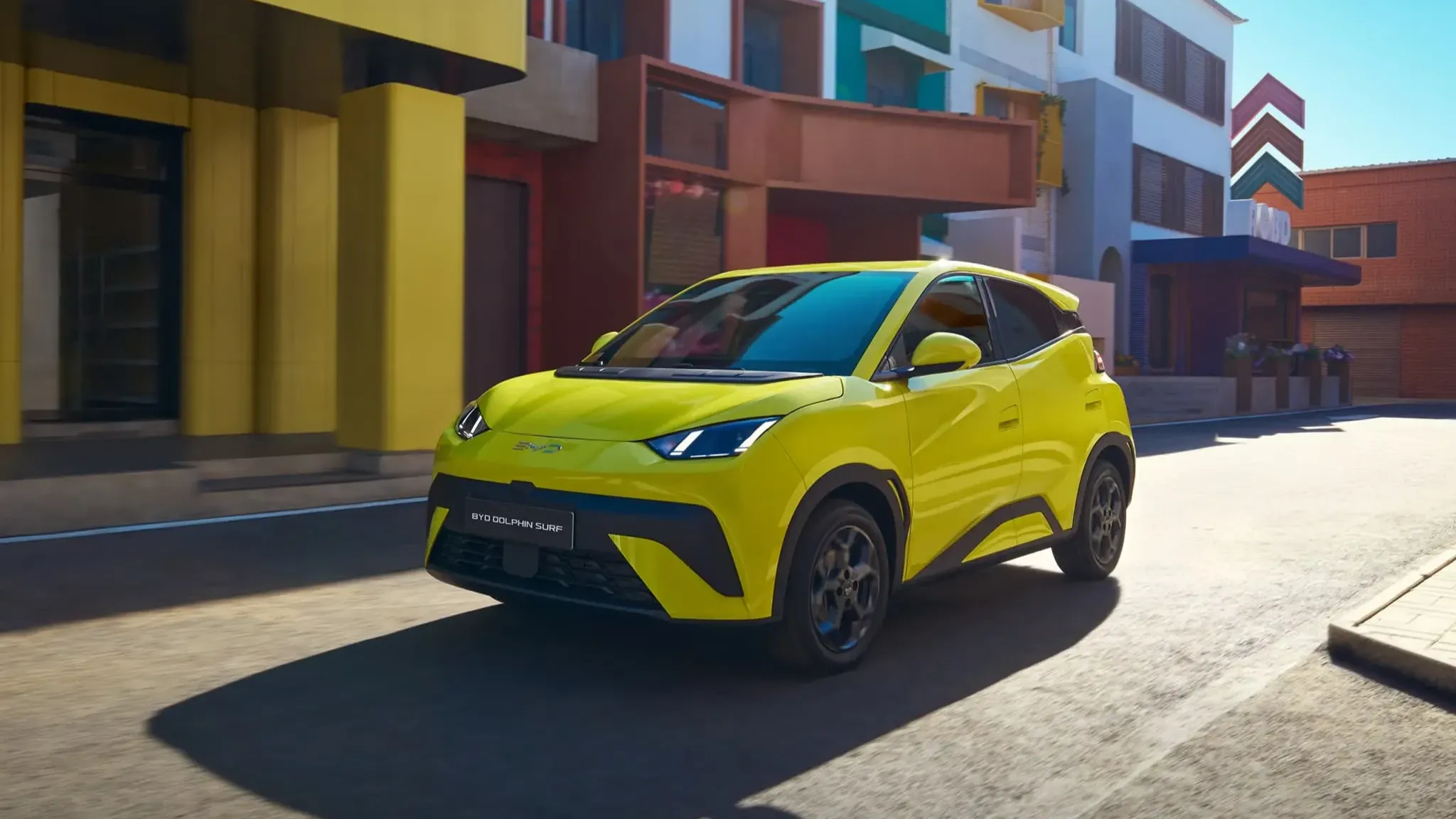
The BYD Seagull is sold in China starting at 69,800 CNY (c. $10,100 USD) for the entry 305 km CLTC variant, rising to 85,800 CNY (c. $12,500 USD) for the 405 km CLTC top trim. In Australia, where the Seagull is sold as the Atto 1, the model is priced from AUD $23,990 before on-road costs — making it Australia's cheapest new EV.
That represents a roughly 63 per cent markup over the Chinese base price once converted to the same currency. Applying a comparable margin for Canada — accounting for the 6.1 per cent quota tariff, shipping, compliance, and dealer costs — a starting price near CAD $25,000 appears a plausible floor. That would set a new price floor for new EV pricing in Canada. The 2026 Kia EV4, currently the country's most affordable EV, starts at CAD $38,995 before freight.
Advertisement – Continue scrolling for more
The Seagull's China-spec powertrain uses a 55 kW motor and a 30–38.88 kWh LFP Blade Battery, delivering 305–405 km on the CLTC cycle. The European-market variant — sold as the Dolphin Surf — was substantially upgraded to up to 115 kW, a 43.2 kWh battery, and up to 322 km (200 miles) of WLTP range, suggesting that a Canadian-specification model would likely reflect the more capable export build. At 3,780 mm long, it is a city hatchback without pretence.
The Dolphin: closer to the CAD $35,000 quota threshold
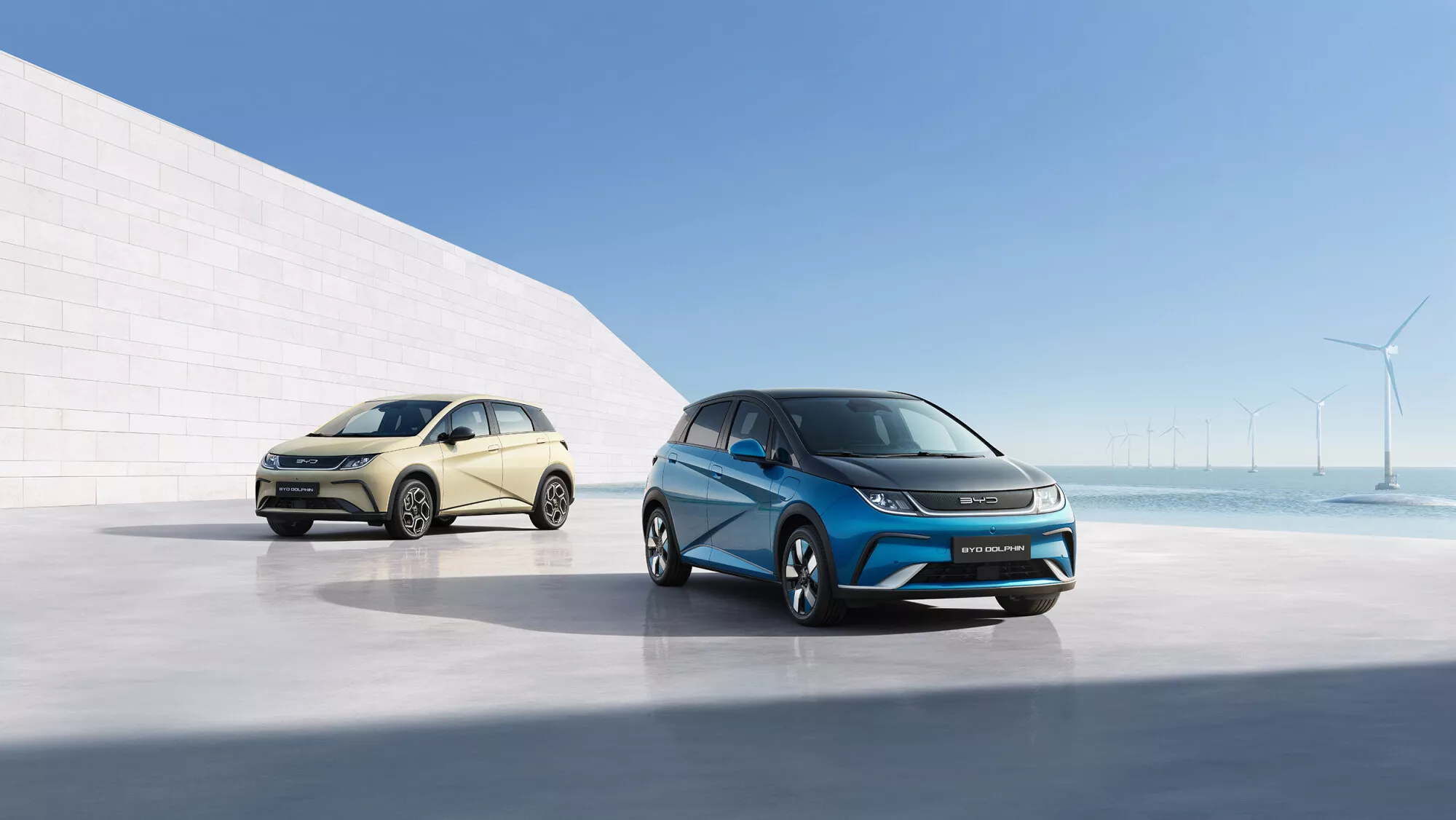
BYD Dolphin (BYD)
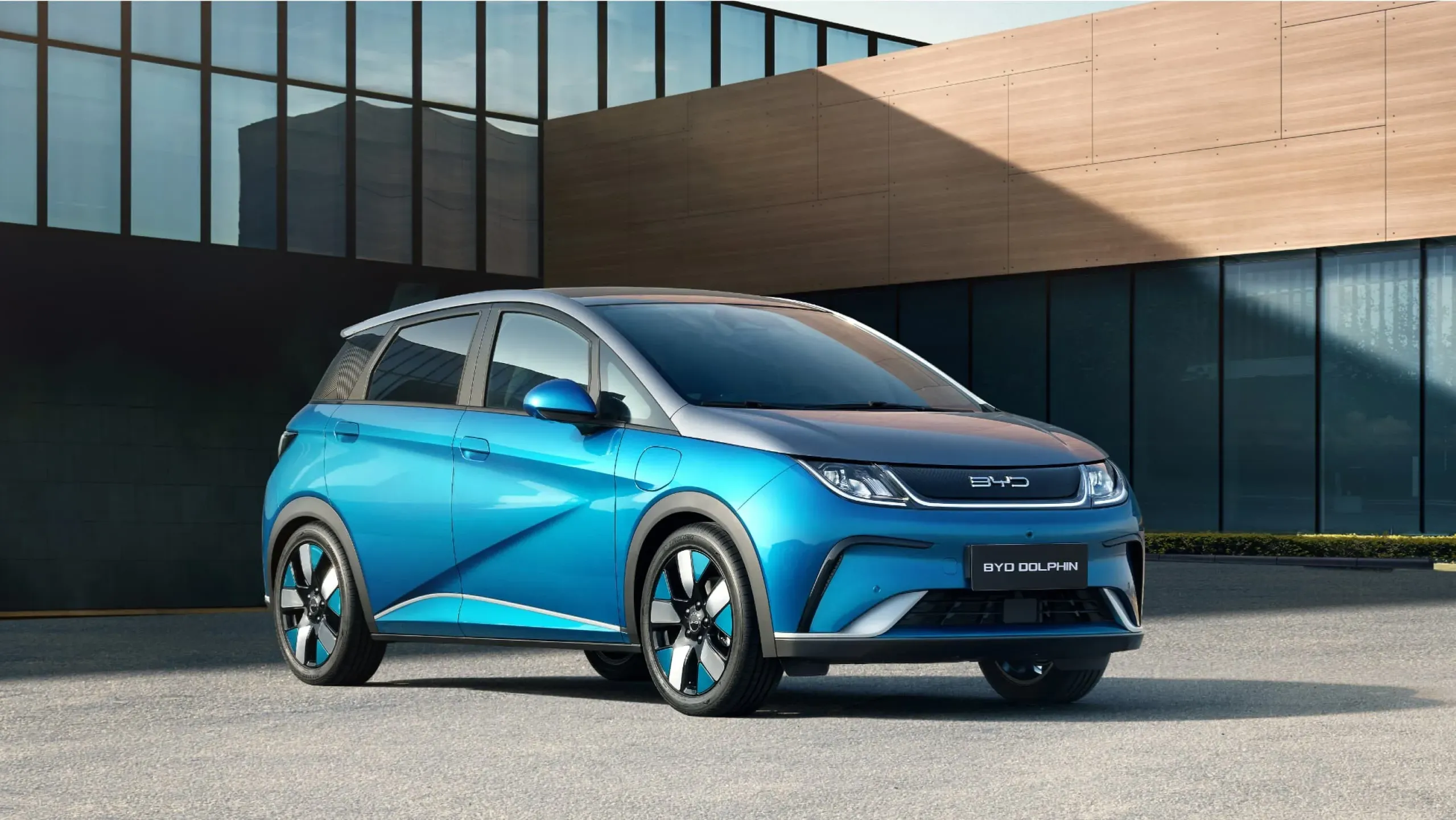
The BYD Dolphin starts at 99,800 CNY (c. $14,500 USD) in China, topping out at 125,800 CNY (c. $18,300 USD) for the long-range 520 km CLTC variant. In Australia, the Dolphin Essential starts at AUD $29,990 — a roughly 43 per cent markup over the Chinese base — equivalent to approximately CAD $31,200. A Canadian entry price in the range of CAD $31,000 is consistent with that model-specific margin.
Advertisement – Continue scrolling for more
That would sit just below the CAD $35,000 import-price threshold the quota agreement reserves for affordable EVs — a factor that matters for permit allocation even though the EVAP rebate is out of reach. The Dolphin's export specification uses a 44.9–60.48 kWh LFP Blade Battery, a 70–150 kW motor, and delivers up to 427 km (265 miles) of WLTP range from its larger pack, with DC fast charging rated at 88 kW.
At 4,290 mm long, the export-spec Dolphin is a full C-segment hatchback — closer in size to a Honda Civic than to the diminutive Seagull. Its closest Canadian rivals are the Nissan Leaf at CAD $41,248 and the returning Chevrolet Bolt, arriving as a 2027 model from CAD $43,425 — both costlier and both eligible for EVAP.
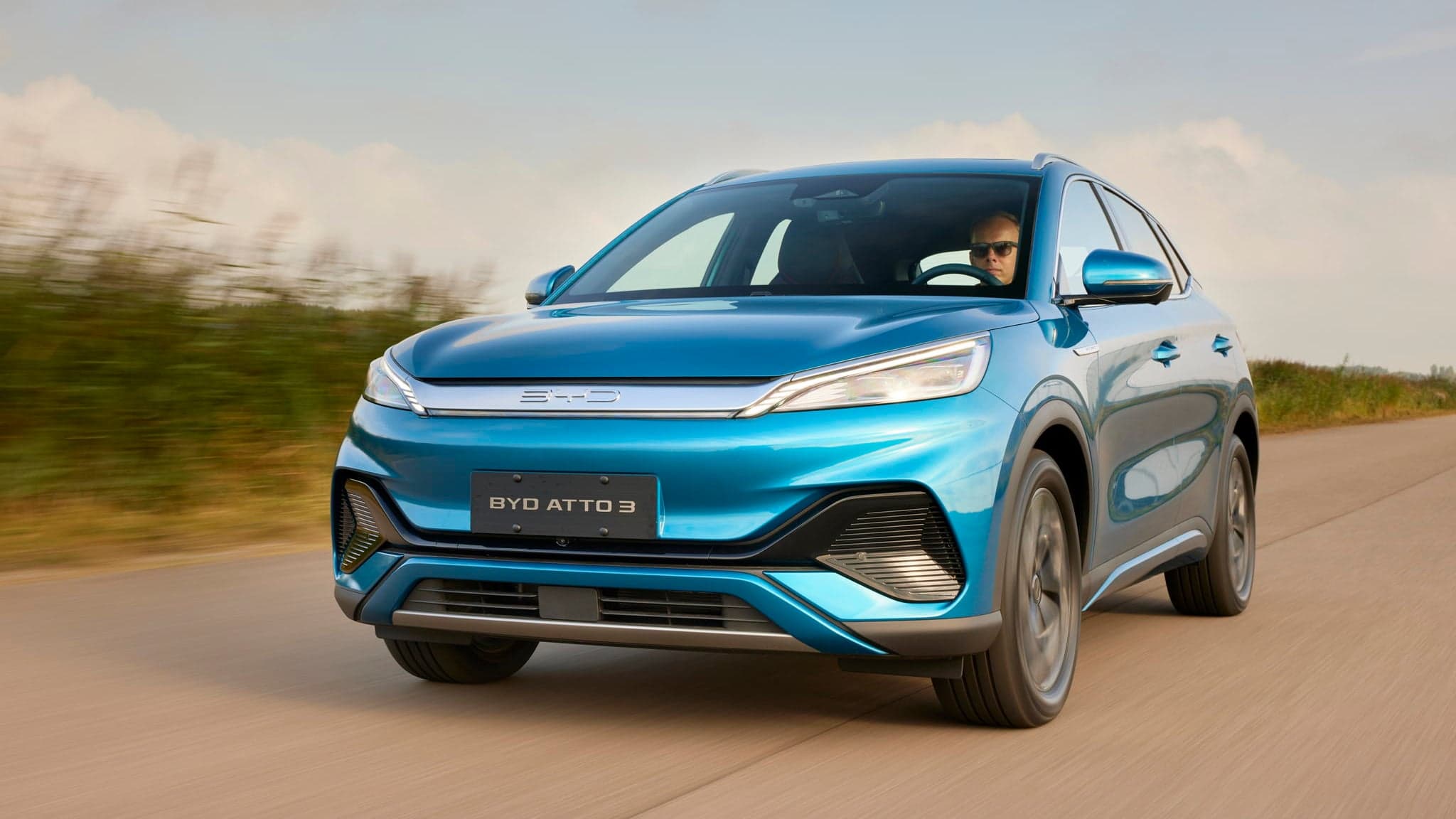
The Atto 3: squarely in compact SUV territory
BYD Atto 3 (BYD)
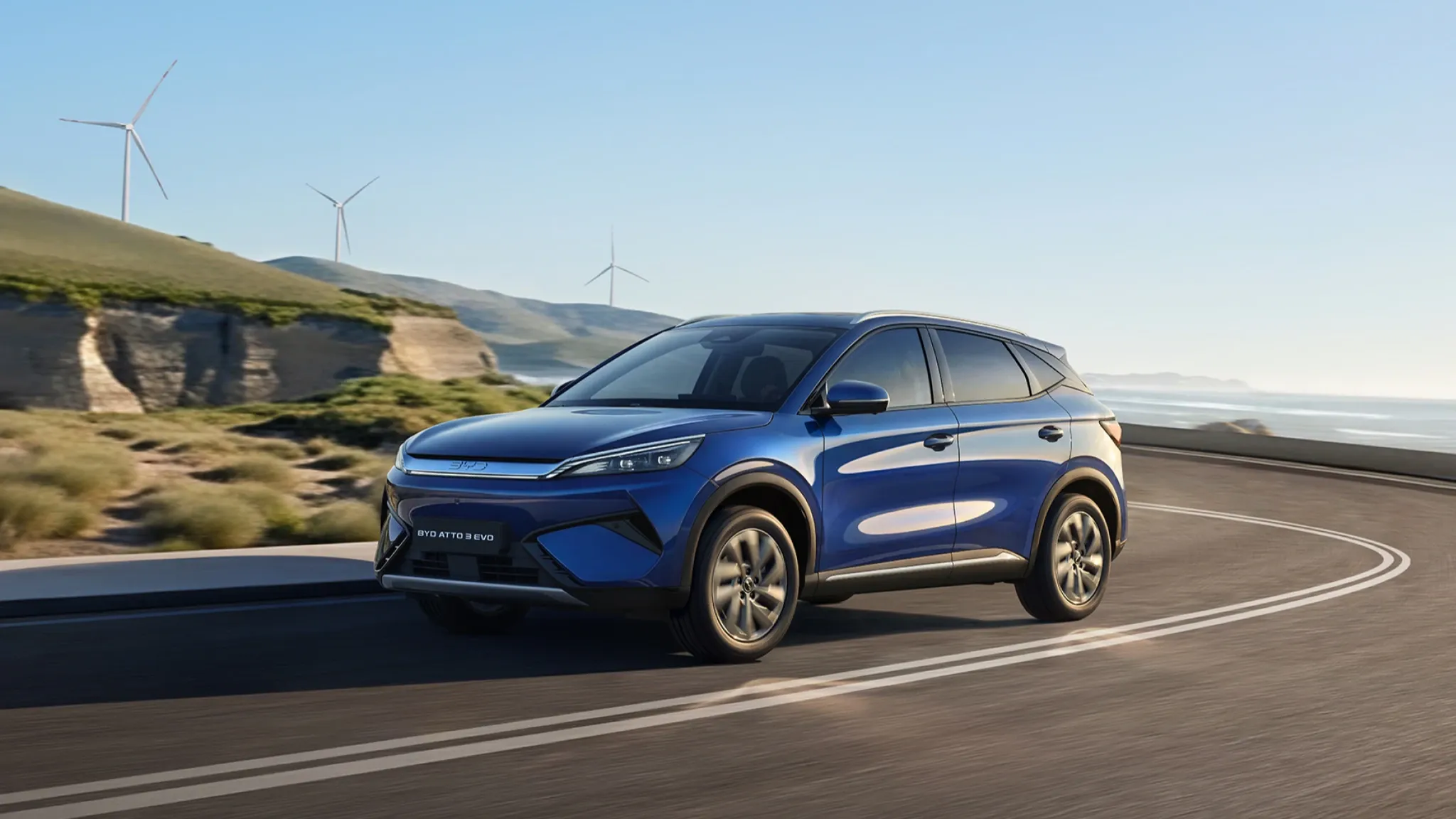
The BYD Yuan Plus — sold internationally as the Atto 3 — is priced from 115,800 CNY (c. $16,800 USD) in China, rising to 145,800 CNY (c. $21,200 USD) for the long-range top variant. In Australia, the Atto 3 Essential starts at AUD $39,990 — a 64 per cent markup over the Chinese base — equivalent to roughly CAD $41,600. A Canadian entry price around CAD $42,000 before taxes is consistent with that model-specific margin.
Advertisement – Continue scrolling for more
The Atto 3 is 4,455 mm long — compact SUV territory — and is powered by a 150 kW motor producing 310 Nm of torque. Its 60.48 kWh LFP Blade Battery delivers up to 420 km (261 miles) of WLTP range, and the vehicle accelerates from 0-100 km/h in 7.3 seconds. DC fast charging is rated at 88 kW, covering 10 to 80 per cent in about 35 minutes. The Atto 3 earned a 5-star ANCAP safety rating in Australia — a useful data point for a brand that will face scrutiny on safety standards in a new market.
Its natural Canadian rivals are the Kia Niro EV at CAD $45,595 and the Chevrolet Equinox EV from CAD $46,199 with its 513 km (319 miles) range. Both qualify for the $5,000 EVAP rebate; the Atto 3 would not. That CAD $5,000 gap effectively compresses what looks on paper like a healthy price advantage, and is a structural headwind BYD probably cannot overcome without local assembly.
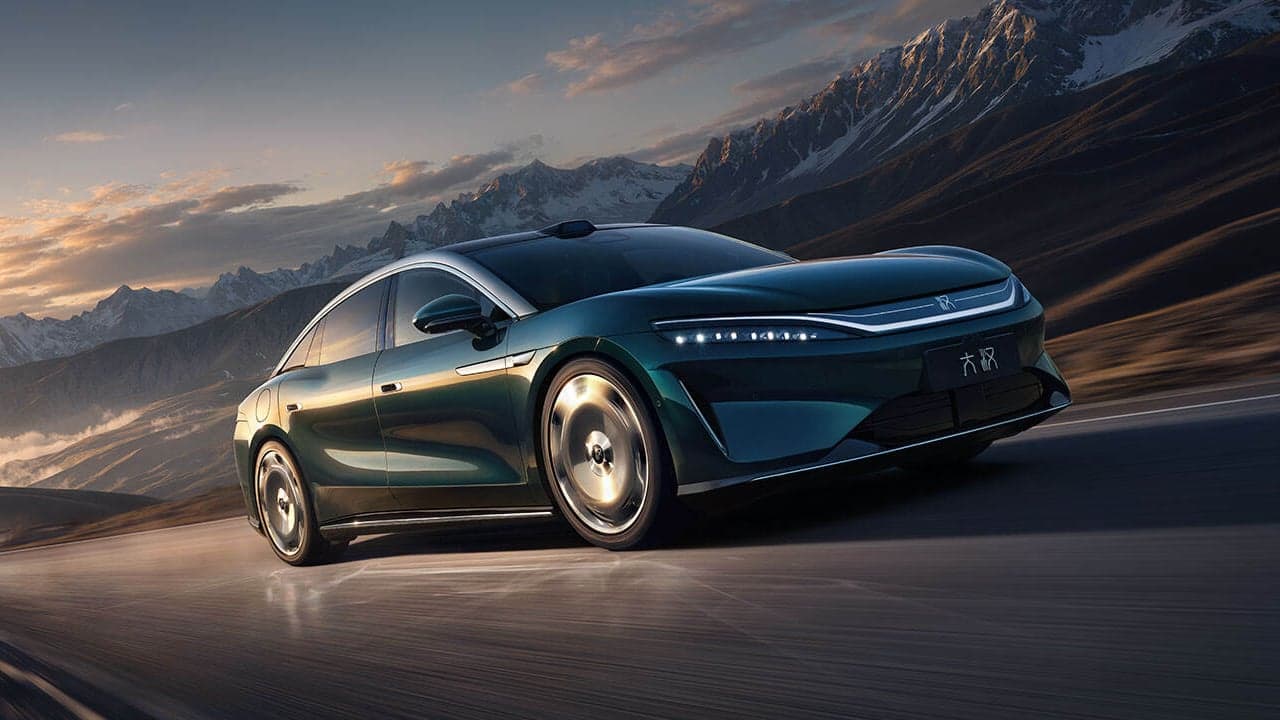
The Seal: mid-size sedan with long-range ambitions
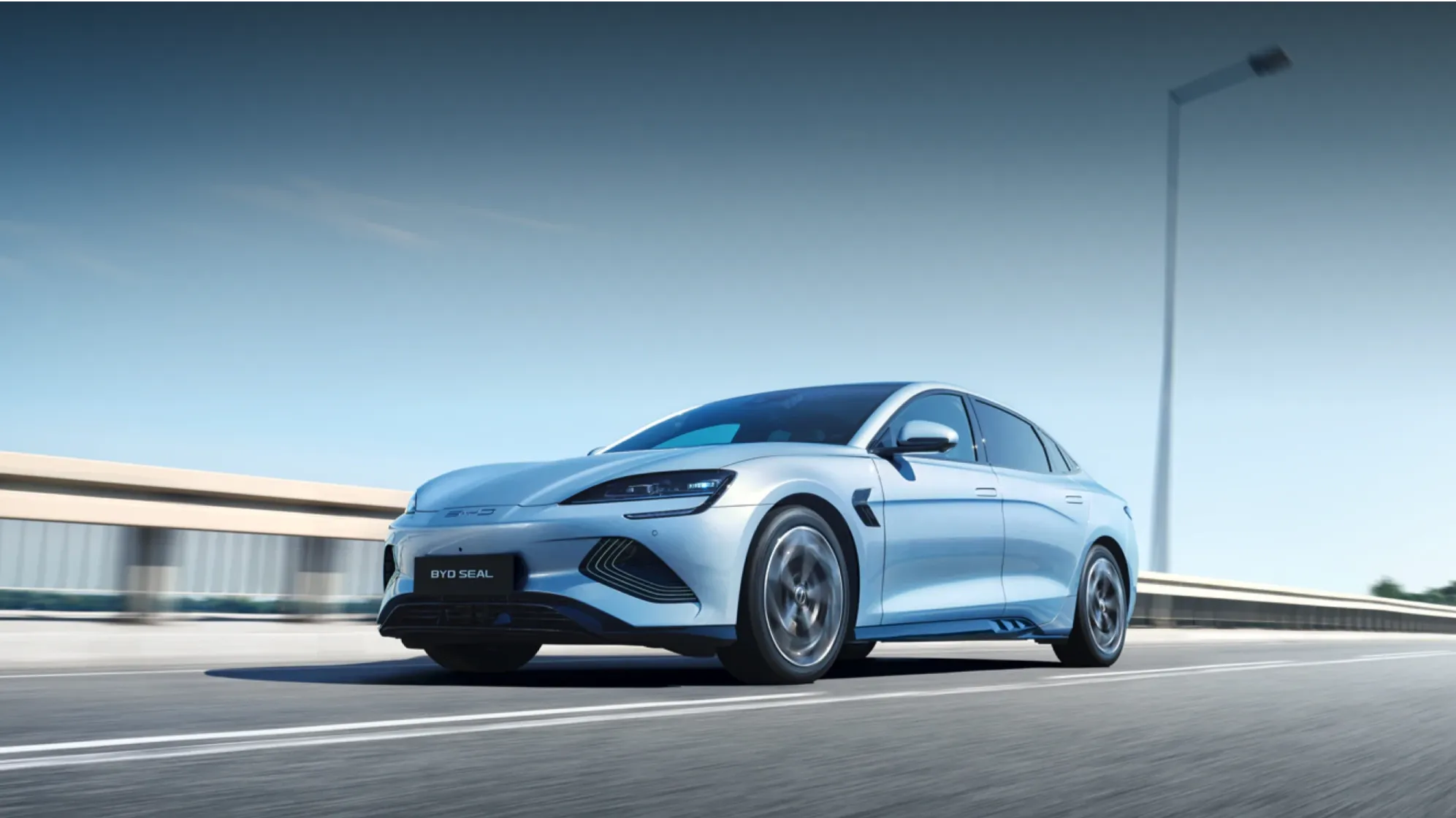
BYD Seal (BYD)
The BYD Seal spans 175,800–239,800 CNY (c. $25,600–$34,800 USD) across its rear-drive and AWD variants in China. In Australia, the entry Seal Dynamic starts at AUD $46,990 — a 27 per cent markup over the Chinese base — equivalent to approximately CAD $48,900. The Seal carries a narrower percentage margin than the other three models.
The Seal is a 4,800 mm fastback-style sedan built on BYD's e-Platform 3.0. The entry Dynamic uses a 61.44 kWh Blade Battery with a single rear-mounted 150 kW motor, a WLTP range of 460 km (286 miles), and a 0-100 km/h time of 7.6 seconds. The mid-range Premium steps up to an 82.56 kWh pack and 230 kW motor, extending WLTP range to 570 km (354 miles) — more than most EV sedans available in Canada today. The top-spec Performance goes dual-motor AWD at 390 kW, completing 0-100 km/h in 3.8 seconds. DC fast charging runs from 110 kW on the Dynamic to 150 kW on the higher trims.
The Seal's clearest Canadian rival is the Tesla (NASDAQ: TSLA) Model 3, now starting at CAD $79,990 following steep price increases. At a projected entry near CAD $49,000, the Seal would undercut the Model 3 by more than CAD $30,000 before taxes — and would do so while offering comparable or greater range in its Premium variant. Whether that spread is enough to establish a foothold in the absence of federal rebate eligibility will be an early test of how price-sensitive Canadian EV buyers actually are.
Advertisement – Continue scrolling for more
The tariff arithmetic — and the rebate gap
None of these estimates accounts for the full complexity of establishing a new brand in Canada. BYD would need to certify vehicles to Transport Canada standards, build out a service network, and navigate provincial regulations. The import quota is shared across all Chinese automakers and distributed on a first-come, first-served basis with no per-brand allocation. Polestar, Volvo, and Lotus — already present or preparing to enter — will compete for the same permits.
The EVAP exclusion is the sharpest structural obstacle. A Canadian buyer comparing an Atto 3 against an Equinox EV would find the price gap nullified after the Equinox qualifies for the federal rebate and provincial incentives.
Automotive News reported in March 2026 that analysts believe the affordability benefits of the Canada-China deal will take years to meaningfully materialize at the consumer level. Carney's office has been explicit that Canadian assembly — and the rebate eligibility that would come with it — is a longer-term goal embedded in the deal's joint-venture provisions. How quickly BYD moves on that front may determine whether its Canadian pricing story is rewritten from scratch.
Conversion rates: 1 USD = 6.88 CNY; 1 USD = 1.3924 CAD; 1 USD = 1.450 AUD as of April 4, 2026
Advertisement – Continue scrolling for more