BYD Song Ultra EV racks up 37216 first-week orders on 5 min flash-charge promise
Source: BYD
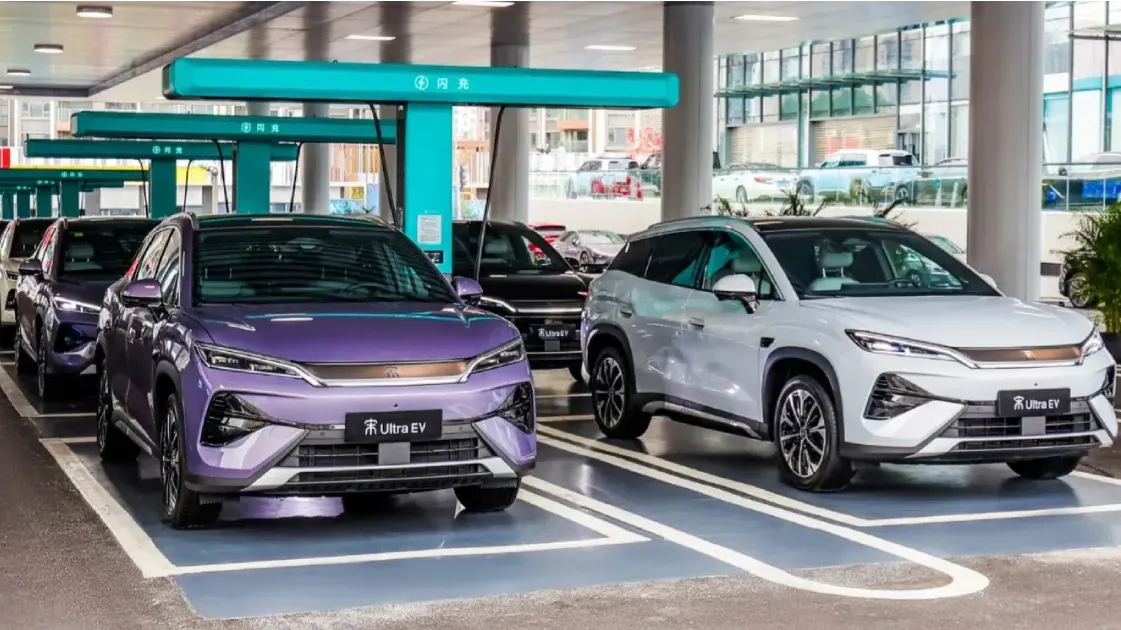
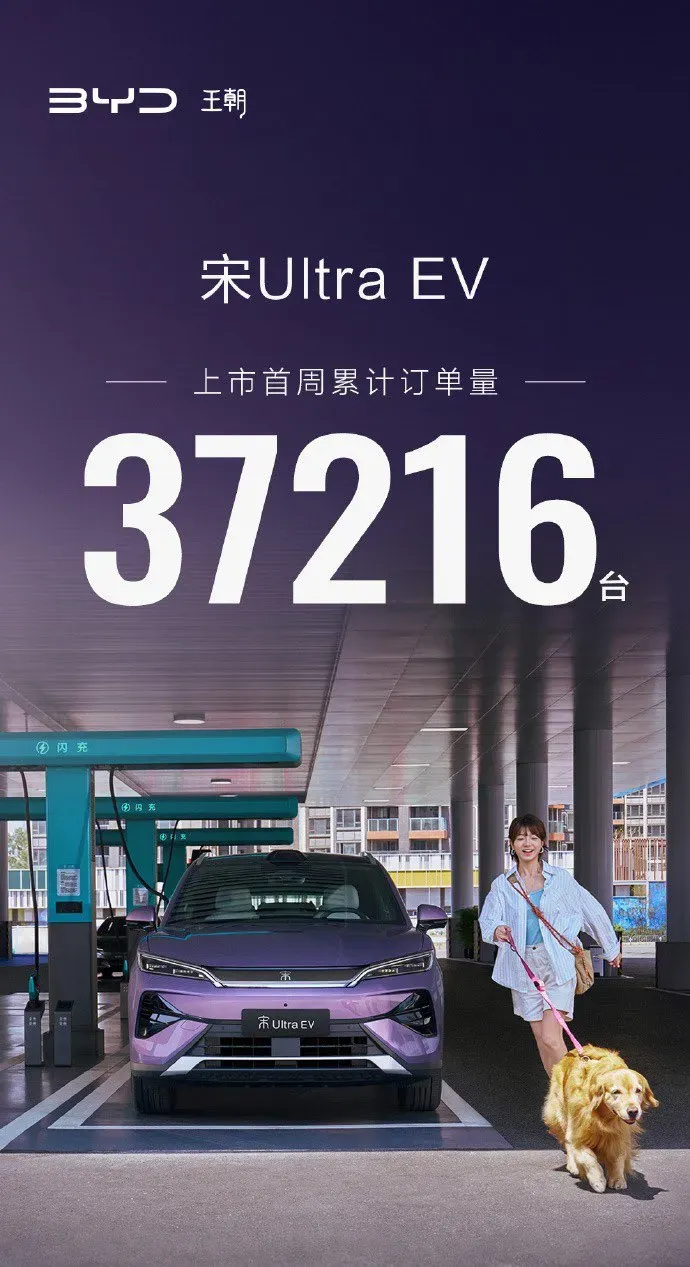
BYD (HKG: 1211) accumulated 37,216 orders for its Song Ultra EV in the first week following its March 26, 2026 launch in China, according to a promotional update posted by the automaker on Weibo. The figure builds on the 21,586 pre-orders the Dynasty-series mid-size SUV collected during its 20-day presale window — a combined tally that signals robust early demand for a model BYD positions as the Dynasty network's first B-segment pure-electric SUV.
Source: BYD
The Song Ultra EV went on sale at 151,900 CNY (c. $22,100), several thousand CNY below the 155,000 CNY presale price announced on March 6. Four trims span up to 179,900 CNY (c. $26,100). All variants come standard with BYD's second-generation Blade Battery and the company's new Flash Charging system, placing the model at the accessible end of the sub-200,000 CNY electric SUV segment alongside rivals such as the XPeng (NYSE: XPEV) G6, Leapmotor C11, and Tesla (NASDAQ: TSLA) Model Y.
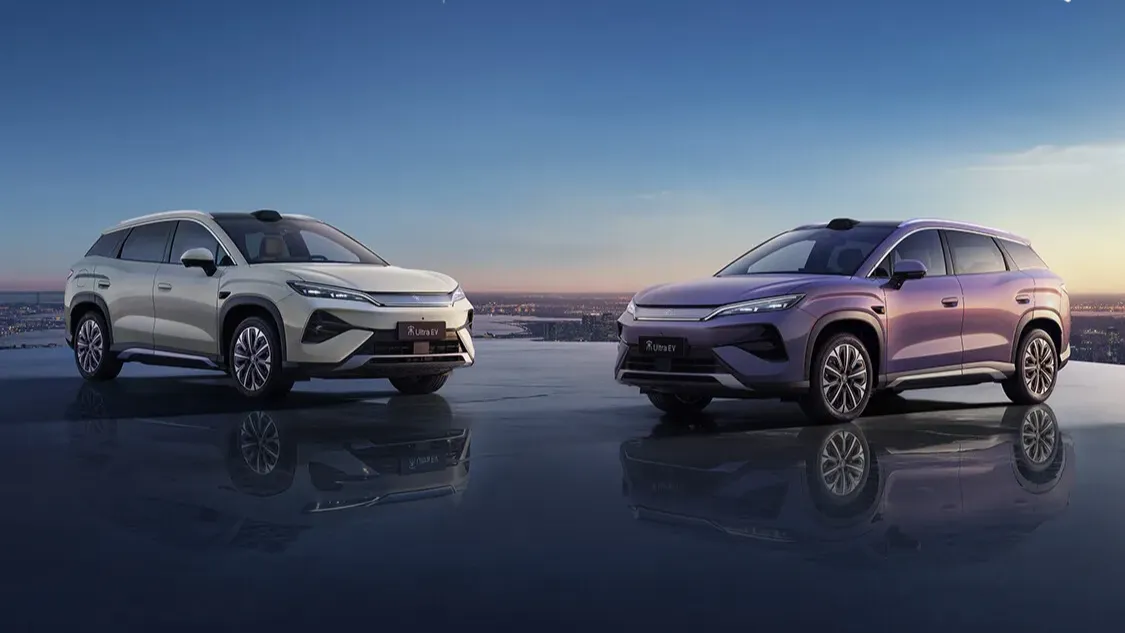
The Song Ultra EV fills a gap in the Dynasty lineup between the plug-in hybrid Song L and BYD's larger pure-electric models. It sits on the e-Platform 3.0 Evo 800V architecture and is produced at BYD's Zhengzhou and Changsha facilities. The model's launch, which BYD branded "Flash Charging Era · Song Departing," was staged across multiple cities in the days surrounding the official on-sale date, with Nanjing hosting a Dynasty network event on April 2.
Advertisement – Continue scrolling for more
The opening price entitles buyers to one year of free use at BYD's proprietary Flash Charging network. Customers who pre-ordered received an extended 18-month free-charging benefit. BYD has simultaneously been expanding that network: 4,885 flash-charging stations across 291 Chinese cities were operational at launch, with a target of 20,000 stations — including 18,000 urban and 2,000 highway sites — by the end of 2026. The company has also said it intends to extend the network to overseas markets by year-end.
Source: BYD
The Song Ultra EV's core selling proposition is speed of charge. Under normal temperatures, the 800V Flash Charging system takes the battery from 10% to 70% in five minutes and from 10% to 97% in nine minutes. At −30°C, BYD says charging time increases by approximately three minutes. The maximum supported DC charging rate is 1,500 kW, making it one of the highest-rated flash-charging architectures on the Chinese market.
Two second-generation LFP Blade Battery configurations are available. The 68.4 kWh pack delivers up to 620 km (385 miles) CLTC range, while the 82.7 kWh pack extends this to 710 km (441 miles) CLTC. The second generation offers 12% higher energy density than the first and has undergone 500 flash-charging cycle tests followed by nail penetration without fire or smoke, according to BYD. The battery warranty covers lifetime repairs on cells and a capacity guarantee above 77.5%.
Advertisement – Continue scrolling for more
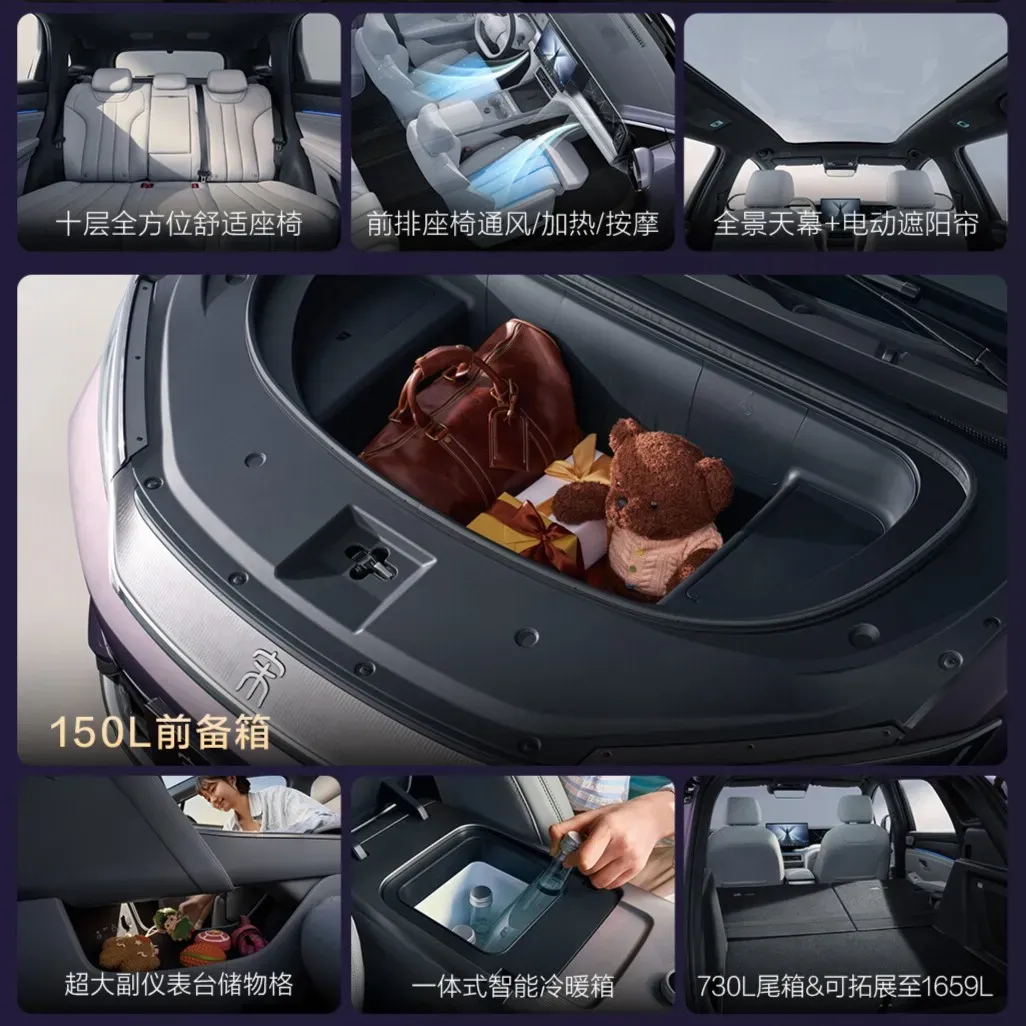
A single rear-mounted electric motor produces either 240 kW or 270 kW depending on trim, with a top speed of 210 km/h (130 mph). The body measures 4,850 mm in length, 1,910 mm in width, and 1,670 mm in height, with a 2,840 mm wheelbase — fractionally larger than the Song L PHEV. BYD states rear-seat legroom reaches 986 mm. Front and rear seats fold to create an approximately 1.8-metre flat surface.
Source: BYD
Cargo space is 730 litres at the rear and 150 litres in the front trunk. The standard suspension pairing is a front McPherson strut with a rear five-link independent setup, complemented by BYD's DiSus-C (Cloud Ride-C) adaptive damping system across all trims. A tyre-blowout stability system maintains vehicle control at up to 140 km/h (87 mph).
Inside, a 15.6-inch rotating central display and 10.25-inch instrument cluster run BYD's UI 7.0, accompanied by a 26-inch head-up display and a 16-speaker audio system. The cabin supports four-zone voice interaction. Front seats are heated and ventilated as standard; the front passenger seat adds massage and leg-rest functions.
Advertisement – Continue scrolling for more
Safety equipment includes seven airbags — among them a front-centre airbag — and 77% ultra-high-strength steel in the body structure. An optional DiPilot 300 (God's Eye B) package, priced at 9,900 CNY (c. $1,400), adds a roof-mounted LiDAR, 27 sensors, and 254-TOPS computing for city and highway navigation assist plus fully automated parking.
Early demand data from industry tracker CarFans shows store footfall rose 40% within 72 hours of the launch, with an average of 15 units sold per outlet. Roughly 70% of buyers chose the longer-range 710 km variant, and 45% added the DiPilot 300 package.
Approximately 50% of prospective buyers compared the Song Ultra EV with BYD's own Sealion 06 EV, pointing to internal competition within BYD's expanded pure-electric SUV roster. The core buyer demographic skews 35 to 45 years old, with women accounting for 30% of orders and trade-in deals involved in 70% of transactions.
Advertisement – Continue scrolling for more
Meanwhile, the Song L EV — BYD's separate pure-electric large SUV, distinct from the Song Ultra EV — began attracting dealer-level discounts of up to 10,000 CNY at Changsha outlets shortly after the Song Ultra EV's launch, with effective entry prices dropping to around 179,800 CNY (c. $26,100). The proximity of the two models' price points underscores the pricing pressure that BYD's own expanding lineup is generating within the Dynasty network.
Whether BYD can sustain order momentum through deliveries — and how quickly the flash-charging network scales to meet demand outside China's tier-one cities — may prove as consequential as the launch week numbers.
Conversion rate: 1 USD = 6.89 CNY as of April 3, 2026
Advertisement – Continue scrolling for more