BYD lifts 2026 export target to 1.5 million, up 15% from January guidance
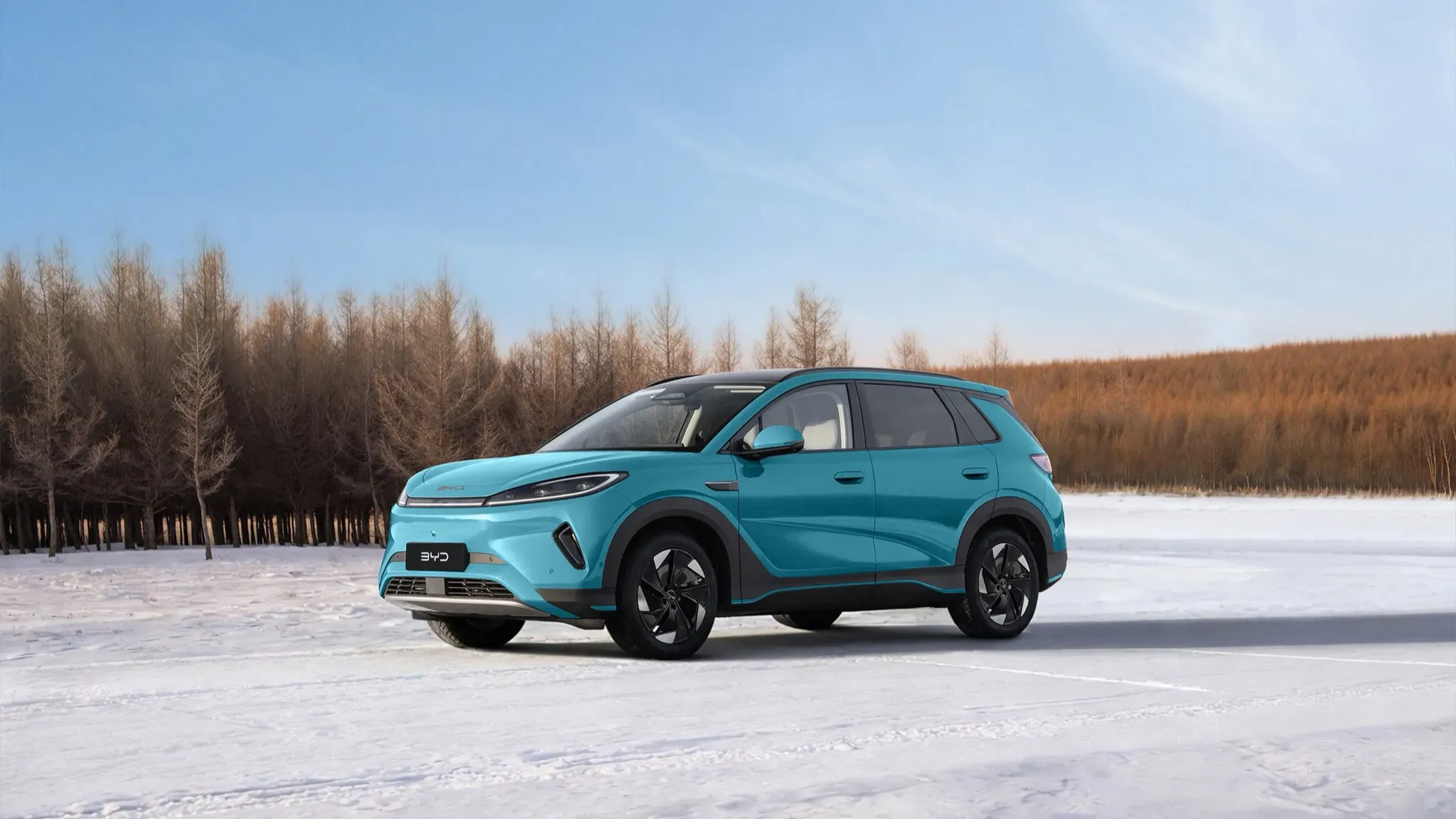
BYD (HKG: 1211, OTCMKTS: BYDDY), the world's largest automaker of new energy vehicles, signalled to analysts on March 30, 2026 that it expects to deliver 1.5 million vehicles overseas this year — 15% above the 1.3 million-unit target the company disclosed publicly in January.
The revised figure was conveyed during an analyst briefing that followed the release of BYD's full-year 2025 results, which came in below market expectations. It was not announced as a formal public commitment.
Advertisement – Continue scrolling for more
BYD's 2025 net profit fell 19% year-on-year to 32.62 billion CNY ($4.72 billion), the company's first annual profit decline since 2021. Revenue grew a modest 3.46% to 803.97 billion CNY — its weakest rate of expansion in six years — while gross margin compressed to 17.74% from 19.44% the previous year.
Management attributed the squeeze to an industry-wide "knockout stage" of brutal domestic price competition that forced automakers to sacrifice margin for volume.
Total vehicle sales for 2025 reached 4,602,436 units, up 7.73% year-on-year — a sharp deceleration from the 41% growth recorded in 2024. Domestic deliveries fell almost 8% to 3,556,353 vehicles, with declines steepening through the second half as competition from rivals including Leapmotor and Geely intensified and consumer demand softened.
Advertisement – Continue scrolling for more
Against that backdrop, exports have become the company's most dependable growth lever. BYD shipped 1,046,083 vehicles overseas in 2025, a 151% year-on-year increase and the first time the company's annual overseas volume has crossed the one-million-unit threshold.
The momentum has carried into 2026: in February, international deliveries surpassed domestic sales for the first time on record, with over 100,600 vehicles shipped abroad.
BYD's international footprint is balanced across three roughly equal pillars. Europe, North America, and ASEAN each accounted for approximately one-third of the company's total overseas sales in 2025.
Advertisement – Continue scrolling for more
In the first half of 2025, BYD led new energy vehicle sales in markets including Thailand, Indonesia, Spain, Italy, and Brazil, according to data cited by Li Yunfei, the company's general manager of brand and public relations.
To support continued volume growth, BYD has been building out local manufacturing capacity outside China. Plants in Thailand, Uzbekistan, and Brazil are operational, while its first European factory, located in Szeged, Hungary, is approaching production start-up in 2026.
The Rayong facility in Thailand now operates with local staff independently handling complete vehicle manufacturing, and the Brazil complex — a converted former Ford plant in Camaçari — covers both battery-electric and plug-in hybrid models aimed at the broader South American market.
Advertisement – Continue scrolling for more
The 1.5 million figure is not entirely new. A Citigroup research note from November 2025, citing BYD management, had already placed the company's internal 2026 overseas sales guidance in the range of 1.5 million to 1.6 million units.
The January public target of 1.3 million appeared conservative relative to those internal projections. Monday's analyst briefing, in which management expressed confidence in reaching 1.5 million, essentially aligned the public narrative with what Citi had flagged months earlier.
Overseas markets carry an additional attraction beyond volume: margin. Analysts have noted that per-vehicle margins on exports — particularly in Europe and Brazil, where higher-end models sell at scale and pricing is more stable — can reach as much as 20,000 CNY per unit, compared with margins of roughly 5,000 CNY in the domestic market. A successful 1.5 million-unit export year would therefore do more than lift volumes; it could meaningfully stabilize margins that domestic price wars have eroded.
Advertisement – Continue scrolling for more
BYD sold 2,256,714 battery-electric vehicles in 2025, surpassing Tesla's (NASDAQ: TSLA) 1,636,129 units in that category for the first time. The company has long held the top position across the combined BEV and plug-in hybrid segment, but the BEV crossover carries greater symbolic weight in a global market where Tesla has historically been the benchmark.
Whether the 1.5 million export target is achievable will depend in part on how quickly the Hungary factory scales and how BYD navigates tariff environments that continue to shift — particularly in Europe, where the company is also planning to expand its flash-charging network internationally by end-2026, bundling infrastructure with vehicle sales in a bid to build an end-to-end ownership ecosystem outside China.
BYD's ability to replicate its domestic integration model — vehicles, batteries, charging — across multiple continents simultaneously may ultimately determine whether overseas markets can do what the home market no longer can.
Advertisement – Continue scrolling for more